

Stamped Concrete Is Making Your Pool Look Cheap — Try This Easy-To-Replace Alternative Instead
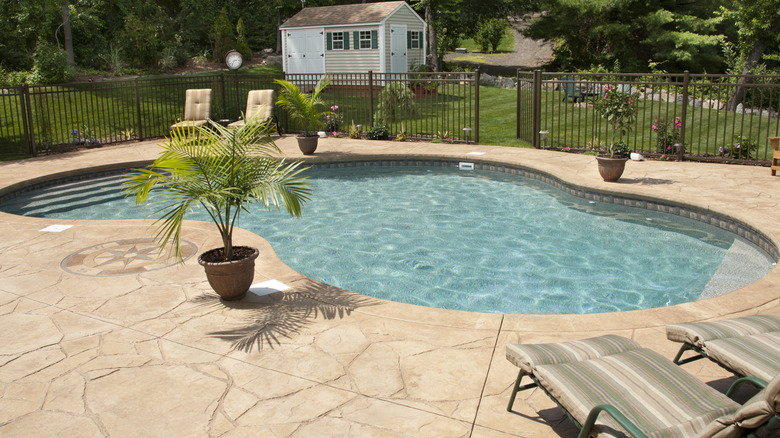
Your backyard pool serves multiple purposes. Not only is the poolside your own little haven of luxury and relaxation, but often, it is also the go-to place for entertaining guests. Naturally, you would not want the area to suffer from bad aesthetics. Unfortunately, certain key elements at the poolside can render it outdated — or worse, cheap-looking. The type of material you use for the pool deck is one, especially if it is stamped concrete.
Stamped concrete tries to mimic the look of natural materials. At the time of its installation, stamping mats are used to imprint the patterns and textures found naturally in materials like brick, stone, or wood. While the faux patterns on stamped concrete can be more cost-effective or even more durable than real stone, more often than not, they just can't compete aesthetically. Proper stamping by a seasoned professional is crucial for stamped concrete to imitate natural stone without giving telltale signs of its fakeness. If it does not have enough detailing or if it appears monochromatic, stamped concrete can easily give away the artificial nature of the deck. If a particular area of the concrete has remained untextured due to bad installation, that can also cheapen the look of the entire pool deck.
Pavers, on the other hand, offer a more high-end and classic aesthetic for your pools. Pavers are individual units of concrete, bricks, or stones, installed one at a time. Better yet, they are available in a diverse range of styles, while also being far more convenient to replace. Over time, the colors on stamped concrete can fade, which can, again, render your pool unsightly. Pavers are more likely to hold their colors as well.
Pavers are way easier to replace than stamped concrete
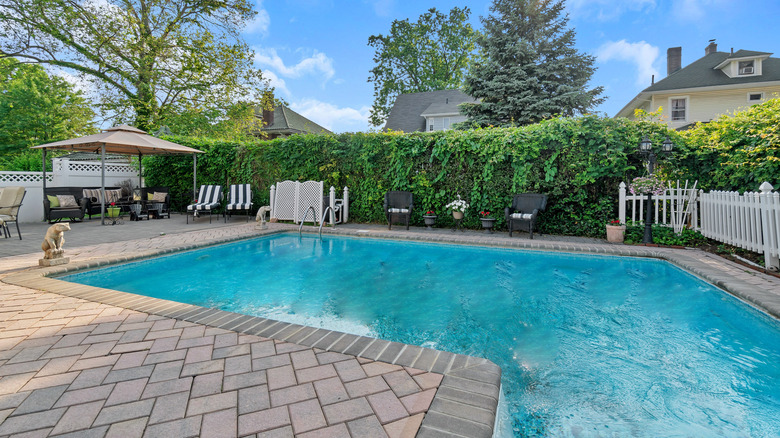
Even if it's installed perfectly, stamped concrete might look cheaper over time. When it comes to repairs and replacements, stamped concrete can be much more of a headache compared to pavers. With time, your pool deck is bound to undergo wear and tear. Moreover, although stamped concrete provides good durability in general, factors like the freeze-thaw cycles can have a damaging effect on the poured-in concrete. Pavers, on the other hand, have far less chances of cracking under pressure in the first place. Their interlocking design allows pavers to shift along with any movement in the underlying base, caused due to freezing and thawing of the ground. This improves their longevity in comparison to stamped concrete in such regions.
If a paver becomes stained or damaged, you can replace individual pavers without leaving any noticeable trace of the replacement. Not only is individual replacement of pavers cost-effective, but the result will be pretty seamless with the rest of the decking. All a professional needs to do to fix a broken or stained paver is to lift it out and drop in a new one. Replacing an individual paver does not necessarily require professional help either. You may be able to DIY the whole affair yourself, especially if the project does not need re-leveling of the ground underneath.
Stamped concrete, on the other hand, is poured in for installation, which means that any substantial damage often demands complete replacement of the slab. Replacing just a section will leave signs of the patchwork, and it often does not blend in with the patterns and textures found on the original concrete. This undoubtedly increases the cost of replacement for stamped concrete pool decking.
Different types of pavers for your pool deck
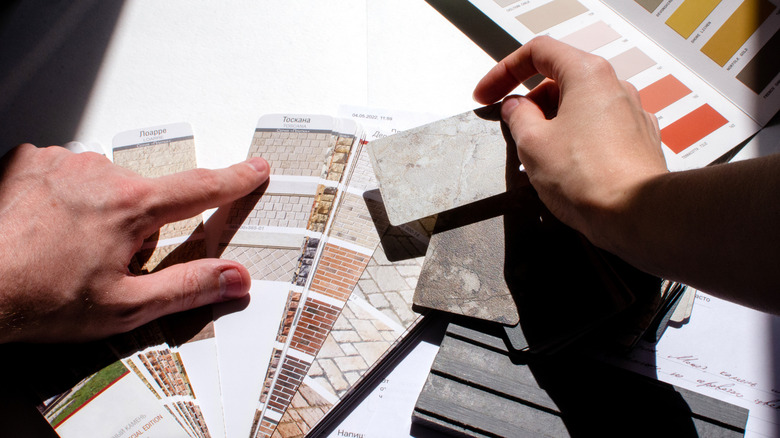
When it comes to selecting pavers while designing your pool deck, you are spoilt for choices. Travertine pavers, made from natural stone, provide an extremely elegant aesthetic. They are also highly durable in all kinds of weather and generally not slippery. Travertine pavers are available in different kinds of styles and finishes, from the elegant surface of honed travertine to the textured one of tumbled travertine, and the rugged finish of brushed travertine.
If natural stone is out of the budget, concrete pavers offer high versatility as well. Although they are not as customizable as stamped concrete, there are still a number of colors and styles for you to choose from. Meanwhile, a little on the expensive side, brick pavers can offer a vintage charm to your pool deck that can make it quite enviable as well. Porcelain pavers, on the other hand, provide a low-maintenance alternative with a sleek finish.
If you want to invest in a luxurious look and feel, you can consider installing marble pavers. Anti-slip marble pavers can make your pool look high-end while still providing safe grip underfoot. Weather-resistance is one of the major factors to consider while selecting material for your pool deck, and thankfully, marble pavers can also provide good resistance against the elements. Other popular paver options include the eco-friendly permeable pavers, or flagstone pavers, which are known for their cool surface.