

The Unlikely Sign Your Lawn Has Too Much Nitrogen (& The Simple Solution You Need)
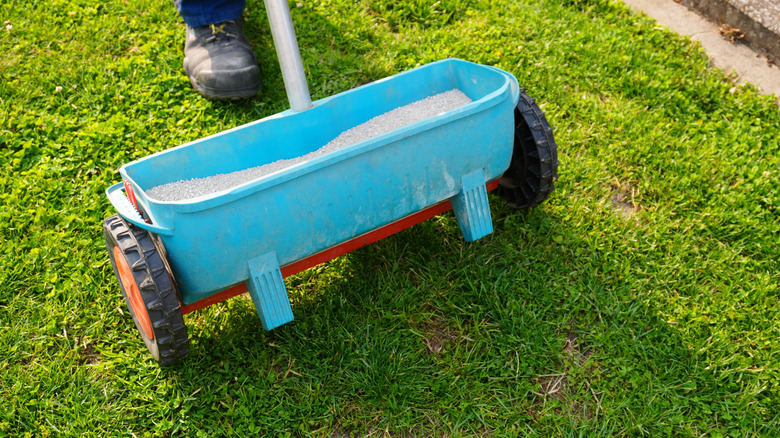
Spring can be the best time to fertilize your lawn, but you need to pay close attention to how much you use and the nutrient balance in your fertilizer. Many lawn fertilizers are high in nitrogen because this is the main nutrient that turfgrass needs regularly. In the right dosage, nitrogen helps promote both top growth and root growth, giving you the lush, healthy lawn you're looking for. But there are some things you should never do when fertilizing your lawn, and one of them is going overboard with how much you use.
While a little fertilizer can help kickstart spring growth, too much of it can end up doing more harm than good. So, if you've recently applied your first batch of fertilizer for the season, pay close attention to your lawn over the next few weeks for signs of excess nitrogen. One sign that you overdid it is a sudden burst of lush green grass. It sounds counterintuitive since vibrant green is exactly what you're going for. But if it greens up quickly, watch for an equally sudden downturn. If those same dark green patches start turning yellow or brown, you might have gone too far.
The sooner you catch signs of excess nitrogen, the better your chances of fixing the problem and avoiding reseeding. The solution is as simple as purging the excess fertilizer from your soil and cutting back on future applications. But if your grass has already died, you might end up needing to reseed your lawn altogether.
Why a sudden burst of green lawn could actually be a bad sign
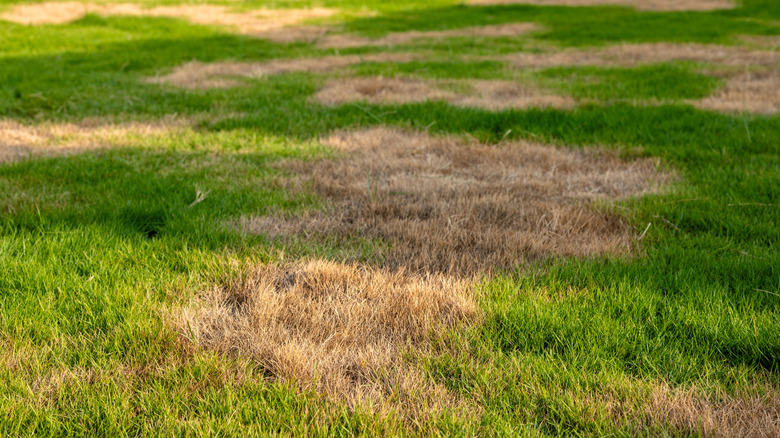
Overfertilizing your lawn (especially with a high nitrogen formula) in the spring can cause the grass to push out a ton of lush top growth that looks great initially. The problem is that it does this at the expense of root growth. As the growing season continues, your lawn may lack the strong root system needed to support that growth.
For gardeners, this can look like a once-lush lawn suddenly turning from green to yellow or brown. If you applied the fertilizer evenly, your entire lawn might look like this. If your application was less even, you might notice streaks or patches of overfertilized grass while other areas look fine.
Depending on the type used, excess fertilizer can also lead to excess salt buildup in your soil, which will make it harder for roots to take up water. Combine a weaker root system with difficulty absorbing water, and you have a recipe for a thinning, parched lawn — even with consistent watering. Lastly, that vigorous top growth can also result in excess thatch buildup later in the season, preventing air, water, and nutrients from reaching the soil and further slowing root development.
How to fix a lawn after adding too much nitrogen
If you went overboard with feeding your lawn this spring, your grass can probably bounce back with the right care. The first step is to diagnose whether your lawn is alive but struggling or completely dead. If you're seeing streaks of yellow or brown, that's a hopeful sign — especially if there are still some green patches visible. Areas that are completely brown and dry are likely beyond recovery. Instead of reviving those areas, then, you'll want to reseed them and start from scratch.
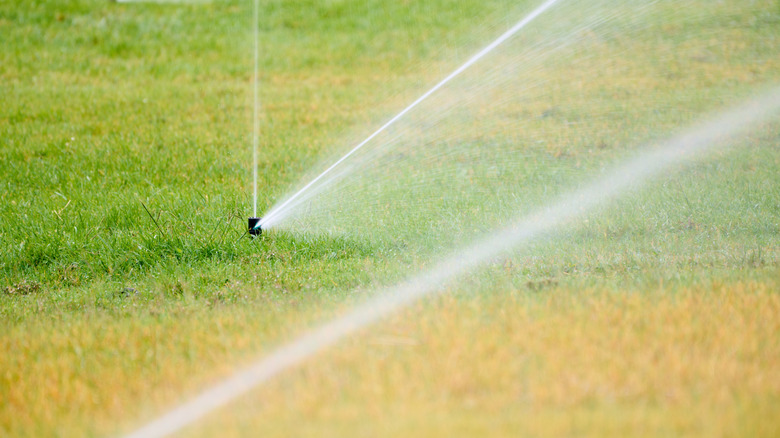
If it's alive but struggling, start the healing process with an extremely deep watering. Soak the overfertilized areas thoroughly for several days to help flush out excess fertilizer. This will help flush out the excess fertilizer and provide ample water for your struggling roots. After that, return to your regular watering schedule and watch for signs of recovery. Any areas that haven't recovered after a few weeks are likely beyond repair and will need to be reseeded.
During this recovery period, avoid adding more fertilizer. Seeing your lawn lose its green luster might tempt you into reaching for more of the stuff that actually caused the problem. In the future, you can avoid this problem by being more selective with fertilizer use. Get your soil tested before adding anything to find out how often you really need to fertilize your lawn. This test will tell you what nutrients your lawn actually needs, if any. If you do fertilize, opt for a slow-release or organic alternative to provide a steady supply of nutrients to your grass throughout the growing season.