

12 Ways To Cover Sliding Glass Doors That Aren't Curtains
Sliding glass doors are a wonderful feature in any home, flooding rooms with natural light and allowing effortless connection to the outdoors. However, they also come with their own set of challenges, so it's important to find the right window treatments for them. For many, curtains are a popular and perfectly suitable choice. But if they just don't appeal to your tastes or suit your space, there are plenty of other stylish and practical alternatives, too.
Compared to windows, there's a few extra factors to consider when covering sliding glass doors. The large glass surface means sliding doors reveal a lot of the home interior and are a major spot for heat gain and loss. Sliding doors take up a lot of real estate on a wall, so you want the window dressings to be stylish. Since it's a doorway, you also need treatments to be functional and easy to move out of the way. The right coverings should look nice and help with privacy, light control, and temperature control. Ahead are some ways to cover sliding glass doors that aren't curtains, but that can do just as good of a job.
Sliding panel blinds run on tracks and offer complete privacy when closed
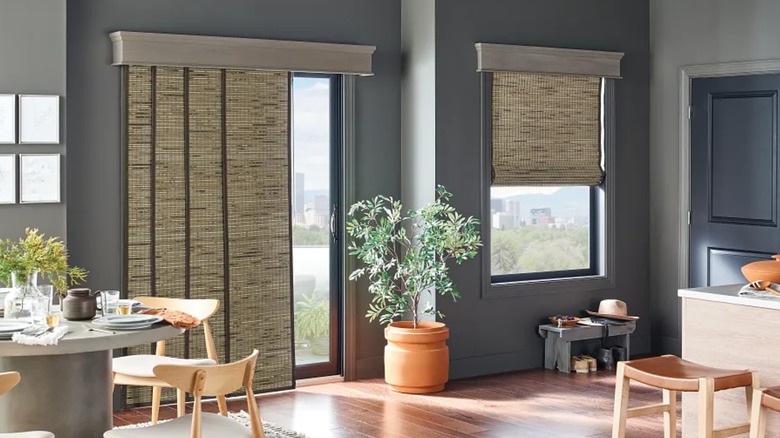
Sliding panel blinds, or panel track blinds, consist of wide panels that slide along a track system. The panels are much larger than traditional vertical blinds. Expect two to five panels to cover a standard sliding glass door, depending on the panel size. The track mechanism resembles traditional vertical blinds, though each panel usually has its own track. The panels slightly overlap and offer complete privacy coverage when closed. Slide the panels to one side (or open them up in the middle) to let in your chosen amount of light or reveal the sliding glass door. Their ample coverage, ease of use, and simple design make them a great curtain alternative, especially in modern and minimalist homes.
Sliding panel blinds are available in a variety of materials and designs, from sheer fabric options to warm wood panels. Styles range from very plain and pared-down to vividly colored and covered in patterns. The wide, thin panels give them a streamlined appearance, appealing to those in search of sleek sliding door coverings. They look a lot more structured than curtains, and more modern than vertical blinds. The GoDear Design Adjustable Vertical Blinds are a highly-rated example of this window treatment type that comes in a few different styles and has an adjustable track that can be set between 45.8 to 86 inches wide, ideal for small to medium glass sliding doors. For larger doors, consider something like the Bali Blinds Sliding Panels, which you can customize to size.
Vertical blinds are affordable and easy to install
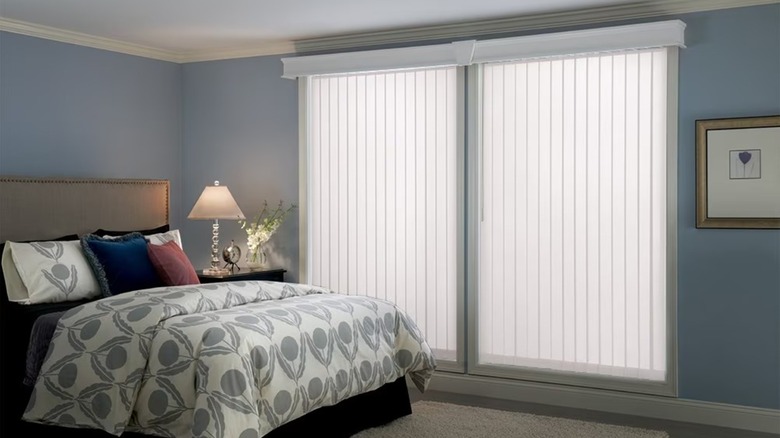
Vertical blinds for sliding glass doors don't have the best reputation: Some may see them as boring and outdated, but that's not always the case. They're so ubiquitous that they don't need much introduction, but, as a reminder, these coverings are made of long, vertical slats that hang from a ceiling-mounted track. Their design is very practical since you can angle the vanes in any position from open to closed. Ideal for doorways, you can also slide them sideways to get them out of the way completely. Even better, they can be very affordable and easy to install.
While vertical blinds are sometimes considered dated and drab, others might appreciate their old-school look. Plus, there are more styles nowadays, with material options like classic vinyl, various types of fabric, and even imitation wood to offer different looks, sheerness options, and textures. A product like the Chicology White Sheer Vertical Blinds almost looks like airy sheer curtains from afar, but has the user-friendly benefits of vertical blinds. Or, if you need to fully block out light, the Letau Blackout Vertical Window Shades are designed to darken a room when they're closed. These are two examples out of a great number of options. Since they're so widely available, several brands sell customizable vertical blinds as well, so you can choose the material, color, and size to perfectly fit your space. For safety, consider cordless options in homes with young children or pets.
Cellular shades can add some much-needed insulation to sliding glass doors
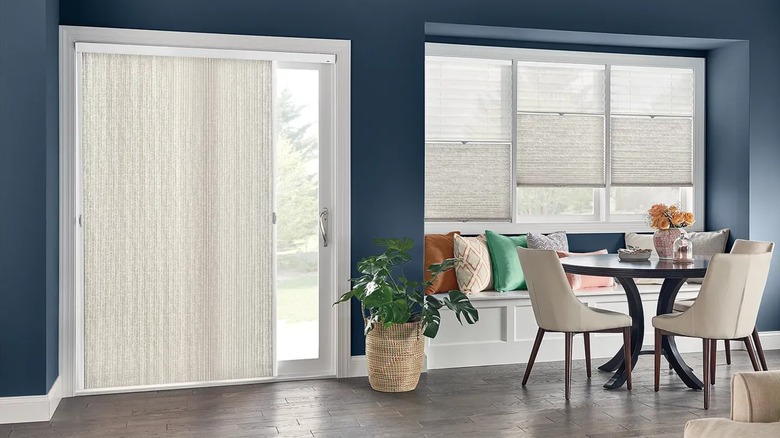
Cellular shades are made of fabric. From the front, it looks like they have horizontal pleats, but from the side, you'll see the distinctive honeycomb shape characteristic. These open cells are a major benefit of cellular shades. The air pockets are excellent for insulation and help slow heat transfer, so they keep rooms cooler in the summer and warmer in the winter. This is particularly great for sliding glass doors, which can be a major area for heat transfer.
Cellular shades have a slimmer profile than curtains and stack compactly when they're open; they appeal to those looking for a sleek and minimalist covering. They come in a variety of colors and sheerness options. In terms of design, they're often plain: You'll likely have to go custom if you want patterned cellular shades. Cellular shades can also be more delicate and difficult to clean.
For sliding glass doors, you can find vertical honeycomb shades that open sideways along the width of the door. Or, you can install horizontal cellular blinds. The latter option is less convenient since you'll have to open the blinds from the bottom-up, but it can be cheaper. The horizontal Persilux Cordless Cellular Shades is one of many affordable blinds on Amazon that are worth buying: For around $220 you can order a blind measuring 70 inches wide by 80 inches tall. Alternatively, Bali Blinds from Costco offers customizable vertical cellular shades that are pricier (starting at around $300) but more user-friendly.
Roller shades offer a very simple, modern look
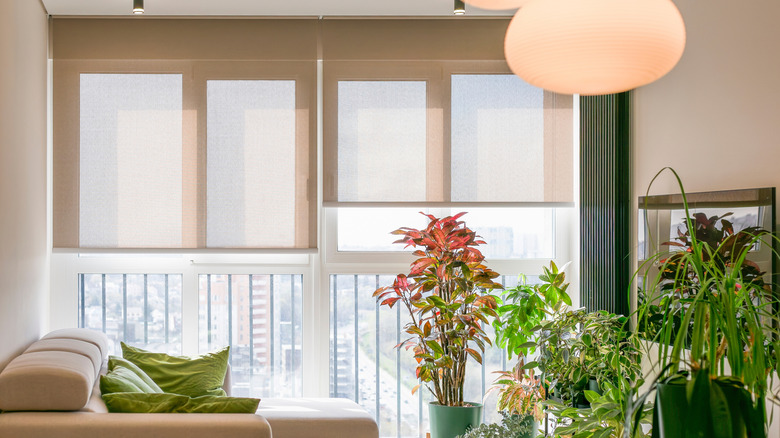
Roller shades consist of a panel of fabric that rolls around a tube mounted along the top of the window. They're another option that looks minimal and sleek, so it's unsurprising that they're a popular choice for modern homes in recent years. Roller shades skew plain in design, and you'll often find them in a single color with a flat, smooth texture. Available in a range of sizes, you can use one to cover the entire door, or use two (one to cover each side).
They're very space-efficient. When fully rolled up, the shade disappears into the cylinder at the top, so it's tucked away from the doorway. However, some users don't like the up-down orientation and might prefer options that open in the same direction as the sliding door. Compared to curtains, roller shades feel more utilitarian and less bulky. They come in a range of opacity options, from light-filtering for sheer coverage to blackout for darkening rooms.
At first glance, it can be easy to confuse roller shades with Roman shades. Between the two, roller shades are the option if you want the sleekest look. Roman shades have a pooled section of fabric when they're open, which makes them look more traditional. With fewer panels and texture and a lack of the soft drape of curtains, roller shades are arguably the most minimalist-looking option on this list. Cleaning roller shades is usually quite straightforward, and many are also available in safer cordless versions; the Aosky Cordless Roller Shade is a size-customizable example.
Roman shades can add soft texture and a traditional touch
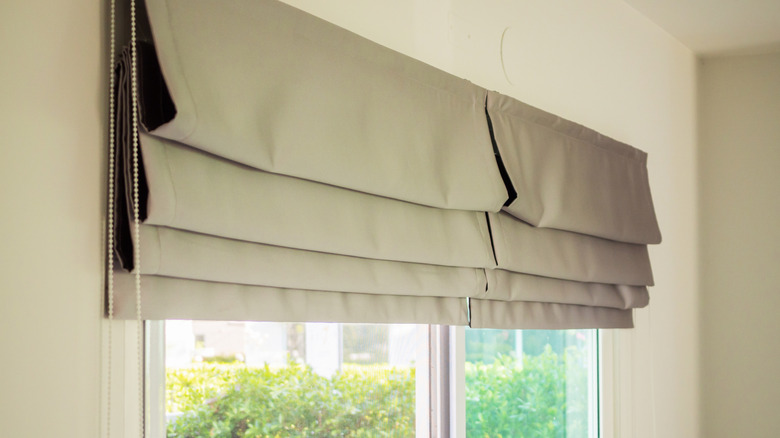
Roman shades also consist of a panel of fabric, but instead of rolling around a tube, they fold into horizontal pleats when the shade is raised. If roller shades feel too plain, Roman shades are a good alternative, combining some of the softness of drapery with the convenience of a roller shade. They look neat and tailored, with some texture, but minus the volume of curtains.
Roman shades are often made of fabric or woven wood, and they come in a few styles. Flat Roman shades lie flat when lowered. You can have a more contemporary minimalist look when they're down, but a little more pizazz when they're up. There are also styles that are textured when they're down, like pleated, relaxed, and more dramatic hobbled Roman shades, which stay in cascading folds even when they're fully closed.
While beautiful, Roman shades won't work for every home. They can be pricey, the folded fabric can be a challenge to clean, and they're bulky. When they're fully rolled up, they do have a few inches of under-hang, which can get in the way of sliding doors. To minimize this, mount them higher above the doorway. The pooled shades offer a more ornate and traditional look. Also keep in mind that, like roller shades, they only have the option to move up and down, not side-to-side. For boho rooms, bamboo Roman shades like the LazBlinds Bamboo Shades can be an appealing option. For a more classic style, consider the Custom Home Collection Roman Shades.
Bypass shutters are durable, but can partially obstruct the view out of sliding glass doors
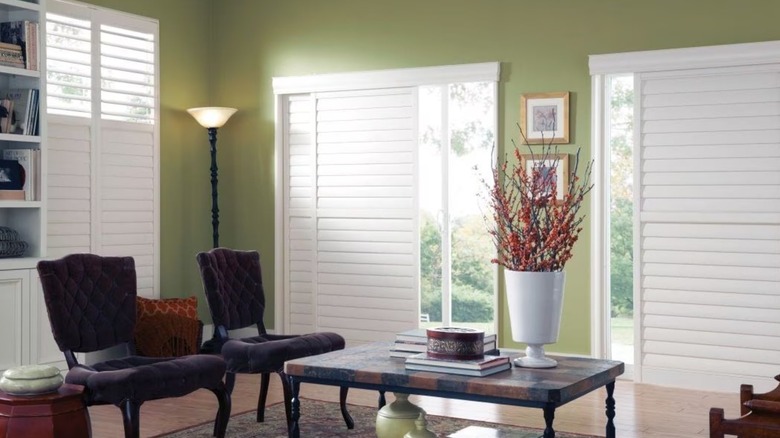
If you're in search of a more substantial covering for sliding glass doors, shutters are a great option. Bypass shutters are large shutters mounted on a track system that enables the panels to slide past one another. These most often come in the style of plantation shutters, which are made of wood, imitation wood, or composite materials and have horizontal louvers to adjust light and privacy. Depending on the track size and spacing, some require you to shut the louvers before sliding the door, while others can slide with the louvers open.
Bypass shutters are a good choice if you want durable, side-opening coverings over a glass door. The hard material is sturdy and won't rip or tear; plus, it's easy to clean. Bypass shutters with a top and bottom track are particularly sturdy when compared to bifold shutters, since they benefit from more even weight distribution.
There are a couple of downsides to installing bypass shutters, though. They tend to be more pricey and require a more involved installation process. They also take up a lot of space: Usually, they use two panels to cover a typical sliding glass door, which means you always have one of the panels covering the door. For those who want their glass sliding door to be as exposed as possible when their coverings are open, skip on this option. However, if you love the look and sturdiness of this glass door treatment, the Levolor Custom By-Pass Shutters is a great starting point for your browsing.
Bifold shutters swing open accordion-style, revealing an unobstructed view through sliding glass doors
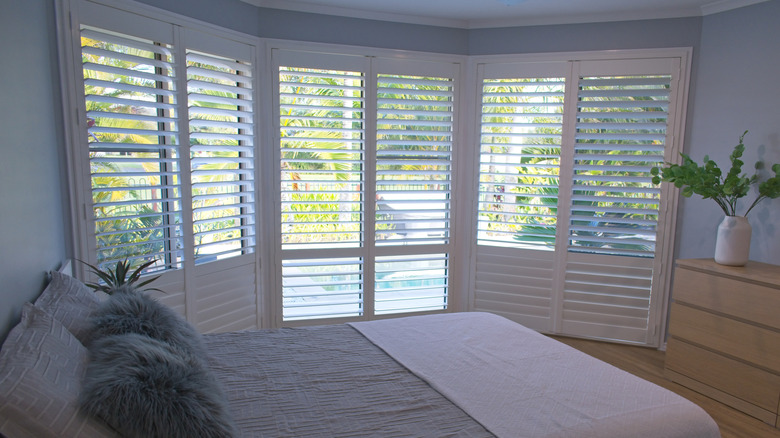
Bifold shutters look similar to bypass shutters. They're also large plantation shutters, with adjustable louvers, made of wood or composite materials. However, instead of bypassing each other on a track, they fold out accordion-style. Once opened, the panels stack on top of each other. This design makes them much more compact when they're open, letting them reveal more of the sliding glass door.
However, bifold shutters can be less durable than bypass shutters. Since they fold outwards, their weight distribution is less even, which means they can be prone to sagging. Similar to bypass shutters, they also come at a higher upfront cost and with a more complicated installation process than some of the other options on this list. As expected from a pricier window treatment, customizable options are available, like the Blindsgalore Bi-Fold Shutters, which you can size to ⅛ of an inch.
Solar shades give the option to block UV rays while letting light through
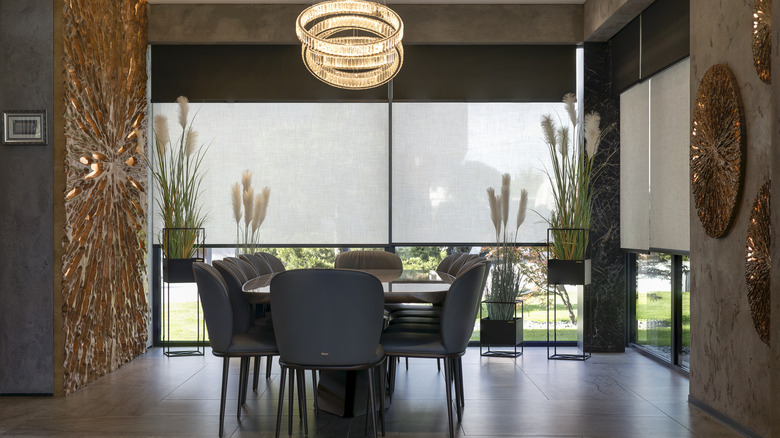
Solar shades are designed to block UV rays. The term refers to shades that block UV rays, rather than specific types of window treatments. They can come in a few of the above treatment types, most commonly roller shades, but also as sliding panel blinds, Roman shades, zebra shades, and more. Since they filter sunlight, they're great for areas that get a lot of direct sun, especially where you want to minimize UV fading or damage. However, unlike blackout products, they also maintain the brightness in the room. Solar shades come in a variety of opacity levels, ranging from almost transparent to nearly opaque. Impressively, there are shades that can block 95% of UV rays, while still being translucent enough to see through. There's a trade-off in privacy though, as outsiders can also see inside when the shades are fully closed.
For the sun lovers, these are the option to choose if you love a light-filled room, but want to filter UV rays and reduce glare. The Levolor Solar Roller Shades are a common option, available in a roller format with customizable fabric and size options. An alternative option is the Bali Solar Screen Sliding Panels if you find roller shades too plain.
Zebra shades provide flexible light control
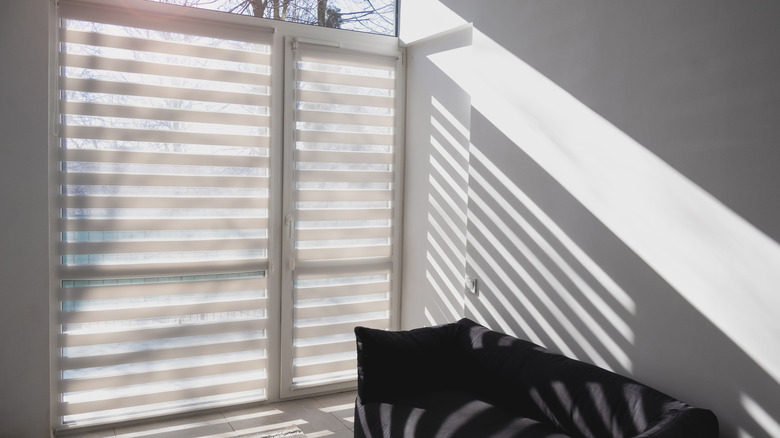
Zebra shades look similar to roller shades, but they have a distinctive striped pattern. The striped pattern comes from their construction, which consists of a panel of fabric with alternating horizontal bands of sheer and opaque material. When you adjust the blinds, the bands shift in or out of alignment, giving you the option to let in filtered light, align the bands for complete privacy, or open the shade completely for full sunlight. Not only do these shades look distinctive, but they also offer more flexibility between light filtering and privacy than regular roller shades.
Similar to roller shades, zebra shades are compact, sleek, and minimalist. The horizontal striped pattern can give them a bit more visual interest, but most users choose them because they like their flexibility. They're often rather plain in design, though you can find different colors and textures, like these marled grey ShadesU Zebra Blinds. The Persilux Custom Size Cordless Zebra Blinds have a more typical, understated design.
Window film can be decorative and offer a lot of privacy
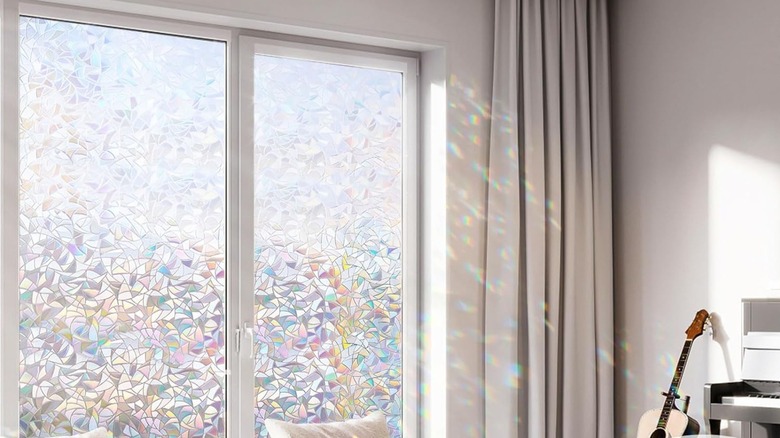
Window films are a distinctive alternative to traditional curtains for windows and glass doors. Depending on the film you choose, you can transform sliding glass doors into a work of art, filter light, and add privacy. Rather than hanging in front of the glass, they stick to the window, either with an adhesive or static cling. In terms of usage, window films are less flexible: You can't open and close them like shades and blinds. They won't come off until you decide you want to uninstall them. But if you want utmost privacy, this might be an appealing feature. Also, since they stick to the window and are very thin, they don't cause any obstruction. However, if you want coverings you can open and close, window films aren't a good choice.
Window films are affordable, easy to install, and available in a range of designs. The Rabbitgoo Window Rainbow Privacy Film is an example of a highly decorative option that also improves privacy, while the Dwersty Frosted Glass Window Privacy Film is very plain and looks like frosted glass. The Sunbaby Window Tint is an appealing choice for reducing brightness, creating a removable tint that's great for privacy and light filtering.
Motorized shades offer ultimate convenience
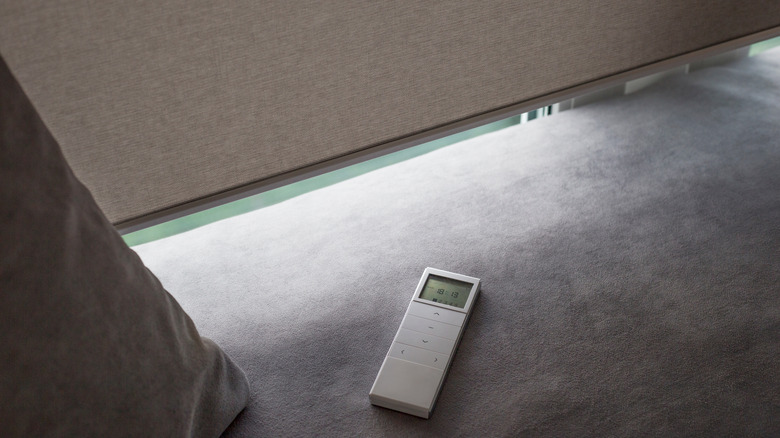
Motorized shades improve accessibility and convenience. This category covers any shades with a hardwired or battery-powered motorized system that lets you open and close the blinds using a remote, wall switch, smartphone, or voice assistant. You'll often see them as motorized roller shades, but it's also possible to find other types. Smart motorized shades are also available and these offer the benefits of smart window treatments in the home, including options like remote control and scheduling. Motorized shades are a fabulous option for sliding doors if you prioritize convenience. And, they're especially great for hard-to-reach doors since you can control them from across the room.
Motorized shades are more of a premium product, which means they tend to come at a higher cost. Also, they're more complex systems, so they might need repairs and troubleshooting that a simple curtain would never require. The Persilux Smart Motorized Blinds are an example of highly-rated motorized blinds that come in various colors and sizes.
Exterior shades can mitigate heat gain
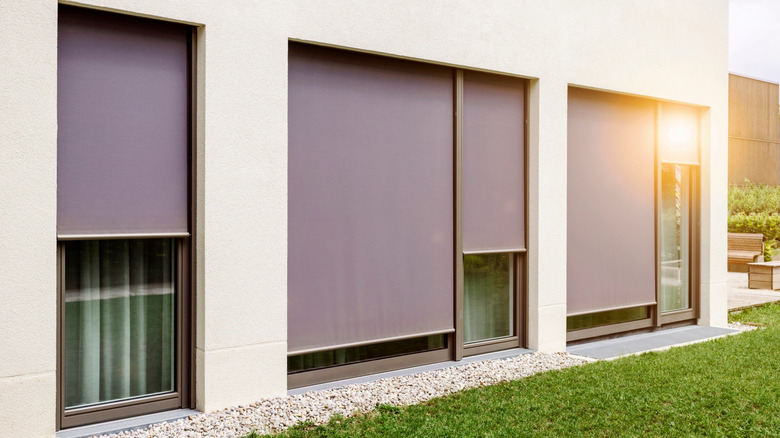
For homes that want to minimize heat loss and gain as much as possible, exterior shades are one of the best options. Exterior shades are significantly better than interior shades for reducing solar heat gain, so this is particularly appealing in hot climates. Sliding glass doors have a large surface area (often larger than windows), so they're an important place for temperature control.
The trade-off with exterior shades is convenience. Unless you get motorized shades, you won't be able to operate them easily from indoors. If you do invest in motorized exterior shades, that gets rid of this problem entirely, but manual options are much more budget-friendly. An example of a motorized option is the Keystone Fabrics Premium Motorized Outdoor Sun Shade. At around $700, it's an investment, but very convenient to use. The Coolaroo Fabric Exterior Roller Shade is a highly-rated manual option. You'll have to crank it by hand, but at around $150, it's significantly more affordable. Ultimately, the right choice will come down to your budget and preferences.