

The Luscious Hedge That Keeps Peeping Eyes Out While Growing Delicious Fruit
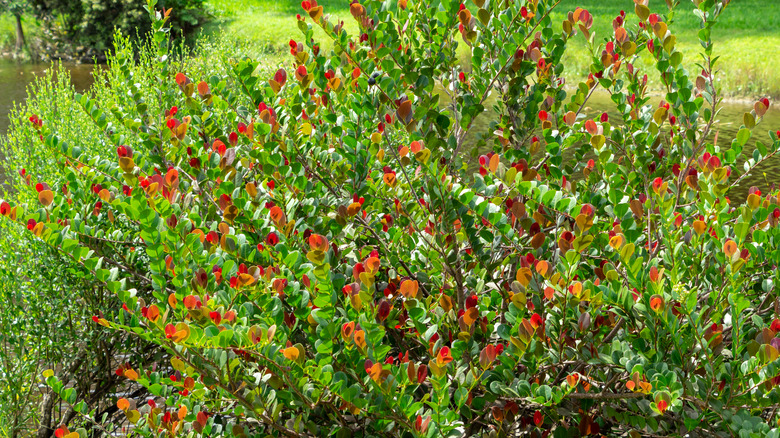
If you live in the subtropical or tropical zones of the U.S., the cocoplum (Chrysobalanus icaco) is one of the best hedges you can plant for privacy in your yard. It provides edible fruit and pollinator-friendly flowers. Best of all, plants in the cocoplum family are salt-tolerant, making them perfect for coastal dwellers.
Thriving best in yards situated between 10a and 12b, cocoplum varieties offer solutions for every homeowner. The coastal ecotype can be grown either as a ground cover or a low hedge, depending on pruning strategies. But for optimum privacy, choose the inland cocoplum ecotype, which can grow up to 25 feet, or be pruned to a standard privacy hedge height.The inland cocoplum's foliage matures into shiny, dark green leaves. The hedge itself blooms with small, waxy-white flowers in late spring. These native plants are perfect for bringing birds to your yard. The flowers also attract a range of other pollinators, including bees, butterflies, and pollinating wasp species.
Best of all, cocoplum types, including the taller, inland cocoplum, produce sweet fruits. Folks can eat them fresh when fully ripe or turn them into jams and jellies. Their almond-flavored seeds can be roasted and enjoyed. The inland cocoplum bears fruits that are a bit smaller than the coastal type. Of these, 'Red Tip' produces new foliage in reddish hues, and bears plum-purple fruits. The 'Green Tip' cocoplum's new foliage is greenish, with the fruit appearing in shades of white or light purple.
Careful planning a little patience will yield the densest plummy hedge
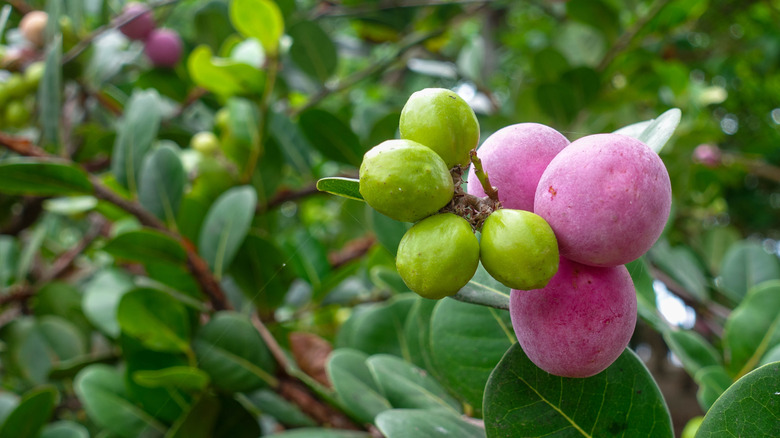
Look for young shrubs that have been grown from cuttings rather than seed, for the best guarantee that they will grow true to their mother plants. After making sure you've chosen the variety that will work best for your yard, site your future cocoplum hedge in either full sun or light shade. If the area is prone to chilly winds in the spring, you may need to provide fabric protection. This precaution will protect the emerging growth, especially when the cocoplum plants are young.
For optimum privacy and a uniform look, space the plants about between 36 and 50 inches apart. Before putting the plants in the ground, make sure the roots haven't encircled the pot, requiring root pruning before going into their planting holes. Remove any extra-long roots, which are prone to rot once planted.
Mature plants are drought-tolerant, but it's best to keep the young shrubs well-watered in the first year. Because these plants are known to thrive in the wild, it shouldn't be surprising that they don't need much in terms of fertilizer or spraying. After a year or two, maintain a schedule of pruning two or three times a year. Most inland cocoplum hedges are maintained at a height of between 4 to 8 feet. Regular trimmings help you maintain the height, density, and shape you want for your privacy cocoplum hedge.