

The Ground Cover That Thrives In Poor Soil Conditions While Attracting Pollinators
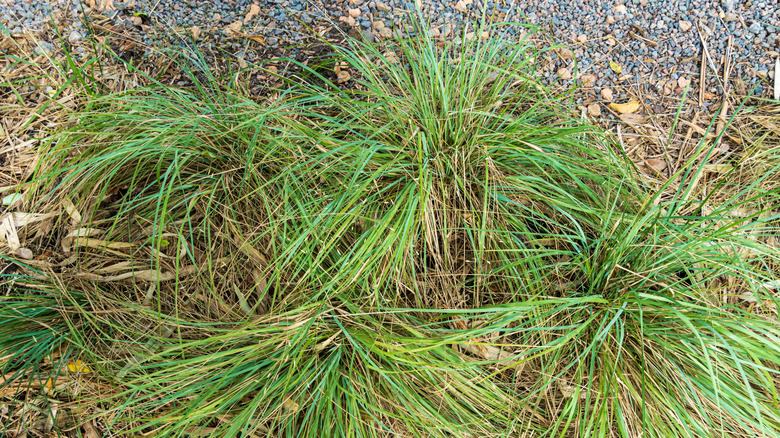
Southeastern gardeners looking to create a naturalistic landscape filled with native plants that are also multitaskers can't go wrong with this clumping perennial ground cover. It grows about 2 to 3 feet tall and thrives in challenging, nutrient-poor areas, including sandy and moist soils. The plant is a host for butterfly larvae — specifically those of the Zabulon skipper. In fact, there are only a few plants, including Elliott's lovegrass (Eragrostis elliottii), on which this butterfly species lays eggs and the larvae feed. That makes establishing this native perennial in your garden even more important.
The bushy plant provides year-round interest in USDA Hardiness Zones 8 to 10 gardens. It boasts arching blue-green leaves in the warmer months. Then, in fall, it is covered with tan or gray flowers that look particularly pretty on dewy mornings. The naturally graceful shape of Elliott's lovegrass makes it a versatile plant in garden design. Plant a few clumps at the border of a cultivated lawn to lend a touch of wildness to your backyard. Use it as a specimen plant in a mixed ornamental bed, or grow this billowy foundation plant in groups to get your garden started. Looking for an eco-friendly grass alternative that's a friendly option for your lawn? Elliott's lovegrass is ideal.
The grassy plumes and the cool-weather flowers of Elliott's lovegrass are a boon for far more wildlife than just the Zabulon skipper butterfly. Songbirds and other small critters rely on the long blades for protection from predators. The seeds are an important food source for birds and invertebrates.
Elliott's lovegrass needs little care, but location is important
Elliott's lovegrass does so well in tough conditions throughout the Southeast — like rocky areas with low-nutrient soils — that it's tempting to think it will survive anywhere. Yet, although this perennial grass tolerates damp soil and even occasional flooding, it won't survive long in permanently boggy soil. Likewise, it doesn't like to be watered often — even a few times a week is too much. This makes it a poor choice for a heavily irrigated lawn or garden bed.
Other than those few considerations, Elliott's lovegrass is a low-maintenance ground cover you'll adore for its little care. It can be planted in the garden during the growing season. Situate it anywhere it sees full sun or light shade. Slopes are ideal because this native grass helps control erosion. Additionally, the raised vantage point allows you to best enjoy the flowers when they glisten in the sunlight. If you have a choice of soil conditions, a location with sandy, well-draining soil is ideal. If possible, protect this lovegrass species from salt. In the first couple of weeks, water your plants regularly as they get established. After that, Elliott's lovegrass is fine with normal rainfall and will even tolerate drought.
Whether you want more clumps of Elliott's lovegrass around your property or simply want to thin out an existing patch, everything you need to know about dividing this perennial grass can be summed up in one piece of advice: do it in winter when the plant is dormant. Giving Elliott's lovegrass an annual haircut is a must, too. It encourages bushier growth. In this case, wait until the end of the dormant period, just before spring growth starts up, to get out your shears. Then prune the plant down to a few inches above the ground.