

The Kitchen Essential That Can Fertilize Your Tomatoes In A Pinch
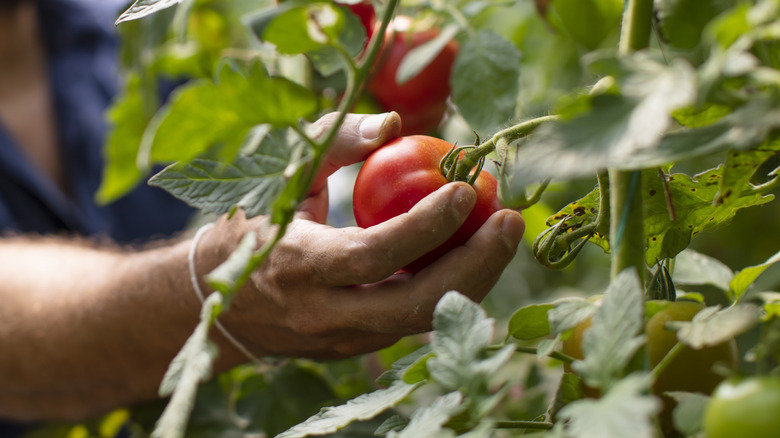
There are few things nicer than a freshly picked tomato off a vine in your garden. From tiny cherry tomatoes to huge beefsteaks, a homegrown tomato will be bursting with flavor that you just won't find from grocery store alternatives. If you're looking for tips for growing the best tomatoes in your garden, a quick internet search will give you a variety of interesting and potentially unusual ideas. One idea that seems to come up time and time again is the use of molasses in the soil.
Are there any potential benefits in adding molasses to your garden, and, in particular, will it have a positive effect on your tomato growth? If various social media accounts are to be believed, adding molasses to your soil is all you need to do to ensure a bountiful tomato crop. There is evidence that unsulfured blackstrap molasses can help the microbes in your soil, thanks to the array of minerals it contains, which could, in turn, help your tomatoes grow. But is it the best choice for your tomatoes, and is it really the miracle product that some claim it to be? Or, are there better alternatives that are both more effective and also cost less?
Is molasses a game changer for your tomatoes?
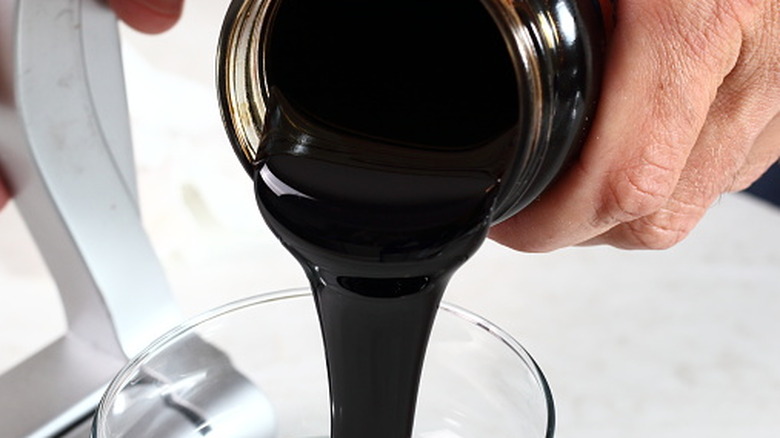
Molasses is, without a doubt, one of the DIY tomato fertilizers that will help your plants thrive. But what it's actually doing is feeding the soil microbes, which will, in turn, help your plants to thrive by improving soil health over time. Thriving soil microbes are crucial to any plant growth, as it means the plants can more easily access nutrients, which, of course, helps them to be both stronger and, in the case of edible plants such as tomatoes, more tasty.
However, there's no getting away from the fact that molasses isn't cost-effective if you have to go out and buy it, as Frank Hyman, garden designer and author, explained to Martha Stewart. "Technically, molasses will help [tomatoes] grow, but the high cost simply doesn't justify it. Think about it: molasses is just made from other plants, and organic fertilizers are often made from plants and animals. Molasses isn't a silver bullet. And there isn't anything magical about it."
The cost of buying enough molasses to feed your soil means that organic fertilizers will work out far cheaper and are a better option if you're starting out from scratch. However, if you have some molasses lying around the house that needs using up, it's certainly worth adding to the soil. You'll only need a single tablespoon of molasses per gallon of water, but you will need to use this around the base of your tomato plants every three to four weeks to see any improvement in your plants.