

The Stunning Perennial With Leaves That Make An Eco-Friendly Garden String Alternative
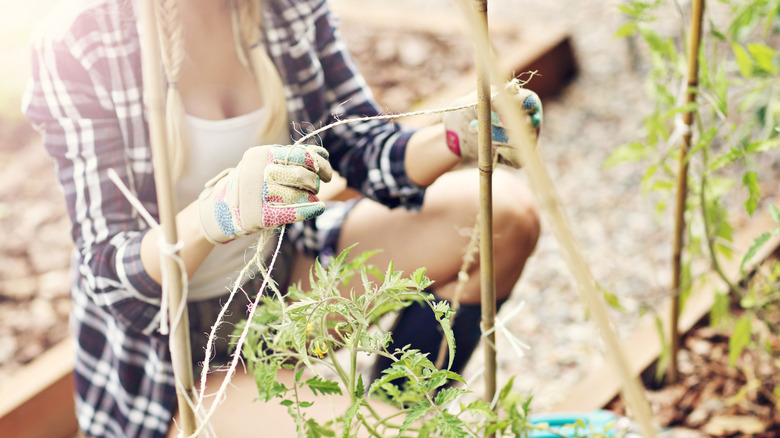
If you're obsessed with those tall or vining plants that add dramatic flair to the vertical space of your garden, then you're likely familiar with twine — that unsung hero of gardening that gives your plants the support they need while resisting mold-causing moisture. There are even ways to repurpose twine around your home, making it a versatile tool that many gardeners prefer to keep on hand. However, if you find yourself in a constant shortage, growing this stunning perennial offers an eco-friendly alternative, all while adding color and attracting hummingbirds.
Native to New Zealand, harakeke, or New Zealand flax (Phormium tenax) is a flowering, evergreen perennial that shows off brilliant red tubular flowers that hummingbirds adore. As a result, it fits in easily when you're starting a pollinator garden or trying to add color to your outdoor spaces. However, for all its beauty, New Zealand flax is also a functional plant — and a significant part of Māori culture. While used as a food and a medicinal source, the leaves of the New Zealand flax are also used to make ropes, clothing, and twine. As a result, growing New Zealand flax in your own yard provides a handy back-up source for garden twine.
To use New Zealand flax as twine, you'll need to process the fibers first, which involves removing the leaves' outer skin and soaking the interior fibers. However, before you get to making your own string from the plant, note that New Zealand flax is not easy to grow, and you'll need to provide it with the ideal conditions.
New Zealand flax is picky about its growing conditions
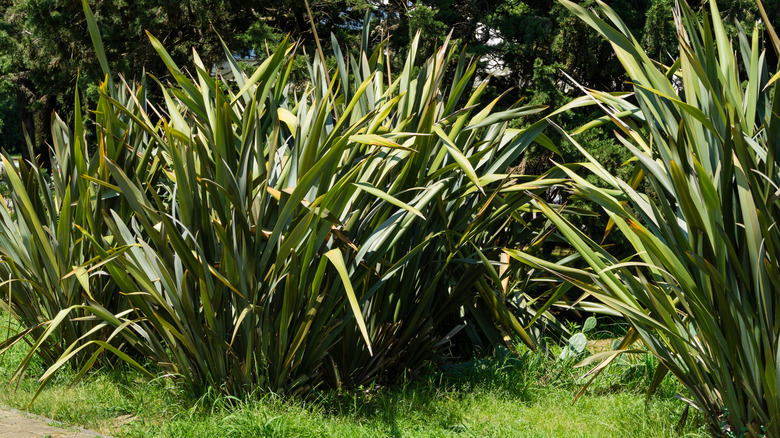
If you want to use the fiber from your New Zealand flax as garden twine, the key is to grow healthy, strong leaves. Even if you choose to grow the plant for ornamental purposes, these large and often colorful leaves work as a showstopper in your garden, adding unique visual appeal from elements aside from blooms alone. First, to take advantage of this plant's perennial growth, note that you'd need to live in the right USDA growing zone. Because it's adapted to the warmer conditions of New Zealand, this plant is only winter hardy in zones 9 through 11. This means that if you're located in the central or northern United States, you may instead need to grow New Zealand flax as an annual or overwinter it indoors in a container.
This slow-growing plant needs acidic, well-draining soil to thrive. Also, the plant grows best when located in a spot with full sun. That said, in warmer climates, or if you choose a variety that has variegated foliage, partial shade may be best to protect it from severe heat or sun damage. Fortunately, these plants don't require excessive amounts of water, and because they tolerate poor soil conditions, fertilizing is more of an annual affair than a regular part of care.
Snails, mealybugs, and scale may harm New Zealand flax. If you find that the plant's leaves have turned yellow or become discolored, the condition may be caused a bacterial or fungal infection. The leaves won't be strong enough to use as twine, and the affected plants should be destroyed to keep the infection from spreading.