

14 Landscaping Trends That Will Make Your Home And Yard Look Outdated In 2026
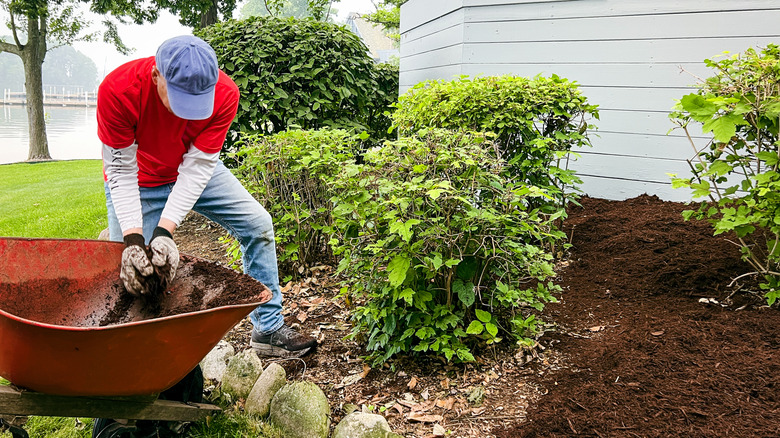
What's hot and what's not in landscaping in 2026? Plantings, hardscapes, and other elements fall in and out of favor, just like interior decor. It's still worth landscaping your yard, though — well-designed landscaping could provide a 10% to 30% increase in your home's value. Part of executing your landscaping is knowing what's no longer trending, so you can avoid it. From there, you can choose the best landscaping projects to boost home value with a modern look.
To find out what makes a yard look outdated, we conducted exclusive interviews with builders, landscape designers, and real estate experts to get their take on what you should leave behind. Some common threads were monotony, perfection, and overly artificial elements. Don't feel embarrassed if your landscaping has some of these features — after all, they were trending at one time. It's just a sign that it might be time for a fresh change. We're here to help with the 14 outdated features you should look out for.
Gravel everywhere
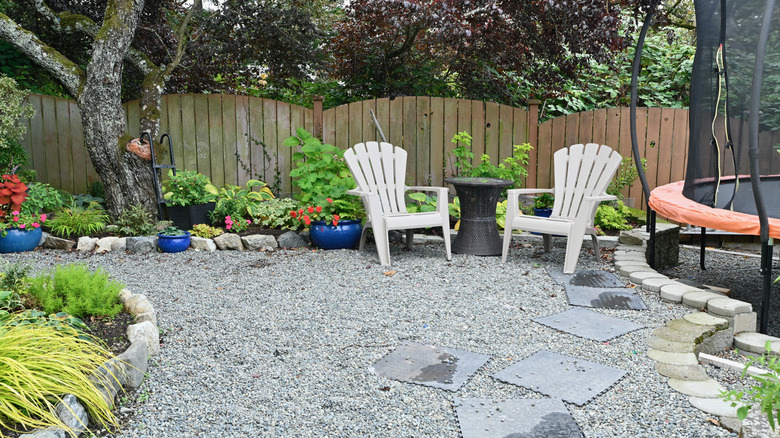
People choose gravel for landscaping to minimize water usage, reduce maintenance, and resolve drainage issues. In hot areas with little rain, it's an effective alternative to grass, but it's not doing your curb appeal any favors in 2026. We talked exclusively to Andrey Likhman, owner and principal of Vandeck Builders, who says, "I get the appeal. It's affordable, low-maintenance, and fits the minimalist vibe that's been trending for years. But when gravel becomes the default for every surface, it starts to feel cold and repetitive. I'm seeing more homeowners ask how to 'soften up' their yards after going all in on gravel." Removing a yard full of gravel is no easy task — it requires a lot of manual work — but reclaiming part of your yard makes it more inviting.
Likhman suggests, "I'm leaning into mixed-material hardscapes, combining composite decking with oversized pavers, or integrating natural stone with groundcover between joints. It adds contrast and a more thoughtful look." That might mean building a new deck to cover gravel when adding outdoor entertaining space or replacing gravel with larger natural stones to upgrade the aesthetic. If you chose gravel for a Mediterranean aesthetic, consider adding raised beds with Mediterranean plants, terracotta planters, and string lights.
Monochrome, ultra-minimalist hardscaping
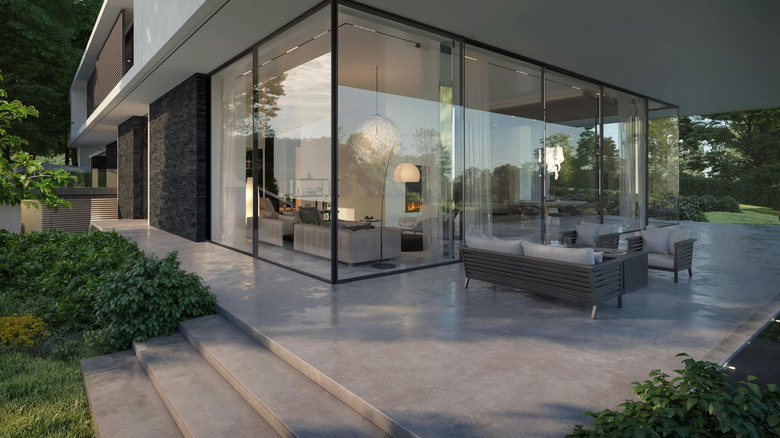
A minimalist landscape creates a simple, tranquil outdoor space, but go overboard and you're at risk of creating a lifeless, boring look that brings down your curb appeal. Likhman says, "The all gray, concrete heavy look with flat planters and straight line everything is starting to feel tired. It photographs well, but in person, it lacks character." Too many black accents and finishes in a landscaping design can have that same effect, creating a stark, cold, unwelcoming look.
Likhman notes, "I'm seeing a shift toward warm and natural textures. Think wood finishes, neutral tone pavers, and soft plantings that create a sense of comfort." Lean into warm, raw wood finishes, like cedar or teak. Limewashing can freshen up large swaths of concrete or other hard surfaces. When it comes to materials, rattan furniture pulls in earthy tones and is a naturally textured material. Add wood furniture to balance the rattan, and round it out with metal or ceramic planters. Hues like beige, terracotta, navy, and dark green can create appealing contrast and warmth.
Pallet furniture
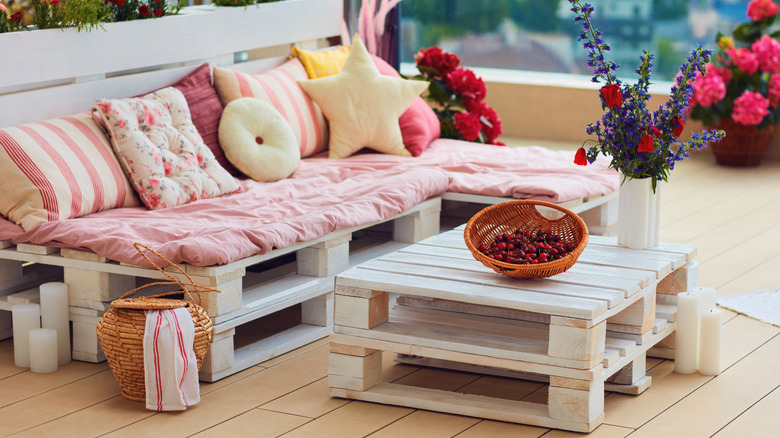
While old pallets are often affordable, making patio furniture from them may not be the best choice. All those affordable DIY wood pallet furniture ideas you can make and customize may not create a trendy outdoor space. According to Likhman, "The rustic DIY vibe had its moment, but by now it just looks dated and often falls apart within a season or two." Pallet wood typically doesn't hold up well outdoors without waterproofing. Plus, pallet wood can be dangerous if you don't source it properly. Some pallets are treated with methyl bromide and marked with "MB" — ditch furniture with that type of wood, as the chemical treatment is toxic.
Wondering how to choose patio furniture with a more refined look? Likhman tells us, "Instead, we're building a lot more custom cedar planters, floating benches, and integrated wood elements that feel intentional and architectural. Still warm, but way more polished." Western red cedar is a common option, but redwood and cypress are also good wood species for outdoor projects that hold up to the elements. Other ways to include wood include pergolas, planters, swings, and privacy walls.
Flat yards
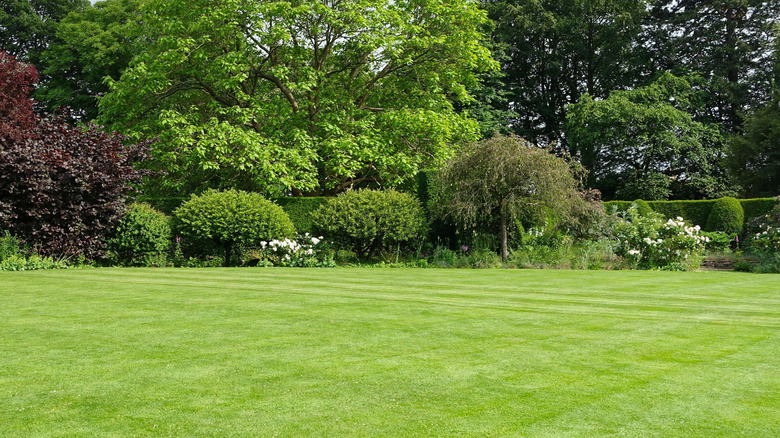
With a perfectly flat lawn, you reduce dangerous mowing situations and severe erosion threats. But a level property can fall flat visually. In an exclusive interview, Sara Bendrick, landscape contractor and designer at Sarita Landscapes, explains that while level yards can offer functional benefits, "outside the main gathering space, slopes and elevation changes can be great design opportunities and make the space feel unique or dynamic." Plus, if your lawn lacks at least a little bit of a grade, you could have pooling water and drainage issues. In short, level land (with the appropriate grade for drainage) is smart where you want to build a patio, pool, pet enclosure, or backyard playground. But having some height variety in other areas can enhance the visual appeal.
Bendrick suggests, "Instead of making everything one level, think about how you might be able to grade your yard in two to three levels if you have the space." Raised beds filled with flowers, shrubs, or small trees are one way to add height strategically in your yard without completely regrading. Consider building a raised deck and seating space — it can even be a freestanding structure away from your house. Or, build a tall stacked stone wall around a patio in your yard. Mounds of landscaped dirt, called berms, offer a softer way to create elevation changes where you can also plant flowers or greenery.
Afterthought garden beds
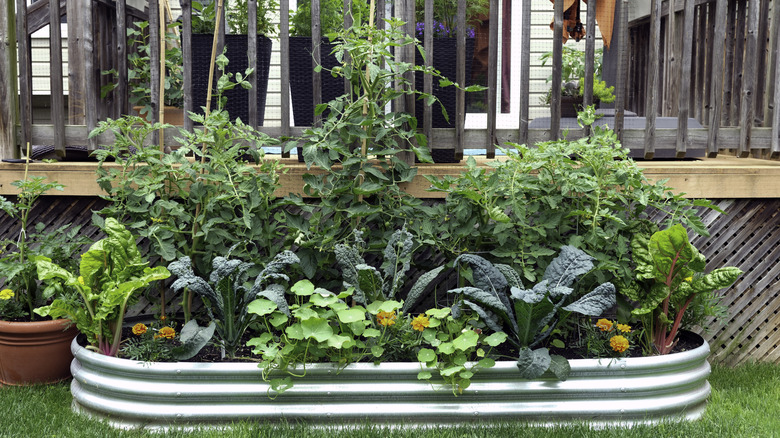
It's tempting to jump right into gardening projects without fully planning them out. You grab your raised planter, plop it down, and start growing. But that can lead to a chaotic look and interrupt the flow of your yard. Bendrick explains that "while growing your own food at home is never going to go out of style and continues to trend, poorly placed prefab or poorly built gardens beds placed haphazardly on patios or crammed into other spaces is not the look."
Bendrick's solution? She says that thoughtfully planned and constructed raised beds that have a feeling of permanency that can add a really elevated touch — enhancing both the design and functionality of a yard at the same time. Wood offers a natural look that can blend into the landscape well. Choose cedar for a longer-lasting hardwood option. If you already have bricks or pavers in your landscaping, consider using them to build a planter. Locate the planters where they'll receive adequate sunlight and protection from the wind. Spacing multiple planters at least 2 to 3 feet apart allows for easy access, and building a stylish paver walkway between them can create a planned, built-in look.
Perfectly matching everything
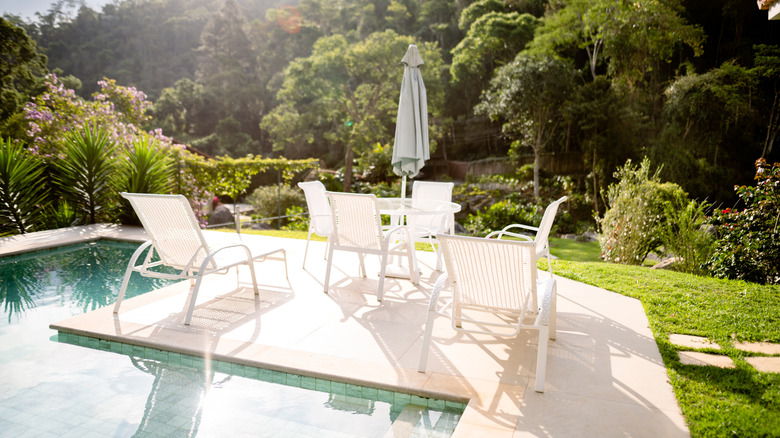
Matching sets are the once-popular furniture trend that's making your outdoor space look dated. Sure, they offer an easy option for outfitting your patio, but they lack creativity and personality. It can make your space look too generic, like every other person's patio who also bought that set. Bendrick tells us, "With many things being mass-produced now ... buying matching furniture sets with tables, chairs, storage, benches, etc. can bring uniformity, however, it might look like overkill in the yard and feel like a lack of imagination is dominating the space."
Suggesting alternatives, Bendrick says, "Opt to buy a few matching things and partner or pair things together so you feel like you were curating your yard versus what was on sale at the big box store." Mix and match different furniture details, including the main material — wicker and aluminum pieces work well together, for example. Just don't choose more than three different finishes. For outdoor dining areas, consider choosing a few different seating options, like a bench on one side, arm chairs on the ends, and armless chairs on the opposite long side. A cohesive overall style with some unifying features, like the color palette or textures, helps the different pieces work well together.
Red, orange, brown, and yellow flagstone designs paired with palms
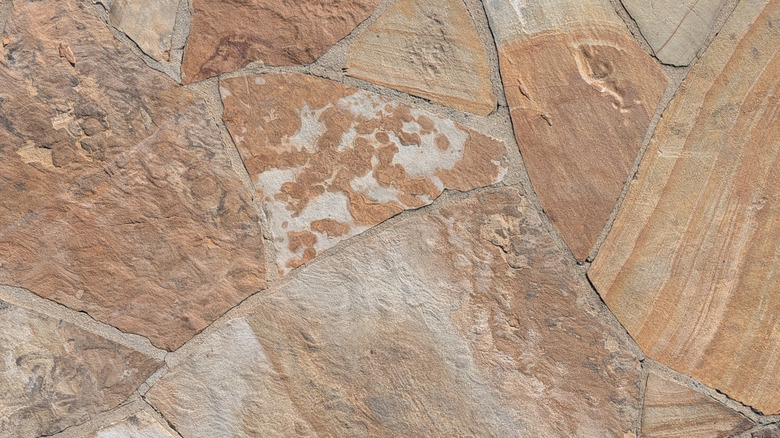
Just when you thought flagstone was a timeless choice, Brad Holley, owner of The UnDesign, makes you think twice. In an exclusive interview with House Digest, he shares what's outdated: "That earthy mixture of red, orange, brown, and yellow flagstone, coupled with copious amounts of non-native palms that will almost certainly die in the inevitable annual freeze without a great deal of care, protection or money to throw at them." The flagstone hues Holley mentions scream outdated, especially when flanked with palms. If the palms are struggling, it could be time to swap them for a more suitable option based on your growing zone.
Holley continues, "To be clear: I'm not against flagstone, and I don't hate palm trees. I'm just saying that any time I see this combination, I know without a doubt that I'm looking at a time capsule from 1998. Every style has a place and a purpose, and to each their own. But if you're still incorporating this in the year 2026, you've no doubt missed out on more than two decades of more compelling landscape design trends." Fortunately, there are several types of flagstones, so you can select hues that work for your style. If you live in a modern-style home, consider neutral options, like bluestone, silver-gray, or charcoal. To create a luxury look, try white limestone or ivory.
An overload of solar lights
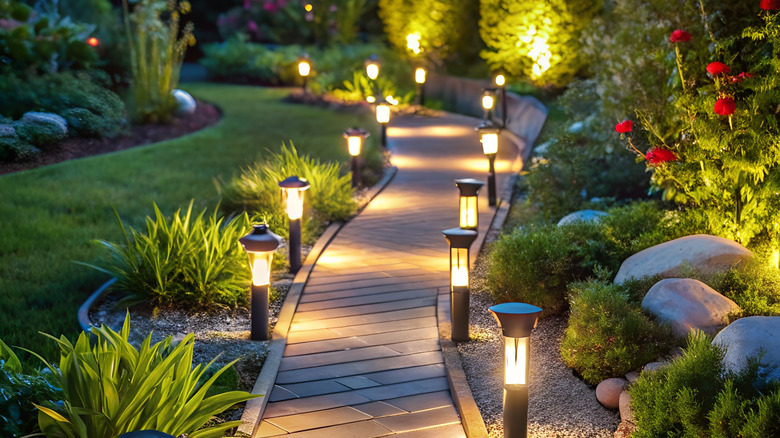
Landscape lighting accents features and improves curb appeal, but it's best in moderation, with a purpose for each bulb. A negative example is excessive solar lights lining driveways, according to Crystal Olenbush, real estate expert at AustinRealEstate.com. She tells House Digest in an exclusive interview, "A few lights can look fine, but too many can take away from the look of an upscale home. The trend became popular because solar lights are easy to install and look impressive at night. However, that same simplicity is what makes it feel generic, like something any house can copy in an afternoon." She also notes it looks cluttered during the day. Too many lights can feel confusing — you're not sure where to look. You also create light pollution, which can impact local wildlife.
Olenbush suggests, "Instead of a runway effect, a better option is layered lighting. Use light to strategically highlight a beautiful tree near the driveway or a wall that adds character. Luxury homes read better with a calm ambient glow and a few well-placed fixtures that create clear focal points." She encourages "soft, intentional light" at night from fixtures that aren't noticeable during the day. How much light depends on your landscaping and property size, but a general guideline is one light every 6 to 8 feet for walkways, and four to eight uplights for facade illumination.
Topiary and overly trimmed shrubs
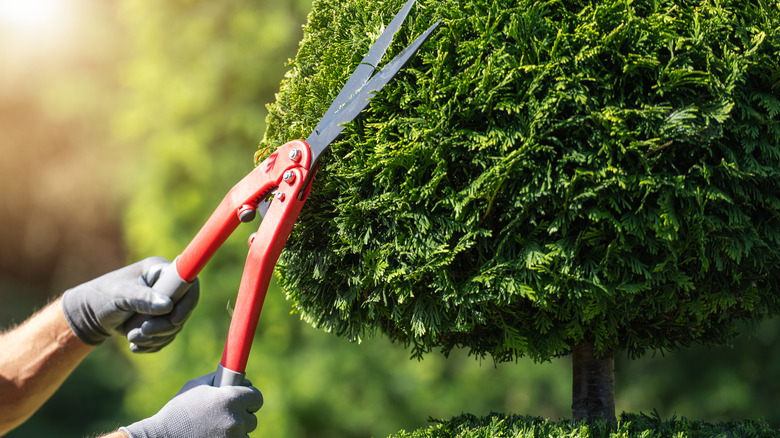
Traditionally, topiaries were a status symbol. Nowadays, they can read a little fussy and outdated. There's a reason blobbery bushes are replacing topiary in laid-back garden design. Olenbush says, "Perfection is something we all strive for, but sometimes it can feel too predictable or even a little boring. Perfect shapes in landscaping, like tightly trimmed hedges and sculpted shrubs, once signaled a polished home. Today, buyers often see it as trying too hard." And they might also see it as a lot of work to maintain a precise shape.
You might not want to eliminate hedges completely, since they provide a living privacy screen and a habitat for wildlife. Olenbush shares that buyers "still want a neat and impressive outdoor space, but they do not want it to look overdesigned. They want character, with uneven and unexpected details that reflect the 'perfect imperfections' of nature. That is why the better approach is a more relaxed look with texture and softer lines, so it feels real and less perfectly staged." For informal hedges, try camellia, viburnum, California lilac, and bay laurel. Give preference to native plants that will thrive with little maintenance. Layering plants with low ground covers, tall grasses or shrubs for structure, and colorful blooms in the middle, helps create a natural, yet polished, look in your landscape.
Artificial turf
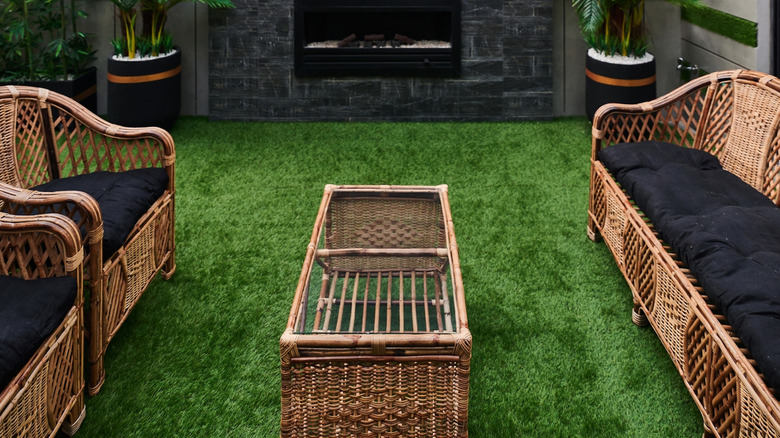
There are plenty of hidden downsides to artificial turf. According to Olenbush, artificial turf was considered modern and neat, especially in courtyards or around pools, because you always have a perfect-looking lawn with less maintenance. But artificial grass isn't a top pick, particularly in areas with direct sunlight. Olenbrush explains, "It can become very hot, especially around pools where people walk barefoot." She adds that "the edges can lift or wear down, which gives a dated and slightly careless look. Homeowners have also become more sensitive to materials that look artificial, especially in high-end homes where authenticity and texture matter." Synthetic turf also isn't completely maintenance-free, since you have to clean and rake it. And even though some artificial turf looks more realistic, it's still not as soft as the real thing.
Olenbush tells us, "Instead of artificial turf, designers now use natural stone, textured pavers, or clean architectural tiles in accent areas. These materials still look neat and controlled, but they feel more refined and age with more character." Well-installed hardscaping can even mitigate the waterlogging, odors, and algae growth that occur with improperly installed artificial turf. You also have more design options with stones, pavers, or tiles — create unique patterns and layouts or mix smaller rocks between larger stones.
Striped lawns
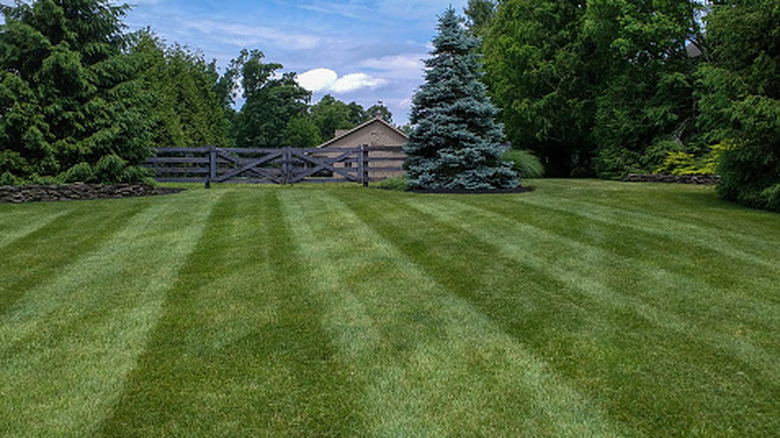
If you stripe your lawn, it might be time to give up that tidy approach. In an exclusive interview with House Digest, Realtor and Owner Greg Dallaire of Dallaire Realty notes, "Perfect striped lawns once looked polished and expensive. Today, buyers think more about water use, chemicals, and long-term maintenance. A lawn that looks too perfect can start to feel artificial and dated. It can also make the whole yard feel a little too stiff." Stripes are an aesthetic choice and not necessary for lawn health. While striping can help the grass grow in an upright pattern, going over the sections repeatedly to get perfect stripes could flatten grass and compact soil.
Dallaire says, "A softer, more natural lawn usually feels more current and more in tune with the house." If you have warm-season grass varieties, striping probably won't show up as much, so it might not be worth the effort. With or without stripes, change the paths you take and the direction you mow each time to avoid encouraging the grass to grow horizontally or creating ruts.
Oversized features that dominate the yard, like big retaining walls
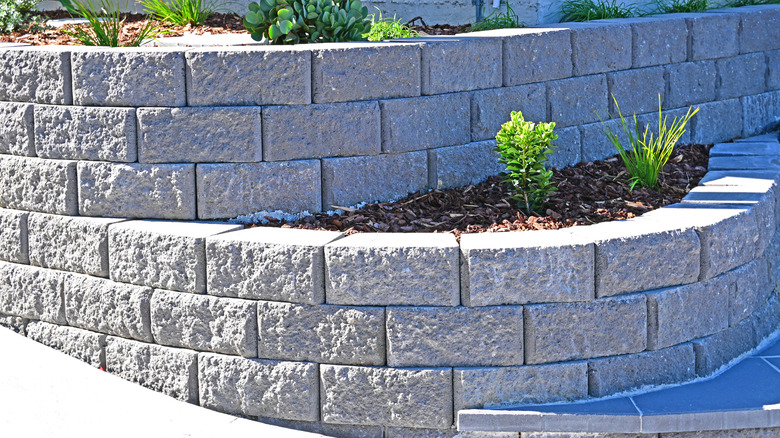
Balance and proportion in your landscape design is crucial. Dallaire says, "One thing that can really throw off a front yard is a large retaining wall. If the first thing you notice is a big wall instead of the house, the whole front yard feels off." The same is true of any overwhelming landscaping. A few massive, overgrown bushes can draw all of the attention and throw off the visual weight of the home, for example. You need balance to create a harmonious look, without one overpowering element.
According to Dallaire, "Landscaping should frame the home, not compete with it. The house should still be the focal point. When the wall takes over, the front yard can start to feel heavy and overbuilt." What's "too big" for one home could be just right for another, because proportions matter — a tiny little landscape feature will be swallowed up next to a larger home. What you use for retaining walls also affects the overall aesthetic. Natural-looking designs are the retaining wall trend you won't see in 2026, because the walls blend in.
Rows of boxwoods
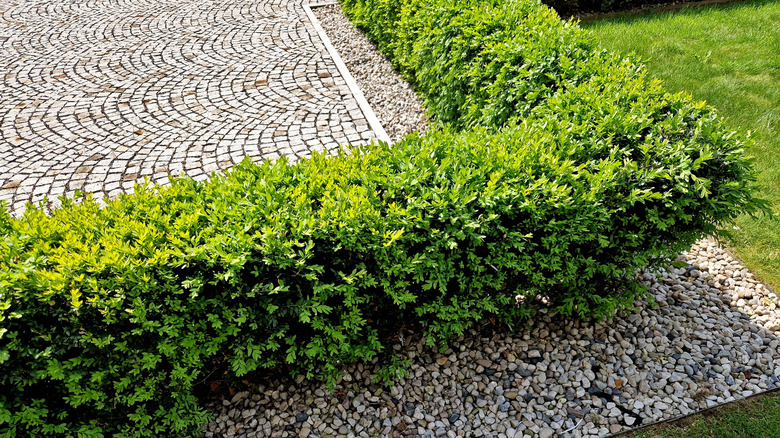
Boxwood grows effectively in different climates and takes well to heavy shaping via pruning. Because it's easy to grow and requires little maintenance, boxwood became a classic. But it's no longer a fashionable choice. Dallaire tells us, "Small boxwood shrubs planted in rows along every walkway were popular in the past. Today, they can look plain and repetitive. When everything looks the same, the yard loses character. It starts to feel flat and a little too rigid." There's also the risk of boxwood blight, which is a fungus that spreads easily and kills shrubs.
Dallaire says, "Buyers usually respond better to a landscape that has more variation, texture, and softness." There are plenty of other landscaping ideas for using boxwood plants for backyard privacy that don't involve rows of perfectly manicured hedges. Or, ditch the boxwoods completely in favor of azaleas, Japanese plum yew, or northern bayberry. Whatever you choose, incorporate it organically with other species to add variety.
Overly bright mulch
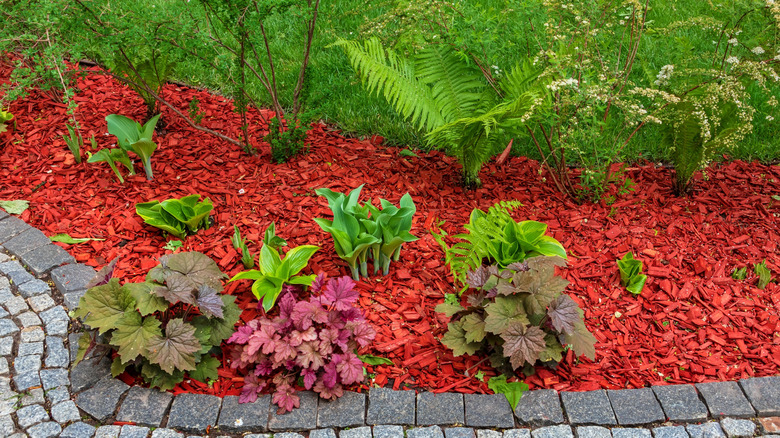
Mulching reduces weed growth and holds moisture for your plants. It also makes your landscape beds look consistent. That's why the type of mulch you choose is important. For example, red is the one color of mulch that's making your yard look outdated. Dallaire agrees, sharing, "I think bright red mulch and overly bright green grass can make an otherwise beautiful yard look dated. These colors are not commonly found in nature, so they can feel disconnected from the rest of the landscape." He notes that the harsh colors can become overpowering.
Dallaire continues, "Softer, more natural tones are what make a yard feel current and well designed. They also help the house feel more refined and more timeless. Instead of bright red mulch, wood tones, stone, and quieter finishes create a more grounded look. This kind of yard feels calmer, softer, and easier on the eye. It also ages much better over time." Light or dark brown mulch are good alternatives for a subtle appearance. Pea gravel and pumice stone are alternatives, if you prefer the look of rock.