

Ground Cover Companions That Won't Take Over Your Perennial Garden
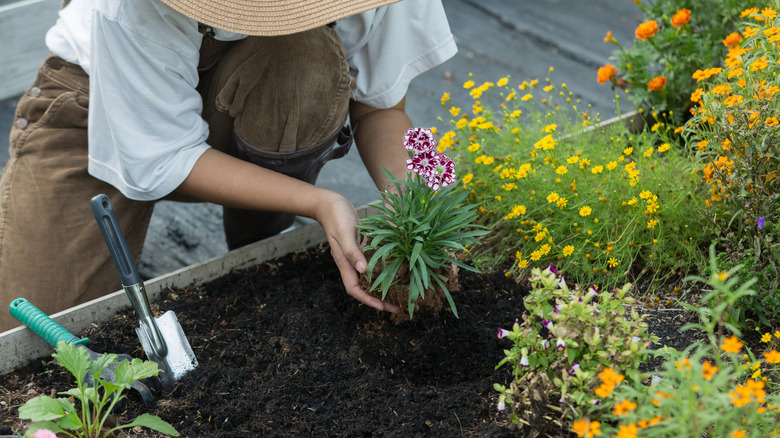
Ground covers are a brilliant way to suppress weeds and add more color and diversity to your yard. However, when you are looking to bring ground covers to your perennial garden, it is a bit of a balancing act. You want the ground cover to do its job and cover those empty spots in your garden bed, but you don't want it to take nutrients and space away from your beloved perennials. A lot of ground covers used are extremely fast growing, with some, such as periwinkle (Vinca minor), considered invasive in certain parts of the U.S. This means that they can really become a problem in a perennial garden. Thankfully, there are a few great ground cover options that work with your current perennials and not against them, such as creeping thyme (Thymus praecox), coral bells (Heuchera), and dwarf tickseed (Coreopsis auriculata 'Nana').
When picking ground cover companions that won't take over your perennials, it is helpful to opt for plants that have a slow or medium growth rate. This means that they will take their time to spread in your yard and won't become unmanageable too quickly. It may also be helpful to consider root compatibility in your garden to help avoid competition when companion planting. If your garden has many deep-rooted perennials, opting for ground cover with shallow roots benefits both the plants and soil health. You may also want to have a think about the aesthetics of your perennial garden and what ground covers may fit in. There are some gorgeous ground covers that bloom multiple times a year, and it may be helpful to opt for those that flower at different times from your perennials, as this will create visual interest throughout the seasons.
The best ground cover companions for a shady garden
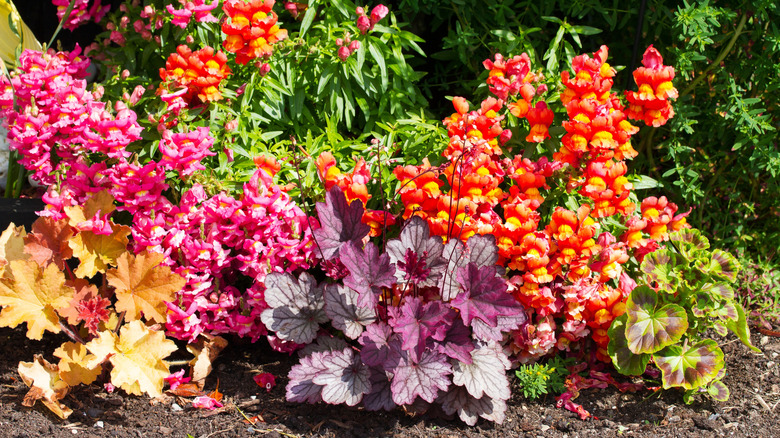
If you are looking for a tidy, manageable ground cover to add to your shady garden bed, consider coral bells. There are loads of varieties of coral bells you can grow in your garden, with some preferring sun and others preferring shade, so have a look at which ones may suit your space. These plants make a really pretty ground cover, with coral bells having beautiful foliage color in hues of purple, orange, red, and pink. Unlike other popular ground covers, coral bells don't spread rapidly through runners. Instead, they are clumping plants that grow in compact tufts at a medium rate.
Coral bells are suitable for growing in USDA Hardiness Zones 3 to 9 and do best in moist soils that have been amended with organic matter. They can be tolerant of drought, but it is best to water them deeply during dry, long summers. Apart from that, coral bells are fairly low-maintenance and pest free. It is useful to divide your coral bells every three or four years to keep them happy and healthy, and mulch over them in winter to protect them.
The best ground cover companions for a sunny garden
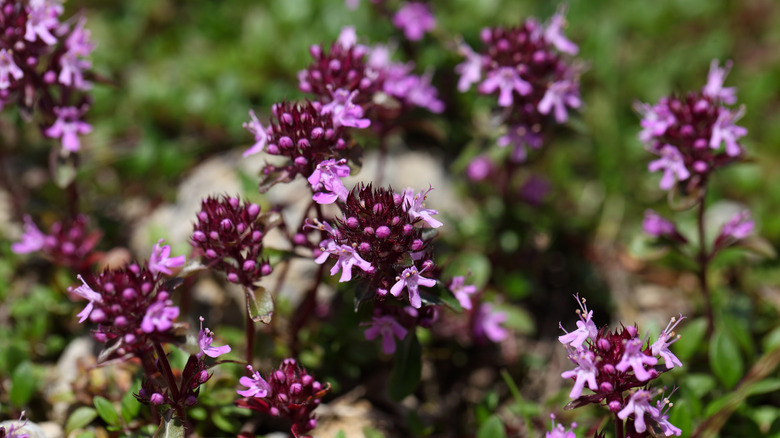
If you have a sunny perennial garden bed, consider using creeping thyme or dwarf tickseed for companion ground cover. Creeping thyme spreads out, taking root across the garden bed to create a thick bed of foliage. However, with a medium growth rate, it doesn't usually overwhelm a garden. Suitable for zones 4 to 8, creeping thyme is a low-maintenance ground cover that doesn't need much attention over the seasons. Still, it is helpful to cut it back every so often to control its spread. Small, purple flowers will appear on the foliage in June and July to add some color to your garden.
Dwarf tickseed is another beautiful ground cover that is suitable for sunny gardens. It is a native plant that can be grown in zones 4 to 9, and its foliage gets decorated with bright yellow flowers in the spring. The plant spreads slowly over time, getting to around 2 feet in width through underground stems. However, it is easy to control, meaning that it won't take over your perennial garden. As a low-maintenance ground cover, dwarf tickseed is easy to take care of. Make sure its soil stays fairly moist and divide the clumps when necessary to make more plants.