

What To Do If You Find Animal Bones In Your Yard Or Garden
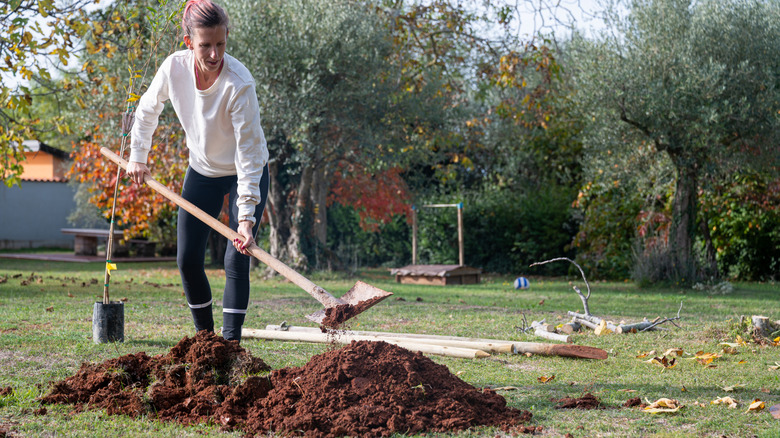
Gardening is good for your mental health until your shovel hits an unfamiliar texture and you find out that you've just unearthed some animal bones in your backyard. Clearly, it's a discovery that's bound to send a shiver down your spine. However, before you assume your garden is a crime scene, take a moment to calm yourself and act accordingly. The first thing you need to do is to analyze the specifics of your discovery. Animal bones found in shallow depths could either be from your deceased furry pets or from the domesticated animals of previous homeowners.
Now, when the sighting becomes too overwhelming, and you find yourself struggling to confirm that the bones are indeed from animals, a good way to dispel your suspicions is to look for the skull. A human skull is larger and bulbous in shape. But if the skull is unavailable, you can examine the other bones. Just know that animals have shorter limbs and smaller vertebrae. It also helps if you can find their collar, blanket, and other things that can confirm their animal origins.
Unless you've stumbled upon a carcass, complete with flesh and juices, there's really no need to alert the authorities or phone carcass disposal services over. You can pretty much handle this task on your own, provided you have proper safety gloves and follow the recommended precautions for handling animal bones. Assuming you were refreshing your backyard landscape on a budget when you dug up the bones, you are more than equipped to do the cleanup yourself.
What to do with the bones
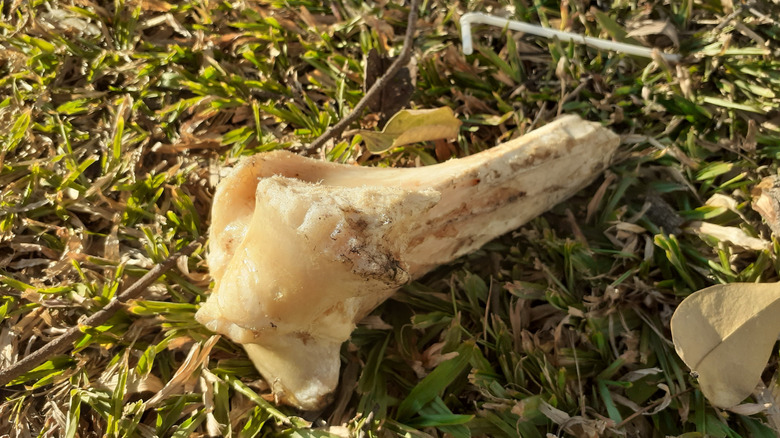
You have several options to choose from once you have confirmed that what you've unearthed are regular animal bones. The first one is to rebury them. However, to prevent anyone in your household or your living pets from finding them again, you need to bury them deeper this time. If the size of your yard isn't an issue, you can relocate them to the area with the least foot traffic. Always wear gloves when handling the bones. Use a bucket or a bag when collecting for relocation, and, depending on their size, bury them using a shovel or a trowel. Don't forget to wash your hands after.
Another option is to use the bones as bone meat fertilizer. This one is more laborious, though, since you will have to bake the bones in the kitchen oven or pressure cooker before you can pulverize them for this purpose. This is doable if the bones belonged to a former pet. If not, you run the risk of contaminating your kitchen with the remains of animals that might have died from certain diseases. Additionally, there's also the big downside to using bone meal fertilizer that people never talk about: It's the fact that this type of fertilizer attracts carnivorous pests, which can damage your garden.
The third option is to keep the bones or sell them. While this may sound weird and gross, it's actually an engaging activity for bone collectors and hobbyists. If you found an intact skeleton of an animal, collect all the pieces and clean them carefully so you can assemble them later for display or sell them online to bone collector sites like JonsBones. The last option, which is probably what most homeowners are inclined to do, is to discard the bones. As long as they no longer have any flesh and juices, feel free to toss them in the waste bin.