

11 Outdated Bathroom Trends Designers Hope Never To See In 2026
We may receive a commission on purchases made from links.
As one of the most frequently used, and most personal, spaces in your home — your bathroom design matters. That's why the sterile styles of yore are shifting toward looks that feel more personal, comfortable, and intentionally styled. In this House Digest exclusive, our experts reveal the missteps of recent bathroom designs and why they're holding back your space from its real potential. Whether they're choices that are functionally useless or ones that create visuals which feel straight out of "Office Space" rather than a cozy, contemporary home, the pros feel these options are all better left in the past.
Luckily, they also give their expert advice on what to do instead — and not all of it involves a full remodel. In fact, you'll notice that traditional decor is back for 2026 and there are so many ways to add it to your bathroom. Spaces are overall trending away from the stark colors and materials that attempted to create serene atmospheres in the late 2010s and early 2020s. Instead, with more trial and error under its belt, design has advanced to warmer, tactile options that more effortlessly create this feeling.
Cold gray bathrooms are officially frozen in time
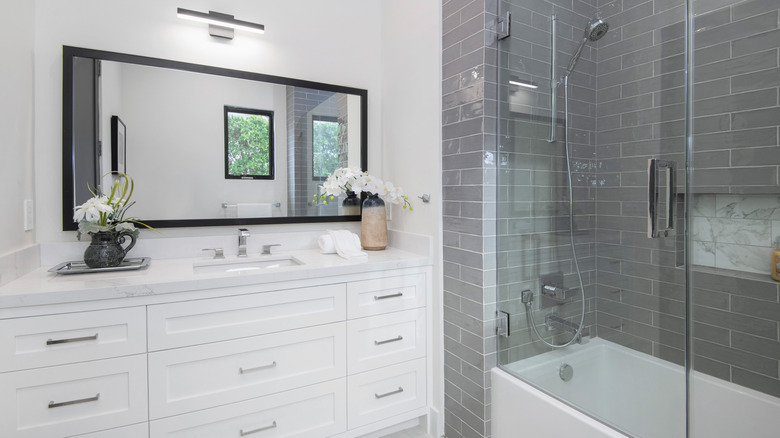
Millennial gray is a generational color. Its popularity in recent years can be attributed to an overcorrection from this group's overexposure to the bold and colorful shabby chic and Tuscan-villa-inspired homes they grew up around. Yet for some, it's finally time to move on from the cool-toned atmosphere the color brings, especially in bathrooms. "One bathroom trend that I'm tired of seeing, and I hope to not encounter in 2026, is the cold gray-and-white bathrooms that were very popular the last 10 years," Craig Gritzen, founder and principal designer at Curated Style Collective, tells House Digest in an exclusive interview. "This palette was overdone, and often feels cold, flat, and lacks character."
In an effort to create calm spaces, the overabundance of gray created clinical bathrooms instead — ones that don't feel visually relaxing at all. "Bathroom design is moving towards spaces that feel warmer and spa-like instead of sterile," Gritzen continues. "I'm especially loving bathrooms that incorporate warmer neutrals, earthy tones, natural wood, and tile with depth and variation, like zellige, which really softens the space." If you're wondering what zellige tile is, it's a clay tile option originally from Morocco. Authentic tiles are still handmade, giving them a unique look that adds the very warmth and character to a space that Gritzen describes.
Farmhouse bathroom features are tired and overdone
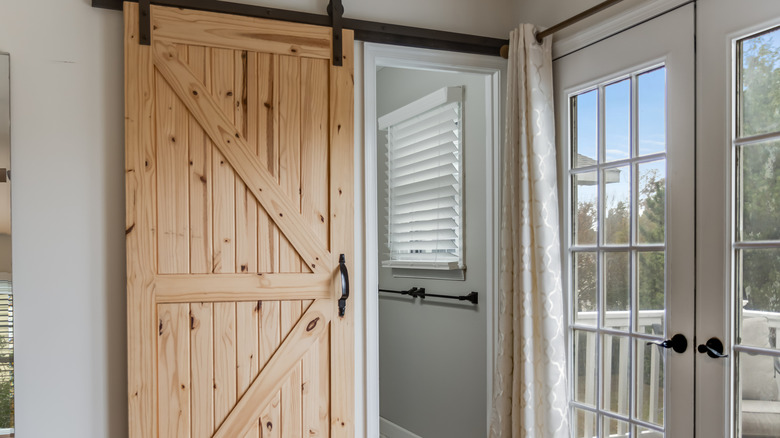
Modern farmhouse design inspo from popular HGTV stars has dominated the past decade, with everyone's favorite flipper Joanna Gaines leading the initial charge. While fine at first, the design's popularity trickled down through the ranks of other house flippers before it quickly became contrived and overdone. "A bathroom trend that feels tired to me is one that leans heavily on farmhouse design features. That usually means subway tile with dark grout, shiplap, and the ever-unprivate barn door," Gritzen warns. "This aesthetic was overdone across everything from modern farmhouse to more rustic spaces, and now it makes a bathroom feel a decade older." Its popularity and overuse became its eventual downfall.
If you're flipping houses, or just renovating your own, Gritzen suggests avoiding farmhouse features just because you think they're a safe, popular bet. While warm, homey spaces are currently popular, a farmhouse look isn't what will accomplish the vibe. As an alternative Gritzen says, "I'd encourage homeowners to create bathrooms that feel more collected and grounded by using warm finishes like plaster or lime wash in an earthy tone, honed stone, and tile with pops of color and slight imperfections," he says. His point is that these details can create the same lived-in, nostalgic feel that farmhouse was meant to accomplish in the 2010s, but without feeling like you've just walked into a cheap flip. Rather, these features create a space that feels designed with real intention.
Flat lighting and generic mirror moments create harsh visuals
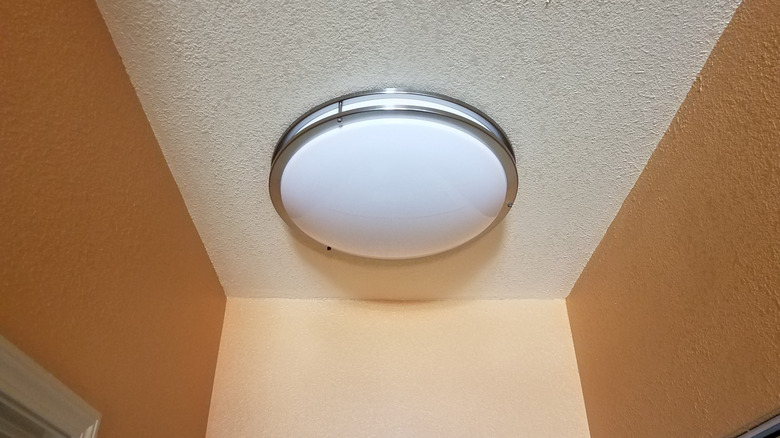
There are many tips for choosing the perfect lighting for your bathroom because nailing it is essential. Applying makeup in harsh lighting leads to disaster and attempting to wind down for bed in the same atmosphere feels more like using a restroom in a corporate office than anything serene. Gritzen warns what kind of fixtures to avoid, sharing, "In 2026, I would love to see fewer bathrooms that rely on harsh overhead light, vanity lighting bars mounted above mirrors, and builder-grade mirrors that leave the space feeling generic and lacking in character." As for why, he continues, "Those elements tend to flatten the room and can make even a well-designed bathroom feel generic."
Instead, he says the key to effectively lighting a space as essential as the bathroom is to include layers. Don't rely on the dreaded "big light" with just an on and off switch. Instead, no matter the style of your overhead fixture, give it a dimmer switch, so you have more control over the ambience. For example, it's easy to swap out your current switches with something more understated, like the Bestten 2-Pack Dimmer Light Switch, which comes in multiple shades to match your color scheme. This eliminates many of the shadowy niches that a blinding overhead light creates. Gritzen also suggests using "sconces alongside mirrors to provide adequate lighting for grooming." For the mirrors themselves, he likes those with "curves, unique shapes, or subtle embellishments," as they pair best with sconces to add visual intrigue.
Generic large-format gray tile is builder-grade and boring
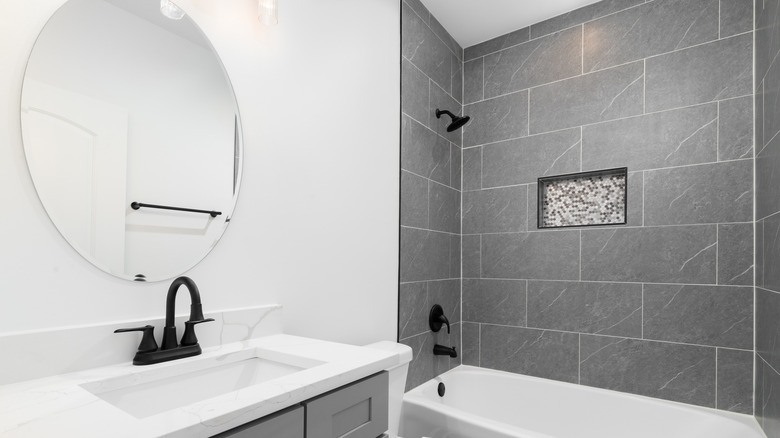
Another byproduct of the millennial gray mania, generic large-format gray tile surged in popularity during the 2010s alongside other minimalist trends. Fewer grout lines offered a sleek, modern look — and initially large-format tiles felt very fresh and updated. However, Gritzen warns that now "these tiles often read more builder-grade than intentionally designed, which can leave a space feeling cool and lacking character." Bathroom wishlists are now trending towards warm, character-rich spaces. Ironically, while the visual unity of large-format tiles might photograph well when trying to sell a house, in person, they don't have as much bite. Gritzen asserts, "Homeowners are looking for more variation in texture and palettes that feel less mass produced."
There's a growing appreciation for craftsmanship over uniformity in bathroom design. For alternatives to large-format tile Gritzen offers, "I'm really loving small-scale tile, whether square or 2-inch rounds, that is hand-finished, and has slight irregularities. Those details create texture and visual interest." If handcrafted options are out of budget, you can also look into handmade-look tiles, like the Amagansett Terracotta Mixed Finish Ceramic Wall Tile, which is $10 a square foot.
All-white bathrooms with no contrast are too sterile
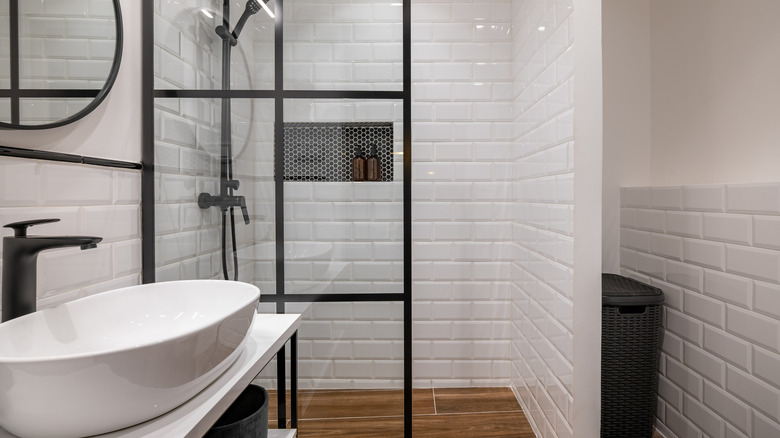
Some experts argue that bathrooms tend to follow kitchens in trend cycles. And as all-white kitchens are being phased out for being too stark, bathrooms appear to be quick to follow. "For years, the all-white bathroom has been the default, but it often falls flat and lacks depth," Cara Woodhouse, founder and principal designer of Cara Woodhouse Interiors tells House Digest exclusively. Just like gray overload feels sterile instead of spa-like, too much white can also feel cold or impersonal. This leaves the bathroom without any visual depth. "Spaces today should feel layered and dimensional, with contrast in tone, texture, and material to create a more elevated and intentional experience," she continues.
To achieve this feel, Woodhouse recommends leaning into elements that feel more inviting instead of clinical: "We are seeing a shift toward warmer tones, including soft taupes, creams, and deeper, richer hues that create a more immersive and calming environment." To achieve this without a full remodel, consider repainting the walls a softer neutral instead of replacing white tile work. To further offset the starkness of the tiling and countertops, you can also inject contrast and warmth with wood-look vanities or mirror frames. Woven baskets as storage options, like the CubesLand Paper Rope Scalloped Edge Toilet Paper Storage Basket or Vatima Hyacinth Medium Wicker Basket are an easy way to add texture.
Overly busy tile patterns cause too much chaos
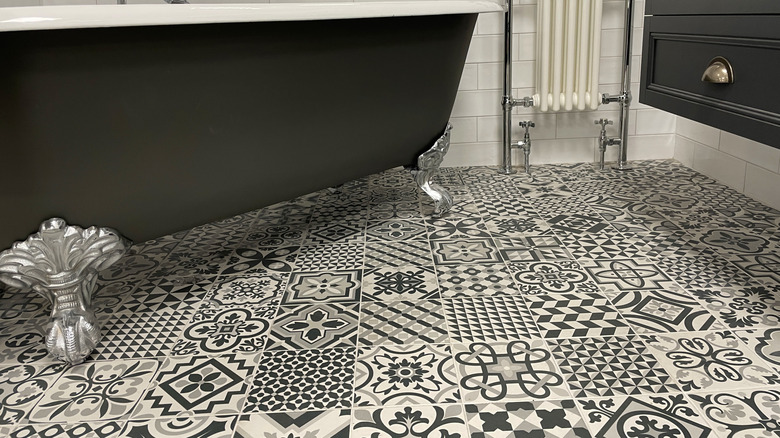
When stepping away from the builder-grade blandness of gray large-format tiles, you might feel a pull in the complete opposite direction, leaning into pattern to do the heavy visual lifting instead of color. However, Woodhouse warns against this overcorrection, sharing, "Highly patterned tiles that dominate the entire bathroom can quickly feel overwhelming and visually chaotic. Instead of enhancing the space, they tend to compete with everything else and date the room faster than more restrained applications."
This isn't to say that you must eliminate patterned tiles completely. However, use them with restraint to make a bold statement. Busy patterns typically work better as a shower niche or single statement wall layered against a foundation of neutrals, so the eye knows where to rest instead of darting around at competing design elements. You can also create visual interest with tile installation patterns, even if the tiles themselves are a touch plainer in appearance. For example, hexagon tile like the Classico Carrara Hexagon Porcelain Floor Tile can add a touch of personality without creating any overload. Also, choosing smaller tiles will automatically introduce some pattern through the grout lines.
Matchy-matchy finishes lack personality
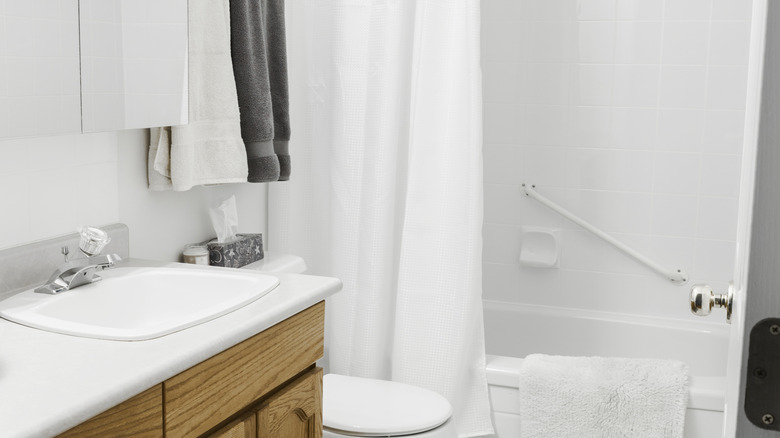
Matching furniture sets that take the work of decorating. They are criticized for looking boring, or being more showroom chic instead of actually belonging in a home. For our experts, the same critique applies to a set of matching bathroom finishes. Woodhouse advises, "Using the same finish across every fixture, from faucets to hardware to lighting, feels predictable and lacks personality. Bathrooms should feel curated, with a thoughtful mix of materials and finishes that add richness and individuality." She wants to see homeowners step away from creating corporate spaces, and instead, design rooms that feel more authentic to personal taste through more subtle choices.
To create a layered feel, Woodhouse recommends "combining finishes like brushed brass with polished nickel or aged bronze adds dimension and avoids a one note look." However, there is one takeaway that you can't forget. "The key is balance and intentional placement," she says. A lack of intentional placement is one of the biggest bathroom design mistakes that makes your space look and feel cluttered. Without a plan, you end up with a hodge-podge of random choices. Instead, it's best to choose one main finish and one complementary one, which is used less. Be careful to follow Woodhouse's recommendation of metals with enough contrast, as you want to create distinction instead of two options that are similar enough that they just clash.
Generic vanities that don't offer any character
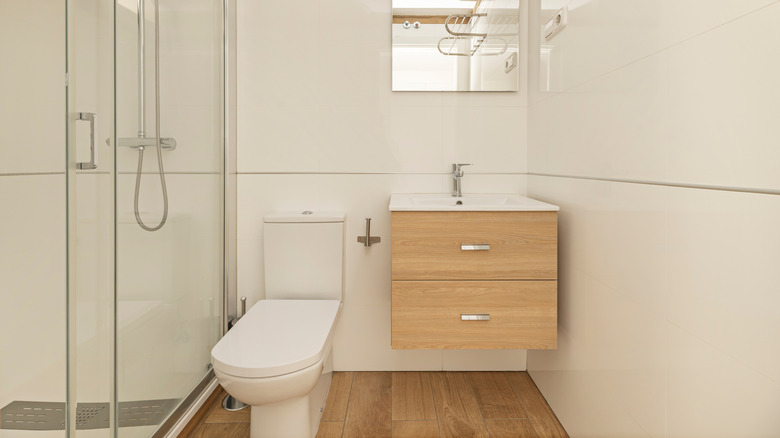
Knowing how to choose the perfect new bathroom vanity can be tricky, but this doesn't mean you should just stick with the one that came with your house. In an attempt to appeal to everybody, these generic pieces end up working for no one at all. "Builder-grade vanities or overly simple floating boxes miss an opportunity to bring identity into the space," Woodhouse says. Instead, she continues, "The vanity should act as a focal point, something with presence, whether through materiality, form, or detailing." A vanity is often the first thing that catches the eye when you enter the bathroom, so you need to make it count.
In fact, a focal-point vanity is the bathroom trend popping up in 2026 that's perfect for antique lovers, as furniture-style vanities are an easy way to add real personality to a space. "Vanities are becoming more sculptural and expressive, whether through bold stone, curved forms, or custom detailing. They anchor the space and elevate the entire room," Woodhouse shares. Besides opting for a main character vanity, you might also want to consider creating custom-built storage in other parts of your space, too. For example, Woodhouse recommends, "A recessed medicine cabinet, a tailored vanity drawer insert, and a dedicated niche for shower products will make the space feel instantly more luxurious because it stays uncluttered."
Cold finishes everywhere are too sterile
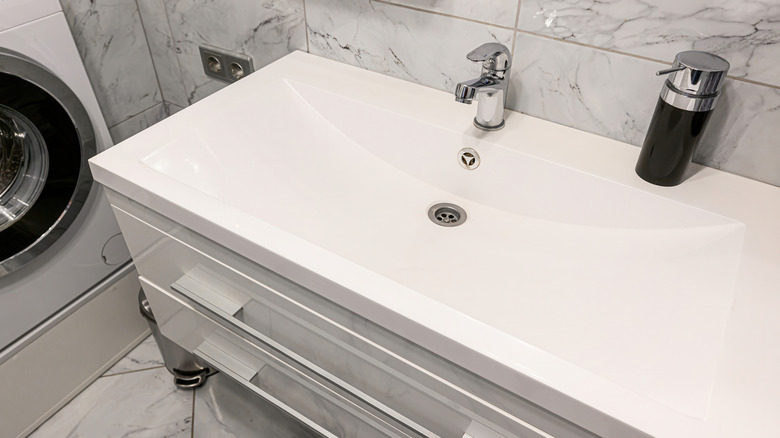
The overall shift happening in bathrooms in 2026 is moving away from starkness, toward spaces that feel both functional and lived-in. "Minimalism without warmth can feel sterile and uninviting. Bathrooms should feel like a retreat, not a showroom," Woodhouse says. She explains that "when everything is stripped back without texture or softness, the space loses its emotional impact." Examples to avoid are matte black finishes against all-white backgrounds, as well as chrome fixtures against glossy white tiles — especially without other mid-tones helping to ground the space.
So what's the solution? "Bathrooms that focus on strong, tactile materials such as natural stone, fluted wood, or plaster bring depth and a sense of permanence. Letting materials lead the design creates a more grounded and memorable space," Woodhouse offers. It's easy to combine these features with other bathroom upgrades, like the Fluted Bathroom Vanity with Ceramic Sink, which also adds a touch of character to the vanity. Something like the LarWorks Waterproof Fluted Wall Paneling promises to hold up in bathrooms, and could shine as an accent wall to break up any monotony along the room's exterior. Using wood (whether real or imitation) also inherently adds warmth to the space, balancing out any cool tones that might be present in the natural stone so the overall palette never feels too cold.
An overload of glossy finishes appear like showroom afterthoughts
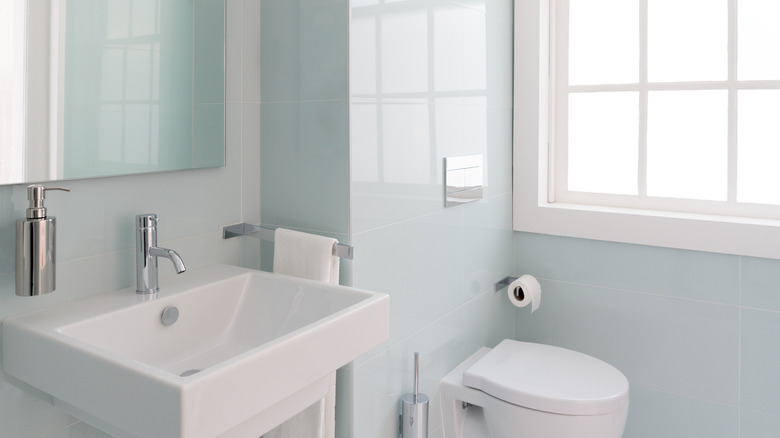
Bathrooms that are too shiny scream mass-produced apartments and lack the authenticity designers are trying to create in spaces in 2026. The one-note spaces often appear cheap and thrown together. "High-gloss everything, especially glossy gray cabinetry and shiny finishes, feels dated quickly. Bathrooms benefit from softer sheen levels and tactile materials that look intentional rather than new-build standard," Artem Kropovinsky, owner of Arsight Studio tells House Digest. Especially when paired with the harsh lighting of new builds, these glossy surfaces create a lot of glare which brings down the overall feeling of the room. It makes everything seem really flat and one-dimensional, instead of creating any sort of depth through different textures. In 2026, bathrooms should feel layered, and high-gloss finishes across all surfaces can feel too sterile and distant.
As a fix, Kropovinsky recommends investing in better, more natural materials that feel more inviting. "One strong slab or a beautiful large-format surface, paired with a restrained secondary tile, often looks more custom than multiple competing finishes," he says. If you're thinking of tile drenching the space, you might want to opt for matte or eggshell finishes to avoid the glare issue. If you do want to go glossy with tile, use layered lighting to cut down on glare, and choose some matte materials to add contrast.
Random statement features that feel out of place
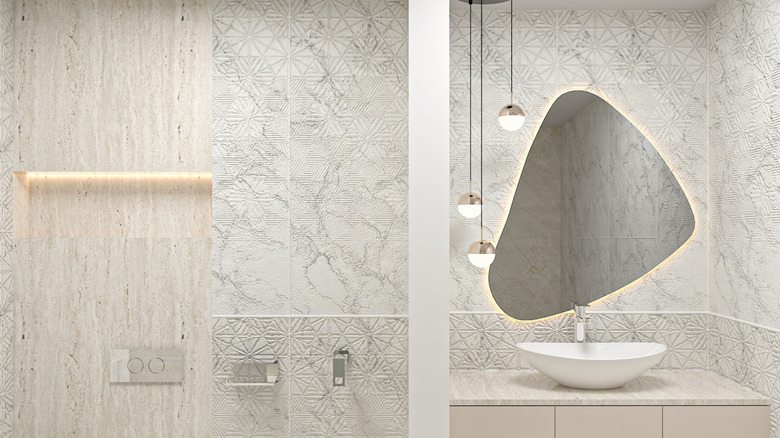
Even amidst the minimal design trends of the early 2020s, there were still microtrends that attempted to inject more personality into these spaces. However, as design norms shift to favor a more coherent story within the bathroom, these seem even more out of place. "Statement features with no relationship to the rest of the room are fading," Kropovinsky shares. He elaborates that "a random accent wall or trendy mirror shape can feel disconnected unless the entire space is composed around a clear material story." This means that the designs you choose for your space need a real through-line to make visual sense. So if you have a funky statement mirror, then you should also echo that shape or vibe in other places, like using rounded sconces or curved pendants in your lighting fixtures.
In addition, Kropovinsky recommends creating functional value when selecting pieces, instead of just trying to create visual shock. "Add real storage where it counts. A recessed medicine cabinet, a tailored vanity drawer insert, and a dedicated niche for shower products will make the space feel instantly more luxurious because it stays uncluttered," he insists. This would be in contrast to adding decor-heavy styling — like lots of little jars or boxes that add visual overwhelm — or a random piece of storage furniture that doesn't match anything else.