

The Simple Root Design That Turns A Simple Spider Plant Into A Statement Piece
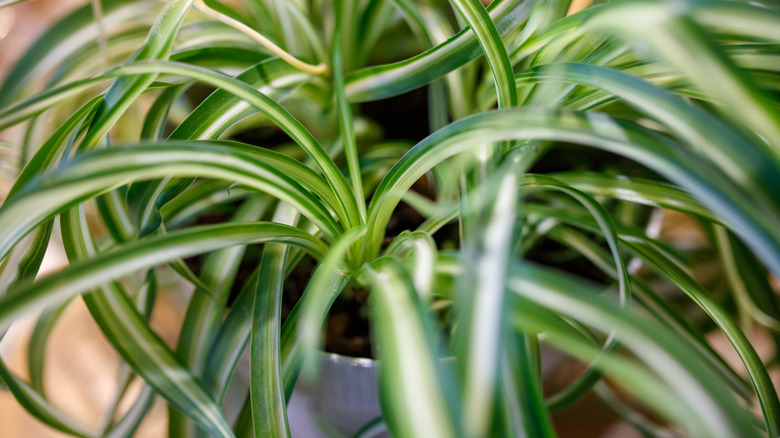
Have you been avoiding getting your own spider plant (Chlorophytum comosum), despite its reputation for being low-maintenance, because you are worried that its classic, variegated foliage looks a little too mainstream? If so — or if you're someone who has become bored with the look of the spider plant you already have — then you're in luck! The roots of this charming plant can actually be used to create an incredible new look to help decorate your home with plants.
Spider plants are known for having thick, abundant roots, which grow well in both water and soil and which store nutrients to help the overall plant thrive. Because the roots of a healthy spider plant are so sturdy and plentiful, they can actually be exposed above the soil or water they are growing in to create an interesting display. And they don't just have to hang limply either. You can actually braid them together for a stunning way to style a simple spider plant.
This clever trick requires no additional tools, just your existing spider plant — as long as it has strong, established roots — and a pot in which to display the eye-popping braided strands. In short, you simply remove the plant from its current setting and gently braid the strands of the roots. Then, place it in a pot with shallow soil so the tips of the roots can continue growing but the main body of the braid will be visible.
Braiding spider plant roots
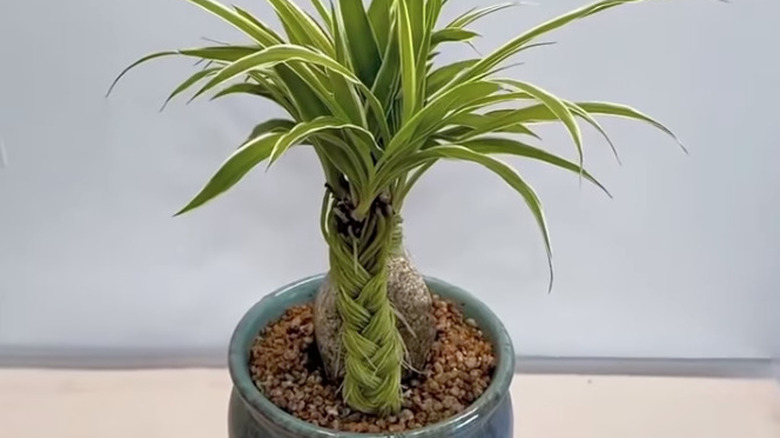
The first thing to think about when considering this interesting spider plant DIY is whether to use a plant that has been growing in soil or in water. For example, Instagram user @ourplants.official shows how a young spider plant growing in water can be lifted out, braided, and then planted over a stone in a pot, thus showing off the impressive braid and allowing the roots to continue growing. However, if you are keen to try this out but are worried about killing the plant, you may want to do it with a spider plant that has been growing in soil. This is because soil-grown roots tend to be stronger and more resilient. Keep in mind, though, that roots grown in soil can be darker and thicker, so your braid will likely be chunkier and less delicate than the one shown in the video.
There are a few other tips that can help you do this trick yourself with the best results. Firstly, after the roots have been braided, displayed, and replanted, you may want to carefully pull off some of the lower leaves. This will allow the roots to be more visible, placing more emphasis on them rather than on the foliage, similar to what you would do with a bonsai tree to add dramatic flair. Alternatively, you could braid the leaves of the plant as well as the roots. Make sure not to pinch the leaves too tightly, as this can damage their health, and tie them gently at the top with a string or ribbon. This can create a nice visual parallel between the plant's roots and upper foliage.