

Driveway Edging Is Way More Than Just For Looks
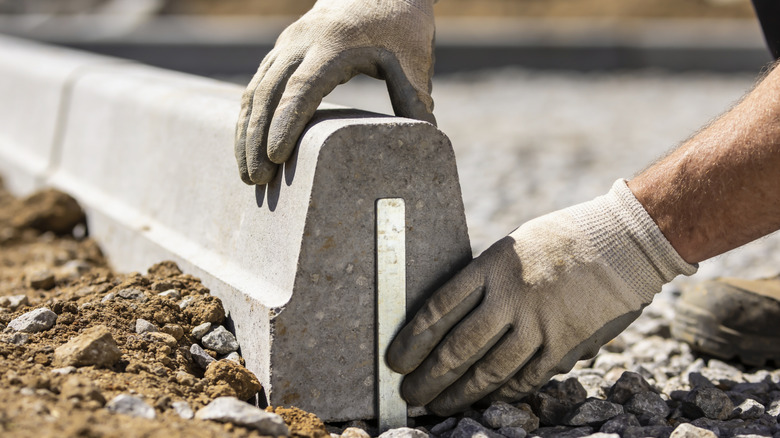
Many types of driveway edging can be visually appealing and give the hardscape a finished look. Some can even boost your home's curb appeal. However, driveway edging isn't just there for aesthetic appeal — it delivers vital practical benefits, too.
Proper edging creates a defined structure for the driveway materials, helping them remain in place. If you use pavers or bricks to build the driveway, they may crumble or pull loose at the sides without support from an edging system. Likewise, without edging, concrete or asphalt can undergo stress at the lawn border, as erosion washes away soil that supports the concrete from underneath. If you have a gravel driveway, the rocks can move out of place because of vehicle traffic or due to fast-flowing rainwater. Adding edging materials is one of the best ways to keep a gravel driveway locked in place.
Although you can use high-end materials (such as professional-grade aluminum or natural stone) to edge a driveway and improve the look of the space, several other options will effectively stabilize the driveway without offering the same aesthetic benefits. These will protect the driveway at a much lower cost compared to materials made specifically to boost curb appeal. For example, if you have a gravel driveway, you could upgrade its edges using simple concrete bags that feature pre-mixed, ready-to-use concrete. The bags won't look anywhere near as nice as stones, but they'll deliver the key benefits of edging by keeping the gravel in place.
How edging protects different driveway materials
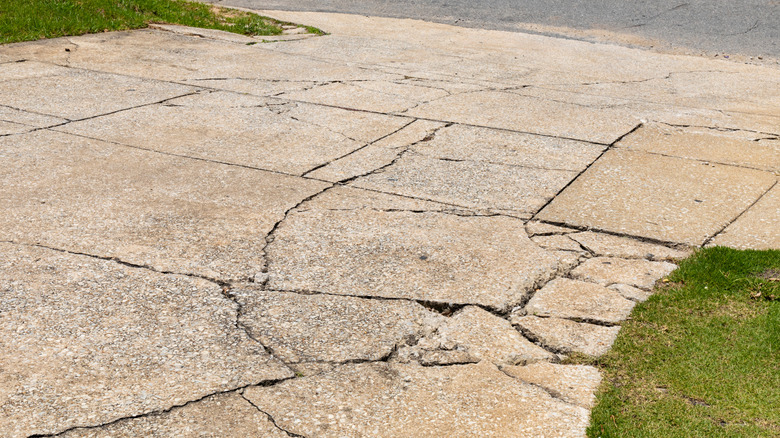
If you have a paver driveway, the pavers will naturally shift during freeze-thaw cycles. That's because moisture that collects between the stones and in the driveway base expands when it freezes, slowly pushing the stones apart. Although some movement is normal, the driveway will lose its structural integrity if the stones continue shifting outward. Edging will hold the pavers in place and minimize any outward movement, even if it doesn't necessarily look great. And, whether it's visually appealing or not, a strip of edging is helpful for separating your driveway surface from the adjacent soil. Allowing dirt to collect on a concrete or paver driveway can eventually cause staining if you don't clean it regularly.
If you have a gravel driveway, installing plastic, metal, or rubber edging can hold the gravel in place. You'll have fewer pebbles ending up in the lawn, and you won't have to replace the gravel as often. Even though it has very little visual appeal, plastic edging works great for this purpose; it's easy to install, and it doesn't cost much. That said, it is susceptible to breakage.
Since vehicular traffic puts driveway materials under constant stress, edging is especially important. Such stress can lead to crumbling along the edges of a concrete or asphalt surface, and the right edging material reduces this risk. Patios and sidewalks aren't subjected to the same loads, so edging doesn't have the same structural significance for these hardscaping elements (although it still keeps dirt and debris off the surface).
Driveway edging improves drainage and erosion control
If you live in an area that receives regular rainstorms, edging along a driveway is important for preventing erosion. When a rainstorm occurs, large amounts of water flow across the driveway. Contractors usually slope the driveway to ensure effective runoff, and many designs have a crown that directs rainwater to the edges. But by pooling at the edges, water eventually finds a way to get underneath the driveway, washing out the base and creating weak spots that cause the surface to crack or collapse.
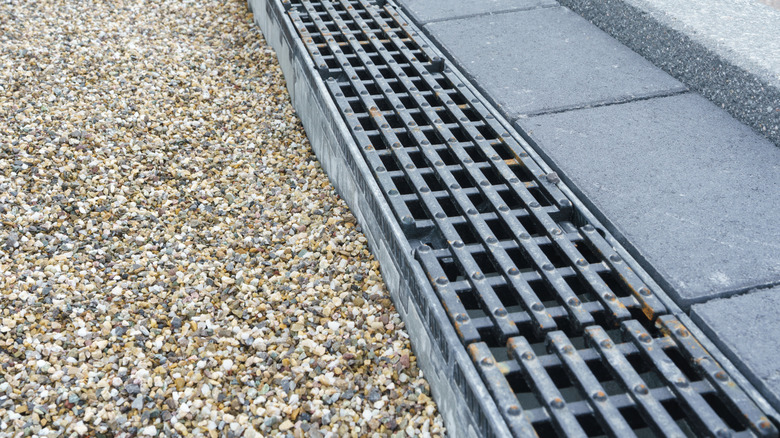
To deal with drainage problems, you could first install a trench drain by digging a trench along the edge to gather rainwater. Line the top of the trench with a grate to help water pass through while blocking sticks and leaves. Then place edging along the side of the trench. As water runs off the driveway, it passes through the grate and moves to the desired location. You could also install a stainless-steel gutter instead of the grate; it will serve as edging and function much like a gutter on the side of your roof. It's important to select trenching materials that can stand up to vehicular traffic and large loads, so they don't crack if your car's tires leave the driveway surface. Such solutions won't always be aesthetically pleasing, but they'll protect your driveway from water damage and erosion.