

Attract Pollinators & Birds To Your Yard With An Evergreen Shrub That Creates Privacy
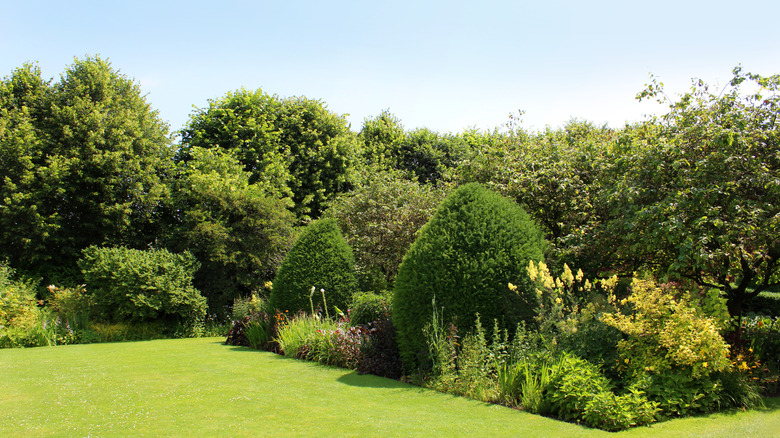
Are you looking for a bit more privacy in your yard but don't like the idea of adding a fence? While there are plenty of other ways to screen off parts of your garden or block unsightly views, wouldn't it be nice if you could find an attractive evergreen shrub that also attracts birds and pollinators? That way, you could have that much-needed privacy all year round but still have something nice to look at while keeping the local wildlife happy. For gardeners in USDA hardiness zones 7 through 9, there's a perfect solution known as 'Chindo' sweet viburnum (Viburnum awabuki 'Chindo'). It's one of a select range of evergreen hedges and shrubs that provide privacy in winter, as well as the rest of the year.
'Chindo' viburnum is one of those lovely shrubs that can provide you with interest in almost every season. It grows densely with large glossy green leaves that can have a reddish tinge when young. Come spring, the shrub produces small tubular, white flowers that are lightly fragrant and draw in those pollinators, including bees and butterflies. The blooms are followed in the fall by red or purple berries or drupes that not only look attractive but also provide an excellent food source for songbirds. Each shrub can reach a height of up to 12 feet and a spread of around 8 feet, which is why this cultivar is perfect for privacy hedges. Depending on the age of the plant when you buy it, you should expect it to take a little time (up to two years) to get fully established before 'Chindo' starts its massive growth spurt.
How to grow 'Chindo' sweet viburnum as a privacy screen
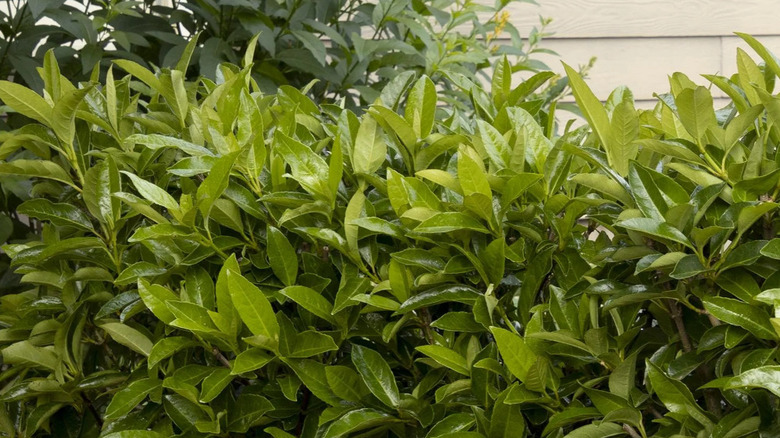
You'll get the densest growth when you plant this variety in full sun. It can handle part shade, but avoid heavy shade as you'll get much sparser growth and limited flowering and fruiting. Ideally, you want the soil to be fertile, slightly acidic, and well-drained. For an effective screen, space your plants around 6 to 8 feet apart. Just keep in mind that this is another plant you shouldn't grow right next to your house because it does produce thick roots. However, it's perfect as a hedge around your yard's perimeter for the ultimate privacy. On the other hand, there are plenty of other hedges and shrubs that are safe for planting next to your house, if you need an effective screen close to your dwelling.
Once planted, make sure you keep your shrubs nicely hydrated so those roots can take hold in the ground. As they start to really put on some growth, they shouldn't need supplemental watering unless you're experiencing a fairly dry summer. To encourage more of that gorgeous red or orange-tinged new growth, give your hedge plants a balanced slow-release fertilizer in spring. Prune these plants after they bloom, if needed, but keep in mind that may reduce the number of berries available for birds to enjoy.