

What To Do If You Find Baby Animals In Your Yard This Spring
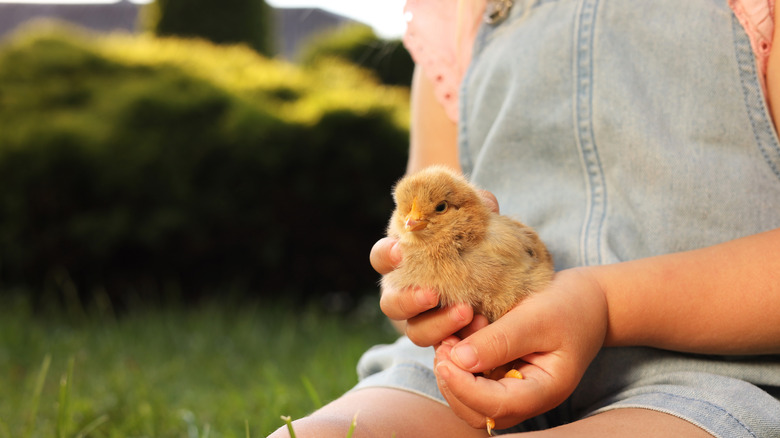
If you've spent time carefully cultivating a beautiful, wildlife-friendly garden, then chances are that at some point, you're going to come face to face with the local fauna. After all, that's the goal, right? However, there's a big difference between watching hummingbirds dart between your dahlias and finding yourself charged with the survival of a helpless baby animal.
If you do, then the best course of action depends on several factors, including whether the animal is injured, how big it is, and whether the species is dangerous. Some, like squirrels, may actively seek out your assistance when separated from their parents. Others, like baby birds, should only be helped if their nest has been destroyed or if they're yet to develop their feathers. And if you find baby snakes, then unless you live in an area where venomous species abound, it's usually best to let them go about their business.
Whatever creature happens to be reproducing in the quiet corners of your garden, this guide is here to help. These species are commonly found in gardens around North America. Learn the signs to look out for that their babies could use your assistance, and just as importantly, when it's best to leave them alone.
Action with baby birds depends on their feathers and behavioral appearance
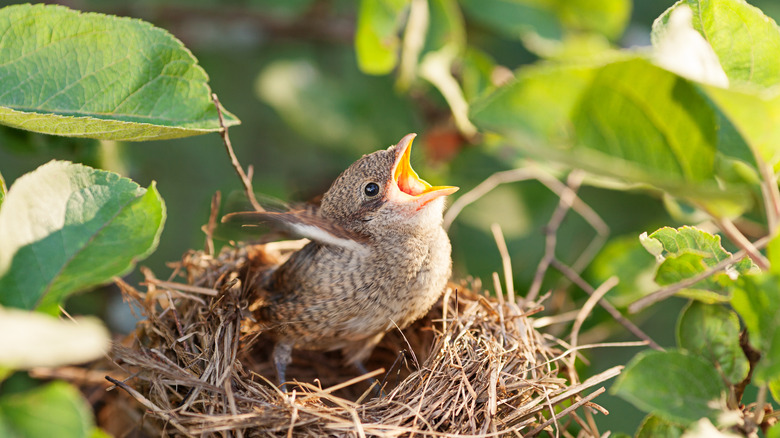
If you've spent time trying to attract birds into your garden, you'll need to know what to do if you start to spot youngsters wandering without their parents. And the answer is that it depends. In many cases, it's best to leave them alone. Even if you spot them on the ground, provided that they're fully feathered, it's usually okay to leave them be. These are fledglings and are often found at ground level as they learn to fly. If you look closely, you'll probably spot their parents watching carefully from nearby. Even if you don't see them, try not to get too close, as the parents may just be well hidden. You don't want to accidentally spook them away.
Where things get a little tricky is if the youngsters' nest has been disturbed or broken. If that's the case, then try to get a closer look at the babies. If they're not yet feathered and the nest is broken, then it's best to call a wildlife rehabilitator and ask for their advice. You should do the same if you notice any clear signs of injury. However, if the nest is fine, but you spot babies below it that don't have feathers yet, then it's fine to give them a helping hand back into the nest. You may just want to keep an eye out to make sure the parents return.
Lonely fawns are usually best left alone
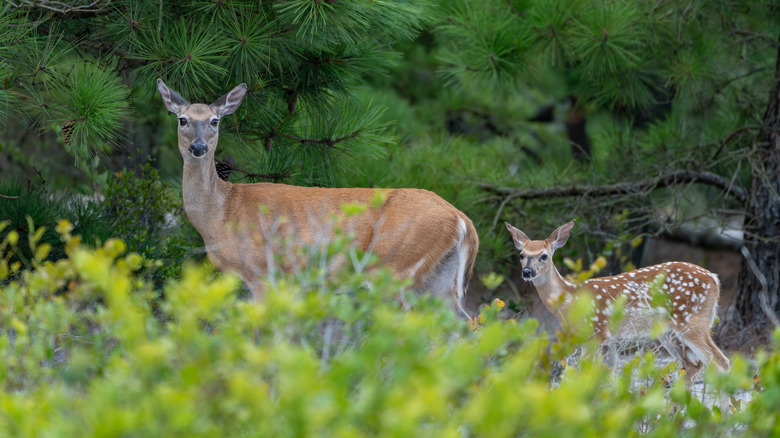
The best thing to do if you find a baby deer alone in your yard is usually nothing. This is especially true if the youngster is lying calmly on the lawn. Doe often leave their young resting in the long grass, hidden from predators, while they go about their search for food. They tend to come back several times a day to nurse, so if you keep an eye out, you'll likely see the mom eventually make her way back. Like birds, deer are naturally shy creatures, which means you should try to avoid the temptation to get too close. If the mother spots you loitering in the area, she may become spooked.
If, on the other hand, you notice that the fawn is crying constantly, then that may be a cause for concern. The same can be said if it's wandering around looking lost. It may have clear signs of injury, and if it's particularly unhealthy or lethargic. If any of these ring true with the fawn in your garden, and mom doesn't make an appearance within a few hours, then call a wildlife rehabilitator.
Give fox parents time, and space, to come back to their kits before interfering
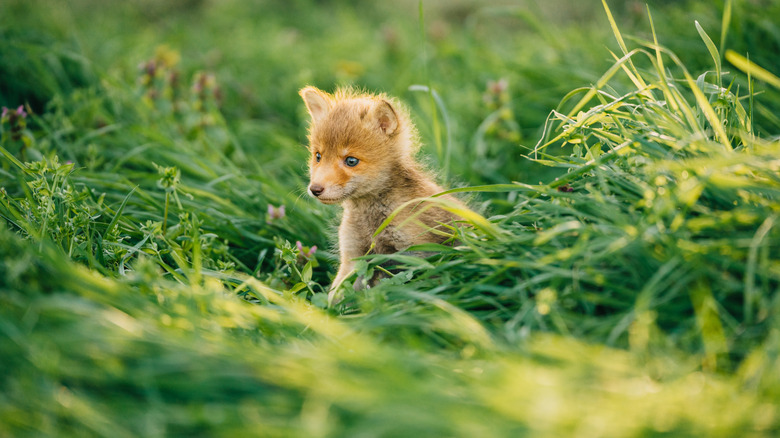
If you're trying to keep foxes out of your yard, then finding one of their babies is a sure-fire sign that your strategy needs some work. But before you look to improve that, you'll first need to work out whether you should help your yard's new resident or leave it to its own devices. Foxes typically mate during the winter, and cubs start emerging from their dens at around four weeks of age. Generally speaking, if you spot one out and about playing in the daytime, then it's probably fine, and its mother is likely nearby keeping watch.
However, if the baby still has its eyes shut and remains above ground for more than a few hours, then that's a sign of a problem. You may also spot obvious signs of injury, like bloody, matted fur or a limp. And if you happen to have seen a deceased adult fox nearby, then it could well mean that the youngster in your yard is an orphan. If any of these signs are true, then your best bet is to call a wildlife rehabilitation officer for assistance. Avoid feeding them food or water, as doing this wrong can lead to serious complications for the fox. And don't forget that foxes are a high-risk rabies species, so minimal contact is key to your safety.
Opossums over seven inches long are old enough to be left alone
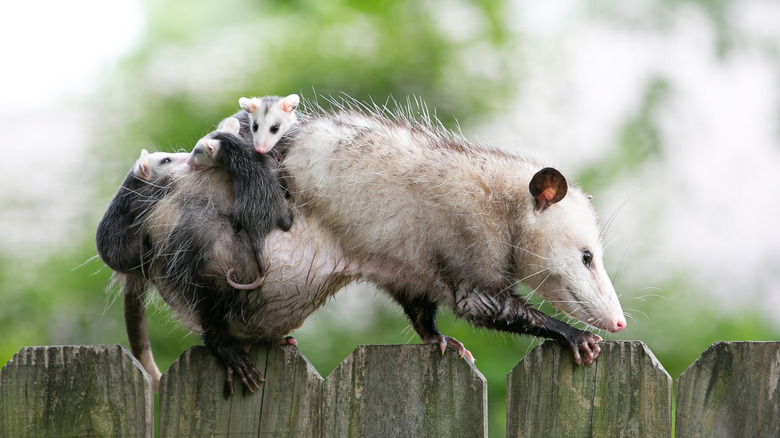
Finding a very young opossum in your yard is unusual. As North America's only member of the marsupial family, babies of this species typically spend the first couple of months nursing inside their mother's pouch. They usually start piggybacking on their moms when they're between 3 and 4 inches long, so the first thing to check if you find a baby opossum in your yard is its size. If it's smaller than 3 inches, it should likely still be with its mom, so a wildlife rehabilitation officer should be called. Even if it's slightly bigger, if it's alone and seems to move around awkwardly, then you may also want to consult a professional. Baby opossums occasionally fall off their mothers' backs during transit without the mother noticing.
On the other hand, if you come across a small opossum that's wandering around your yard of its own accord, it's probably fine. To be sure, try to gauge its size. As a rule of thumb, opossums around 7 inches in length or more (not including the tail) are fine to leave as they are, even if you don't see their mom nearby. Of course, if you notice one of this size that's injured or in obvious distress, then you should consult the advice of a local wildlife expert.
Open-eyed, happily-hopping baby rabbits should be left to fend for themselves
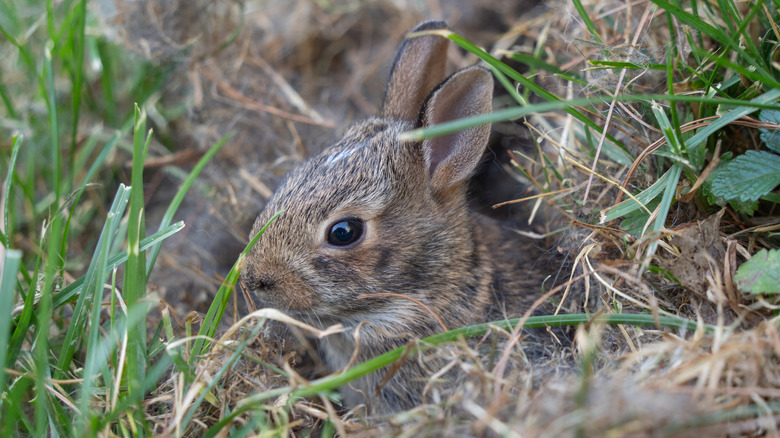
If you have populations of rabbits living in your nearby area, then make sure to check your lawn for bunnies before you start to mow it. Rabbits tend to nest in plain sight, and they especially love doing it in areas of long grass. This means they're easily found by adventurous pets and children, and are at high risk of injury by machinery if you don't check the area for nests. When you do, if you find a baby rabbit, it's best to leave it alone and avoid mowing the area. Rabbits of around 4 inches or more in length are usually fine, especially if they hop independently and their eyes and ears are open and erect.
If you do accidentally disturb a nest, you can try to re-cover it with grass clippings or leaves. And if you want to be sure that the baby hasn't been abandoned, you can always build a criss-cross pattern over the nest with yarn, sticks, or string. If, after 24 hours, the pattern hasn't been disturbed, then it means the mother hasn't visited. In that case, the best thing to do is to call a rehabilitation specialist. The same applies if you notice that the baby bunny is bluish in color, sluggish to move, or constantly crying. Babies with signs of injury should also be reported, as should any with flies buzzing around them or fly eggs around their faces.
Mother raccoons rarely let their young out of sight for long
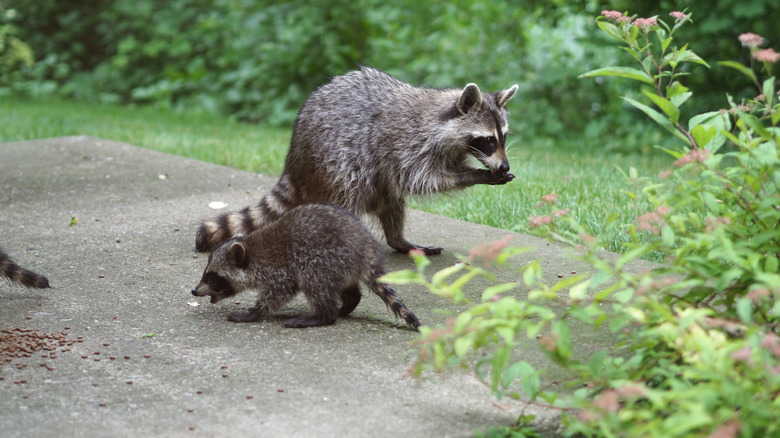
Before you decide what to do with that baby raccoon in your yard, you first need to define how much of a baby it actually is. If you come across what looks like a junior-sized bandit, and it seems to be moving around quite independently, then it's probably fine as it is. From the age of three months, raccoon kits start to forage on their own, and it's common to see them without their mothers.
However, if it's less than 10 inches in length, then it probably needs some help, especially if it isn't moving around much. At this age and size, it's unusual for raccoons to come into contact with humans without their mother also being present. But it can happen, often by accident as the mother tries to move dens.
The best course of action if you find a youngster this small is to check for signs of illness or injury. Flies buzzing around the raccoon are a sign that something's wrong, and if it's constantly crying, that likely means it's distressed. As long as there are no signs of injury, it's best to put the baby in a bucket or another similar-sized vessel, with a towel or blanket for warmth. Make sure that you use protective gloves when you do this. Leave the bucketed baby overnight somewhere safe, near where you found it, and give the mother a chance to come and collect her kit. Give her at least 12 hours. If she doesn't reappear and claim the little one, then it's time to call a professional.
Baby skunks spotted without a mother in sight may have been orphaned
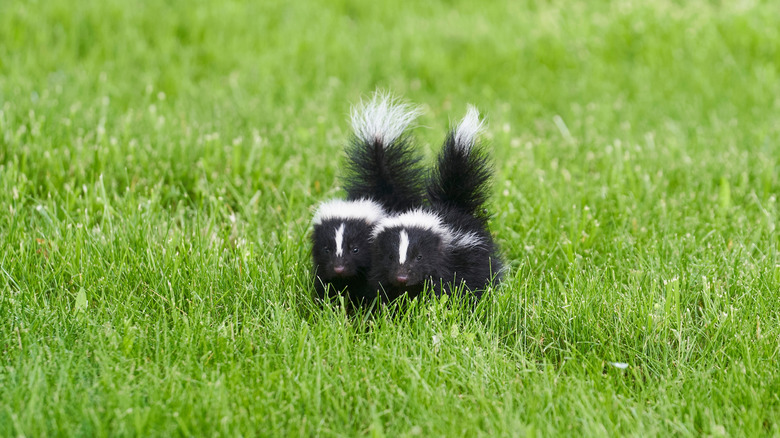
Like raccoons, it's unusual to see very young skunks venturing beyond the safety of their dens. They usually hide out in them for between six and eight weeks, and when they do eventually surface, they continue following their moms for months. They usually do this all the way through summer, and sometimes even later. They're reactive to the presence of predators from the moment they leave the den. However, they don't become truly independent until much later.
So, if you spot a baby and its mom is nowhere to be seen, but it seems nonplussed by your presence, then it could well be in trouble. Flies buzzing around the youngster, constant crying, or obvious injuries should all be treated as a sign to call a wildlife professional. However, if it's fully mobile and appears in good condition, then it's best to simply watch from a distance until the mother comes back. If she doesn't, or if the baby is very small (less than 4 inches) then try to give it a helping hand. Using leather gloves, place it in a small open box with a towel or a blanket, and leave it close to where you found it. Wait overnight to give the mom a chance to recover her baby. If she doesn't, contact a rehabilitation expert.
A squirrel constantly vying for your attention should be discouraged
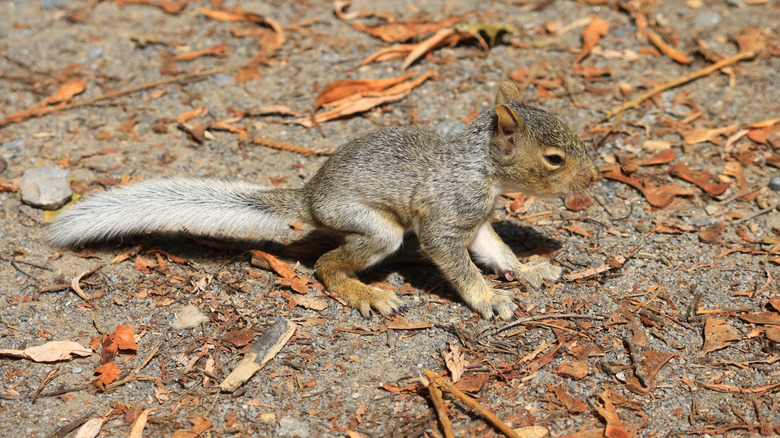
Generally speaking, squirrels longer than six inches, with a fluffy, bottle brush tail, are fine to be left alone. But if they're smaller, they should really be accompanied by their mom. As long as they're not exhibiting obvious signs of injury or poor health, like crying or fly eggs on their face, then you can hold off on calling a wildlife expert. Instead, try putting the youngster in an open container with a blanket and leaving them for their mother to collect. Place them on the tree closest to where you found them, and give the mom at least 12 hours to stop by. If she shows no sign of returning in that time, then it's best to contact a professional and have the squirrel rehabilitated.
Even if the youngster in your yard is in decent shape and large enough to be left alone, it's still important to know how to act around them. It can take small squirrels time to learn the dangers of large, scary animals like us humans, and it's not uncommon for juveniles to approach people. However, it's important for their safety that they learn to be wary of predators. In other words, don't be tempted to try to tame the squirrels in your yard. The greatest favor you can do for them is to make loud noises and try to scare them away.
Baby snakes should be approached with caution
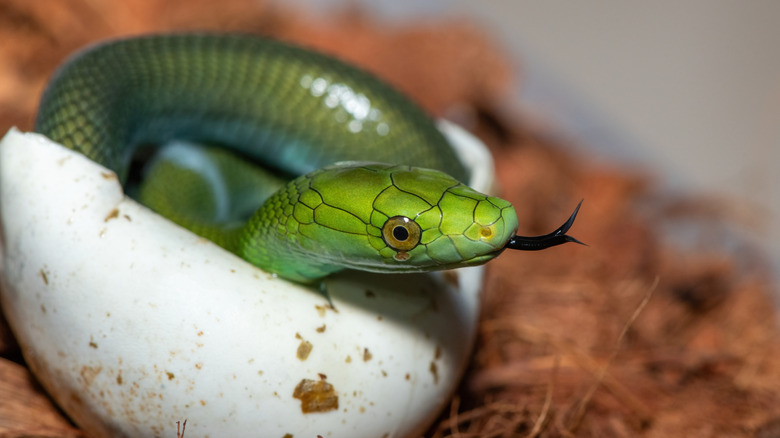
What you do with baby snakes in your garden depends entirely on the species that live in your region. There are certain types of snakes that you definitely don't want to see in your yard, like rattlesnakes and eastern coral snakes. If you have these in your area and you come across some slithery babies or find snake eggs in your yard, then the safest bet is to call a wildlife removal expert. Keep your children and pets away until the problem is dealt with, too, and remember that venomous species like coral snakes and rattlesnakes are dangerous, even when they're very small.
Now, if you live outside of the range of dangerous snake species, or you know that the species in your yard isn't dangerous, then it's best to leave the babies alone. In fact, depending on your tolerance for these reptiles, you might want to encourage their presence. Snakes will only stick around for as long as there's shelter and food. If the species in your yard happens to enjoy the taste of rodents, then their dietary habits are likely to align perfectly with your pest control strategy.
A baby mole found outside a disturbed nest shouldn't go unclaimed for long
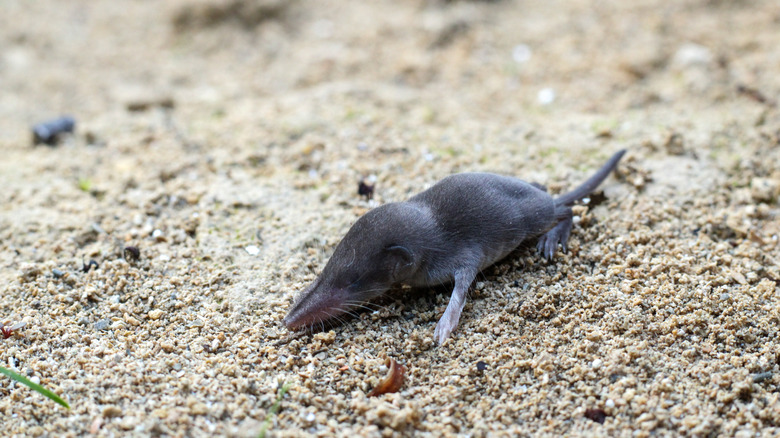
If you've been trying to identify which pest is digging holes in your lawn, the sudden presence of a baby mole should help to solve the mystery. It should also be cause for concern. Mole babies usually stay in their nest for the first month of their life, and even when they first leave, they usually stick to foraging in the tunnels beneath the ground. In other words, unless an action by you, your children, or pets has disturbed the nest, finding a baby mole in your garden is unusual.
If you do happen upon one, then the best thing to do is to wait and give the mother time to come and reclaim her pup. If this doesn't happen, then you'll need to call a wildlife expert and have them collect the baby. To ensure its safety while you wait, pop it inside a tight-lidded cardboard box, being sure to punch some holes in the box for air flow.
Groundhogs less than eight inches long and only partly furred may be in trouble
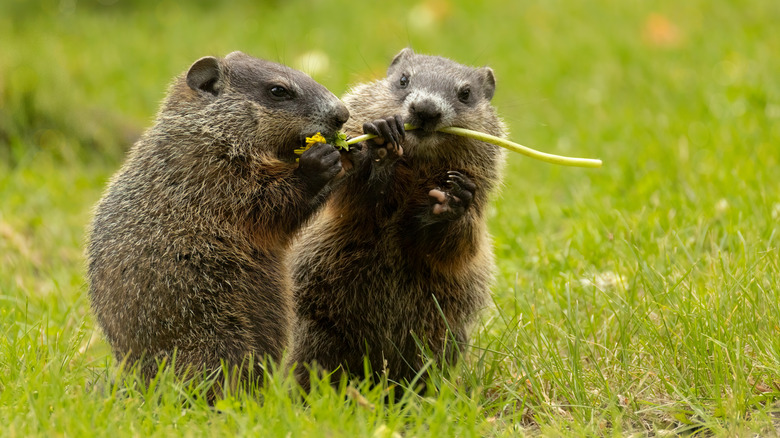
There are various signs that indicate you have groundhogs in your yard. But few are quite as clear-cut as the presence of a baby. This species usually mates around March, just after emerging from its annual period of hibernation. The young are then born around April, and it doesn't take long for them to start to grow up. In as little as four weeks, their fur fully develops, and so, too, do their characteristic teeth. However, even at six weeks, when they're old enough to forage, they usually only do so near the den entrance. In other words, if you find one seemingly in the middle of nowhere, with no signs of a den entrance nearby, then watch. Give the mother a few hours to retrieve the youngster, and if she doesn't turn up, call a wildlife professional.
Other things to look out for include the size of the baby in question. If it's less than 8 inches long, or not yet fully furred, then that's also a good sign that help is required. Groundhogs of this size are rarely found outside of the den. When they are, it's usually a sign that either the den has been disturbed or that the baby has been orphaned. If it's in trouble, you may also spot flies buzzing around it, constant crying sounds, or slow movement. On the other hand, if the baby is over 8 inches in size, moving independently, and showing no signs of stress or poor health, it's best to leave it alone.