

Mosquito Vs Midge: Which One Is Biting You? (And How To Stop Them Both)
We may receive a commission on purchases made from links.
It's no secret that you'll see blooming flowers in the spring, but you'll also see the resurgence of insects waking up from dormancy. While some are harmless, others, like mosquitoes and midges, are anything but. Even though both bite and itch, it's important to know which one is bothering you so you know how to properly take care of the itch (and your skin).
Overall, the differences between mosquitoes and midges are quite distinct. Mosquitoes are generally larger, louder, and leave a singular bite. Midges are tiny, virtually silent, and leave small red clusters that burn or itch. While they are different, they both can put a damper on your outdoor fun and might even cause allergic reactions or infection.
The best way to protect yourself is to know how to get rid of mosquitoes in your yard. Although these efforts won't completely eliminate them, they can significantly reduce their numbers. You have a variety of options here, from hiring a professional pest control company to planting easy-to-grow herbs that help keep mosquitoes out of the yard and garden. Getting rid of midges is equally important, and you can use various methods to help keep them away, like installing specialized fine-mesh screens.
All about mosquitoes and midges

Is the pesky bug trying to bite you a mosquito or a midge? There are a few key factors that can help you tell them apart. First, you can tell them apart by their physical attributes. Mosquitoes are generally 3 to 6 millimeters long and are pretty easy to see and swat away. Midges, on the other hand, are only 1 to 3 millimeters long and often look like a speck of dust or lint. Mosquitoes move in an individualistic pattern, meaning they hunt alone, whereas midges travel in what looks like a cloud or a swarm. You'll likely hear the mosquito flying around you, but the cloud of midges you'll only see, not hear.
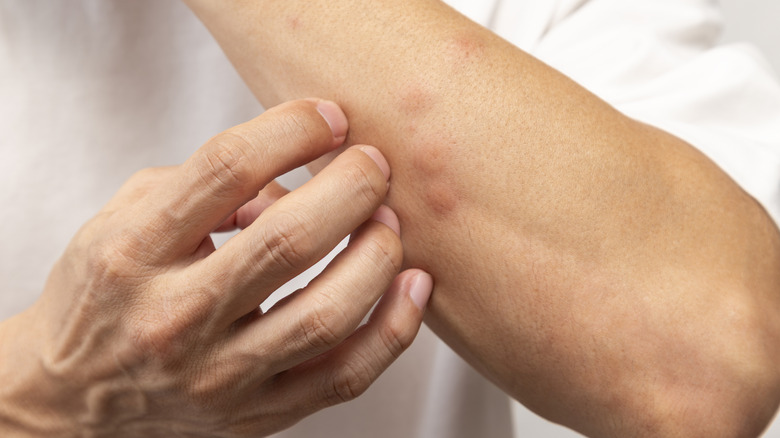
The way that these insects bite is also different. Female mosquitoes use a specialized six-needle mouthpart to saw through the skin and extract blood needed for egg production. Midges use tiny, saw-like mandibles to physically cut into the skin and create a small pool of blood, which they then drink. The results? A mosquito bite is generally one, larger, puffy welt, whereas the marks left by midges are clustered and resemble burning red spots.
Even if you use hacks that will help keep insects out of your house, some will inevitably get through. Regardless of whether you've been bitten by a mosquito or a midge, treatment is focused on soothing the skin. It's important to remember not to scratch the bite, regardless of the type. Instead, neutralize the "itch signal" given by mosquito bites with oral medications (like cetirizine or loratadine) or histamine topical creams. For midge bites, an anti-inflammatory like hydrocortisone is usually better than a simple antihistamine to reduce the redness and the "burning" sensation.
How to keep these pests away

Keeping your outdoor space habitable during bug season requires a multi-layered approach. To help keep mosquitoes from entering your immediate area or biting, you can use a device like Thermacell Mosquito Repellent to create a protection zone. These are highly effective for mosquitoes but often less consistent against the smaller, denser swarms of midges. Using professional barrier sprays applied to the undersides of leaves and tall grass works well for mosquitoes because they rest in vegetation during the day.
If you have a midge problem, standard window screens won't stop them. If you are screening a porch specifically for midges, you must use "No-See-Um" mesh to physically block them from crawling through the weave. It's also good to remember that while mosquitoes are somewhat indifferent to light type, midges are intensely attracted to standard white incandescent bulbs. Swapping to yellow LED bulbs significantly reduces the "beacon" effect that draws midges to your doorways.
Regardless of which bug is bugging you, there are several dual-action strategies that work for both. Fans are the most effective chemical-free deterrent, since mosquitoes are weak fliers, and midges are even weaker. A simple floor or oscillating fan on a patio creates enough wind to make it physically impossible for them to land on you. You can also use EPA-registered repellents that have active ingredients like DEET, picaridin, or oil of lemon eucalyptus (OLE). Picaridin is particularly effective against midges, which are sometimes unfazed by weaker herbal sprays. Be sure to wear long-sleeved, loose-fitting clothing to create a mechanical gap between the bug and your skin. Light colors are preferable, since both insects are attracted to dark, heat-absorbing fabrics. Finally, eliminate sources of standing water from gutters, birdbaths, and even hollow tree stumps, since both insects lay eggs in moisture.