

The Ancient Paint Technique That Pests Can't Stand
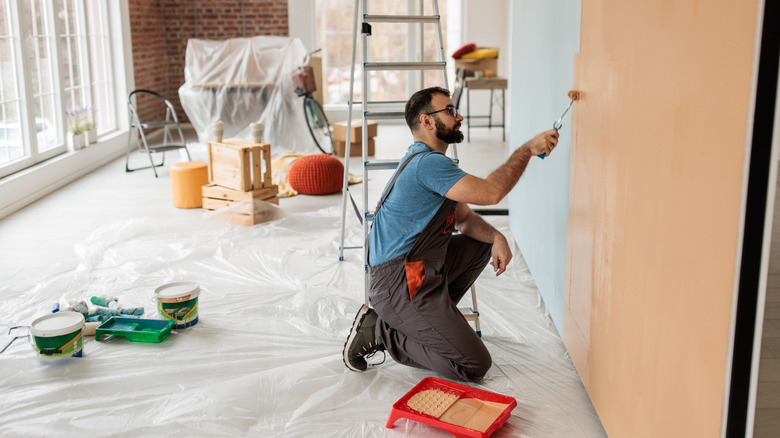
In the spirit of everything old being new again, more people are rediscovering the "old-timey" benefits of limewashing, also known as whitewashing. Its origins are said to go back to the days of ancient Greece, Rome, and Egypt, but limewash has now entered the modern home. Its eco-friendly formula and surface-protecting qualities are making this ancient practice relevant for today. Not only can you create a DIY paint with simple ingredients, but the resulting covering can help to protect your home from insects and mold. For people who live in older homes, limewash preserves the building material's structural integrity while remaining historically accurate.
A key compound in limewash, calcium hydroxide, boasts protective properties when used as a "paint" on interior and exterior surfaces. Unlike modern paints, the coating allows walls to absorb and release moisture. Rather than converting to salt hydrolysis, which corrodes the building materials, dampness is expelled. Along with preventing the kind of rotting wood that pests like to feast on, calcium hydroxide is a natural deterrent to beetles, worms, and other pests. Limewash also kills mosquito larvae, a major pro for those who can't seem to avoid these biting insects.
The benefits extend beyond protecting brick, wood, iron, and other materials. Because the "breathing" ability of limewash reduces moisture, it also diminishes the kind of atmosphere in which mold and mildew thrive. That reduction of mildew and mold spores helps reduce allergic and asthmatic reactions in humans. It's additionally antimicrobial and is prized for odor reduction. And as if all that weren't enough, applying limewash to the roof may lower the interior temperature by as much as 10 degrees Fahrenheit!
Applying pest-repelling limewash to your own structure is quick and cheap
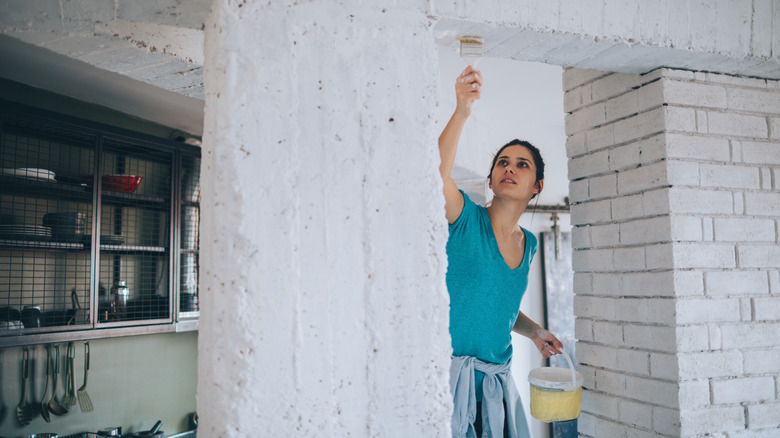
These days, you can buy ready-made limewash paint, especially when you're looking for limewash color ideas that add old-world elegance to your space. But if you are interested in creating your own pest-repelling limewash, start with either quicklime powder or lime putty. For the former, combine about 5 parts of quicklime to 1 part water to make lime putty. Once you've created or bought ready-made lime putty, stir it with more water, using a formula of two parts water to one part lime putty. It may take some experimenting to determine how much of the overall limewash you'll need to cover the walls or other surfaces.
Wet down your surface before applying a thin coat of limewash. Let each coat dry out for about 24 hours, and wet down the previous coat before applying a new one. If you wish, pigments can be added to the final coat. Look for powders labeled "earth pigments" for the best compatibility with lime.
So, where should you apply limewash in your own home? Of course, an exterior "whitewashed" brick wall is a classic look, but if you're ready to bring things indoors, how about the kitchen? It may seem like an uncommon place to try out limewash, but the rustic look may be just what your kitchen needs for a little extra warmth. Or, if you'd rather start in a more inconspicuous area to build confidence, consider using the painting technique to add texture to your closet.