

No Pond, No Problem: How To Grow Water Lilies In Pots For A Stunning Patio Garden
We may receive a commission on purchases made from links.
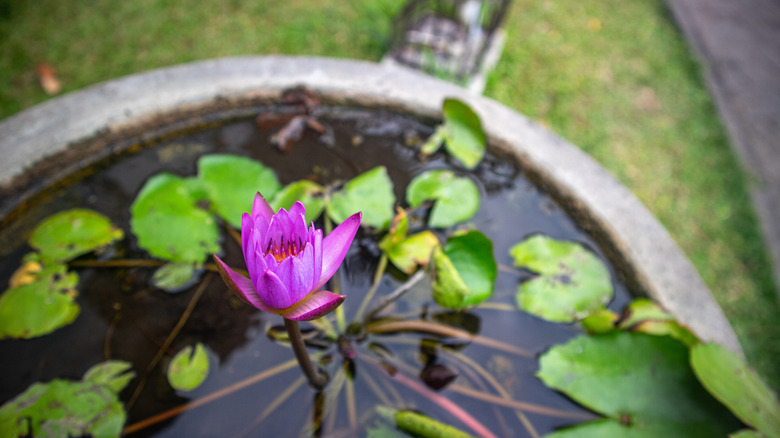
The delicate beauty of water lilies (Nymphaea) has inspired artworks as legendary as Claude Monet's series of dreamy impressionist paintings. If you think it's impossible to grow these lovely aquatic plants that range in color from from white and yellow to pink and shades of purple without a large body of water, think again! Growing water lilies in pots that are submerged in water can make for a stunning garden on your patio or other small water feature. It takes choosing the right variety and carefully layering soil and water to replicate pond conditions, but by following our guide, you can enjoy beautiful blooms even in a city. For this endeavor, you'll need at least two wide pots or containers, potting medium made for aquatic plants, and a water lily type appropriate for your container size and climate.
When it comes to choosing a water lily variety, the size of your container limits what you can grow. A dwarf water lily like 'Helvola,' also known as 'Yellow Pygmy' is a safe choice, while the pink- and yellow-blooming 'Ray Davies' requires a little more space. Also, think about average temperatures in your area and whether you can bring the container inside over the winter. Hardy water lilies are good options for beginners and those in cold or temperate climates from USDA Hardiness Zones 4 through 8 since they can survive the winter in a dormant stage. Tropical water lilies are better for the warmest zones. They can be grown as annuals in some regions or brought inside for part of the year but won't make it through the winter if left out on the patio.
Tips for planting thriving hardy (or tropical) water lilies in containers
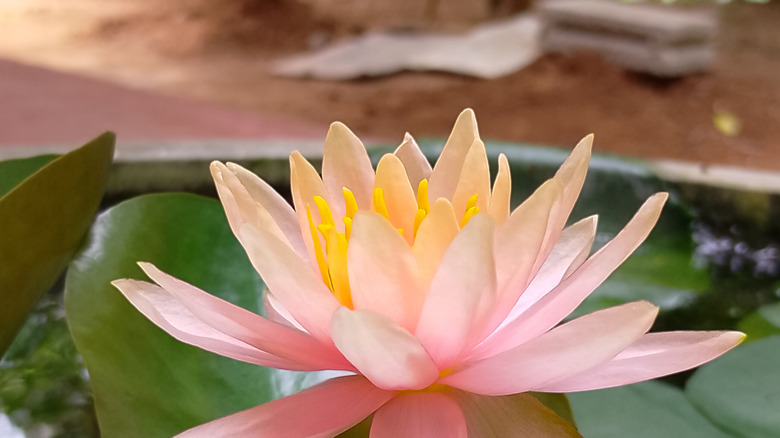
Planting water lilies is not the time to use the same potting mix that works for your houseplants. Most of these mixes would be too light, and common ingredients like perlite will actually float to the top of your container once a potted lily has been submerged in water. Instead, this is a rare time in container gardening where you can may be able to use dirt from your yard, but only if it's the loam or clay-loam type. If your soil is too sandy, use a special mix formulated for water-dwelling plants, such as Aquascape Pond Plant Potting Media.
Pour the soil into a round container between 12 and 20 inches in diameter, stopping when it's two thirds full. Plant this tuber in the pot's center, covering the roots but leaving its crown exposed. Submerge a wide pot into a larger container that is full of water such as half a barrel, a stock tank, or even a small pool.
Before planting water lilies, you should know the positioning of the roots differ based on the type of water lily you're growing. Hardy water lilies grow in a horizontal pattern from special stems called rhizomes that should be 18 to 24 inches underwater. Place the rhizome at one edge of the container so that the crown of the plant is facing the middle. When grown, their lily pads and blooms will appear to float close to the water's surface. In contrast, tropical water lilies have stems that stand up straight and blooms that sit further above the water.
Ways to add water to your new water lily patio garden
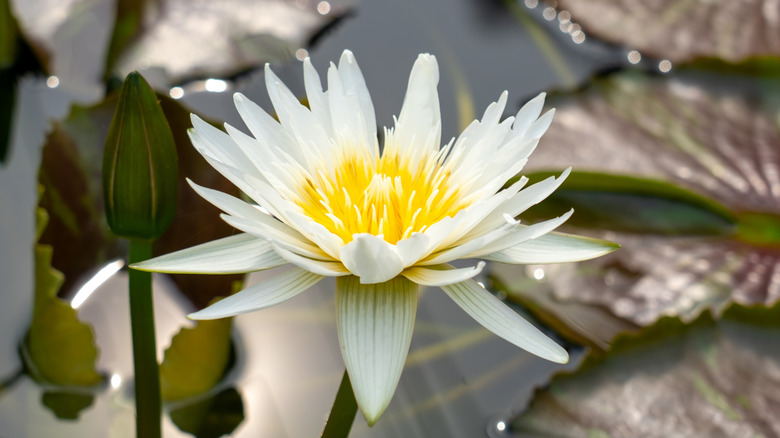
Once your water lilies are planted, they'll of course need plenty of water to grow in. Mimic pond conditions by submerging the pot with the waterlily into a bigger, water-filled container. To keep the soil contained, so you should cover up the bottom drainage home with a mesh screen so it won't spill out. Also, place some rocks or gravel on top of the soil to further weigh it down before you submerge.
Settle the pot with the plant into the larger container, deep enough so that they're 6 to 18 inches below the water. You can start growing them at the shallower range of this depth and lower them as they grow by placing the pot on top of bricks and gradually removing them.
The water lilies will be happiest in still water, so avoid making the pot into a dramatic water feature with a fountain. They do best being planted when the water temperature is higher than 68 degrees Fahrenheit. In addition to their water needs, the plants need at least 6 hours of sunlight a day and too much shade from trees or structures can disrupt their flowering, so move your patio garden somewhere they can bask in the sun. For shadier areas on your patio or yard, it's better to DIY a bucket pond with aquatic plants that need less daily light.