

Don't Forget This Crucial Step The Next Time You're Resealing Tile
We may receive a commission on purchases made from links.
Having tile throughout your home is a major plus. Whether it's in the bathroom or the kitchen, this durable floor or wall material makes any interior feel clean and polished. Knowing how you really should be cleaning your tile floors or walls is a start, but regular cleaning on its own isn't enough maintenance. You also need to reseal tiled surfaces every one or two years, especially in wet spaces. Over time, the porous grout lines between the tiles and other materials absorb moisture, leading to staining and water damage. To avoid this, homeowners should prioritize resealing these joints, but it's crucial to do it correctly to ensure long-lasting protection. That includes an important first step people often miss: removing the old caulk.
It's tempting to think that adding fresh caulk over the existing layer is an easy fix. In fact, it's a temporary solution at best. The crucial step of removing the old caulk — the step that's often forgotten in a DIY resealing project — is essential for the success of your tile surface. Removing old caulk isn't just about aesthetics, though new caulk on a freshly cleaned surface will look better. It's a necessity. Since caulk doesn't adhere well to itself, the new layer applied over the old is prone to peeling and leaking. Instead, you need to remove every last bit of the old caulk, including any residue, before applying a fresh bead. You'll also need to learn how to choose the perfect caulk for any job; not all caulk is created equal.
How to remove old caulk before resealing your tiles
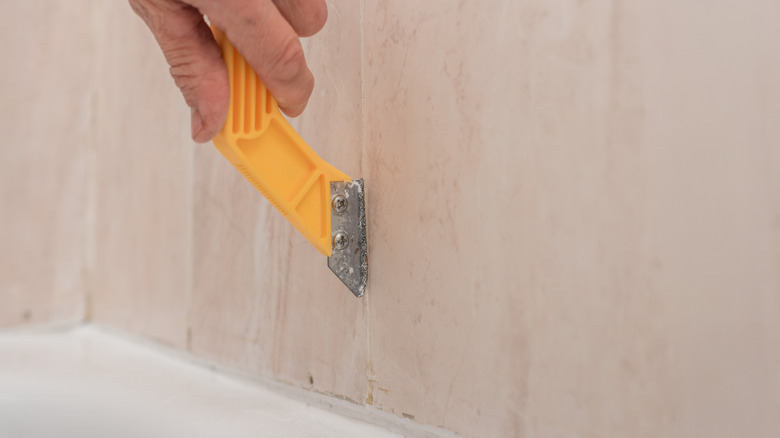
Put down the caulking gun — you're going to need to do some prep work first. You need to remove the old caulk before applying the new with an Allway 3-in-1 Caulk Tool or similar product. If the old caulk is silicone, which is common in high-moisture areas like bathrooms, it can be notoriously difficult to peel off. If the caulk is brittle, a caulk remover gel can break the bond. For stubborn caulk, use a pair of needle-nose pliers to grab the end of a bead and pull it out of the tile gap.
After removing the old caulk from around your tiles, check for mold. If you've removed the caulk and see black spots underneath, the seal was likely compromised for a while. Before resealing, you'll need to treat the gap with a 10% bleach solution or a dedicated fungicidal wash, like Concrobium Mold Control, to kill mold spores. It's crucial to have a bone-dry surface before reapplying new caulk, since moisture can hide in the gap for a surprisingly long amount of time.
After letting the area dry for at least two to four hours, apply painter's tape about ⅛ inch above and below the joint. Apply the caulk and smooth it down with a wet finger or a tool. Peel off the tape immediately, while the caulk is still wet. It's important to keep in mind the common mistakes when caulking your bathroom, such as cutting the tip at the correct angle, using denatured alcohol while smoothing, and allowing the caulk to dry completely. Rushing through the preparation work or the actual job will only lead to the new bead failing.