

Everyone Owns One — The Kitchen Tool That Has Ancient Origins
You might think that modern human life looks nothing like it did in ancient times. Today, we have a myriad of inventions that make routine tasks easier. Cell phones, televisions, air conditioning — name a problem or chore, and we've found a way to streamline it or make it more bearable. It can be hard to believe that anything from ancient history has stuck around as we continue to make our houses into smart homes. There's absolutely nothing wrong with enjoying the comfort that comes with innovation. There is, however, at least one chore that our ancestors perfected. Low and slow cooking that results in tender, juicy, and flavorful meals has been facilitated for centuries by a unique pot: the Dutch oven.
The earliest recorded evidence of primitive underground earth ovens in North America dates to around 10,000 years ago. The technique was fairly simple. Ancient cooks dug a pit and filled it with hot rocks. They placed anything they wanted to cook on top, and then covered everything with a layer of organic matter to seal in the heat. This style of cooking is still in use today — barbacoa pits in Mexico or hāngi in New Zealand are modern-day examples. While digging a pit in the backyard isn't common practice for most people anymore, the science behind this cooking method is something that you're at least familiar with and possibly even use regularly. Dutch ovens — yes, even bank-breaking Le Creuset Dutch ovens — are used to create the same low and slow cooking conditions as ground ovens. Next time you make a juicy pot roast or a delicious loaf of fresh bread, thank your innovative ancestors.
How do Dutch ovens work?
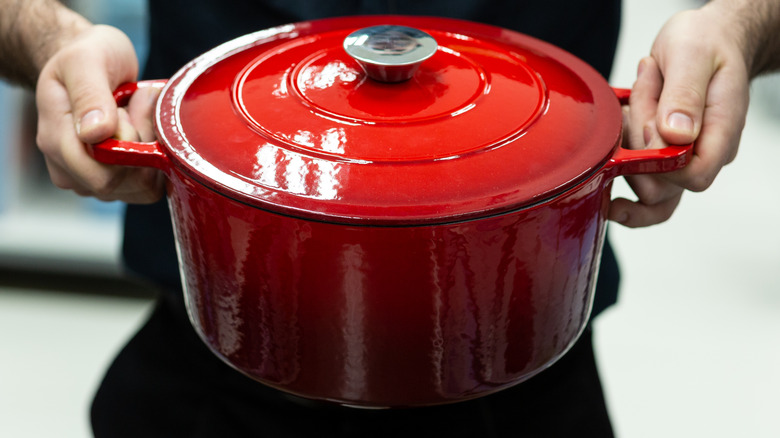
Two things set Dutch ovens apart from other cookware: thick metal walls and a tight-fitting lid. Most modern pots and pans are designed with relatively thin walls and lids with steam vents. They quickly heat and cool food. Dutch ovens are designed to do the opposite. They trap heat and steam, allowing the temperature to gradually rise to a consistent (and often lower) level. If this sounds familiar, it's because it is.
In ancient underground ovens, the thick lid of natural materials trapped the heat of the hot stones, performing the same function as your Overmont 5.5 Quart Enameled Cast Iron Dutch Oven. The result was — and is today — a temperature controlled interior where food can cook for hours without burning or losing too much moisture. Everything from tender braised meat and delightfully crusty bread to stews and soups benefit from this low and slow cooking style.
You don't have to splash out on a big-name brand of Dutch oven, either. Costco carries Le Creuset dupes that are much easier on the budget. The tech is the same — and it has been for thousands of years. With so many changes and innovations, even just in the last few decades, it can be comforting to know that there's one thing that's remained consistent throughout the bulk of human history. At the end of the day, we all love a cozy, home-cooked meal, and a low and slow oven (made from cast iron or dirt) has always been the way to achieve it.