

That Isn't Grass In Your Lawn: Watch Out For These 12 Weeds That Look Like Grass
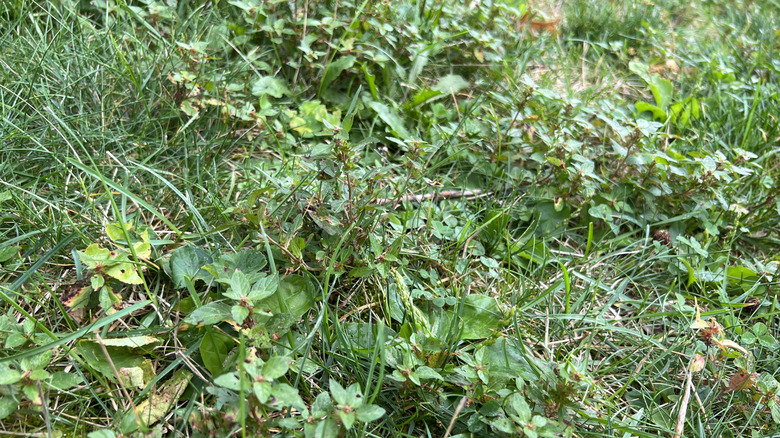
Caring for and maintaining a lawn is often easier said than done. In a perfect world, each section of your yard would be subject to the same exposure to sunlight. There'd be no gradient, which in turn would ensure no areas are more prone to flooding than others, and you'd have no issues with weeds trying to colonize your lawn. Unfortunately, the reality is that such a perfect set of conditions rarely presents itself to the average home gardener. And with that being the case, it can pay, in most cases, to be vigilant for signs that your lawn is under attack.
In fact, there are various weeds that can easily fool you into thinking that they're grass. Some of them are fairly innocuous, which is good to know. In fact, depending on the conditions of your garden and how tricky it is to grow regular grass, you might actually be thankful for the appearance of something like carpet crabgrass. But if it's the first tell-tale shoots of running bamboo that are starting to broach the surface of your soil, then without speedy action, your lawn could be in trouble.
If you're unsure what those new shoots of growth around your garden are, this guide is for you. In it, we'll cover 12 common weeds that look like lawn grass. From bamboo and carpetgrass, to nutsedge, false brome, and horsetail, we'll explain how to identify each of them. Perhaps more importantly, we'll also offer tips on how — and how not — to go about removing them.
Crabgrass seedlings look just like regular lawn grass
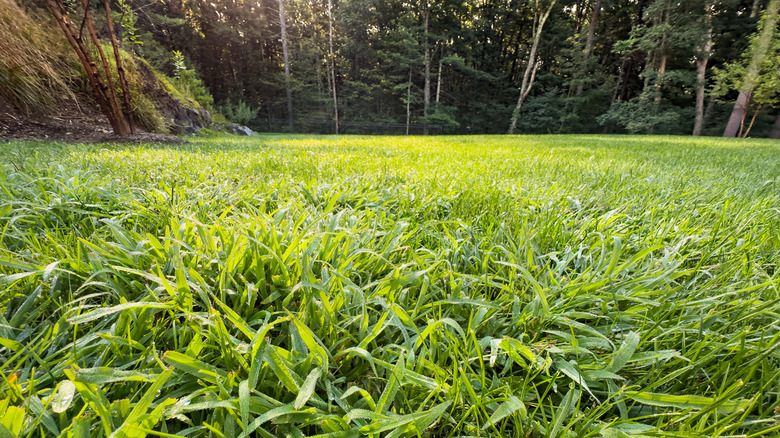
When crabgrass (Digitaria spp.) first starts to establish itself, it's easily mistaken for a lawn grass. As it matures, it becomes more easily identifiable, first with light yellow-green leaves, and later, foliage that begins to redden with age. Unlike other grass imposters, it's tricky to rule it out based on where you live, since it grows around the country. Having said that, it loves areas with full sun and dry soil. Give it those two things, and it can quickly cause problems in your garden. It spreads aggressively, too, in fact it can overtake thin, unhealthy lawns in as little as a single season.
Sounds bad, right? Well, it can be. Fortunately, there are a few ways to combat crabgrass. One is adopting simple habits to ensure your lawn grows thick and healthy. For example, make sure that you water it frequently (without overdoing it) and ensure that any sparse areas are quickly overseeded. Check the best lawn mower setting for your grass type, and don't forget to sharpen your mower blades every now and then, to ensure a clean cut.
And if prevention fails? In that case, you'll need to shore up the health of your regular grass, and consider raising the height to which you mow it. Crabgrass produces thousands of seeds, which in turn remain viable for years to come. By keeping your lawn slightly higher, you effectively suffocate these and prevent them from germinating. You should also arm yourself with herbicides. Pre-emergent types can be used in the spring, with the goal of stopping new seedlings starting. Post-emergent chemicals can then be used on new, young plants. To physically remove crabgrass, pull out the plants when they're young, before their roots have a chance to get established.
Yellow nutsedge is an imposter that can quickly spread if not dealt with properly
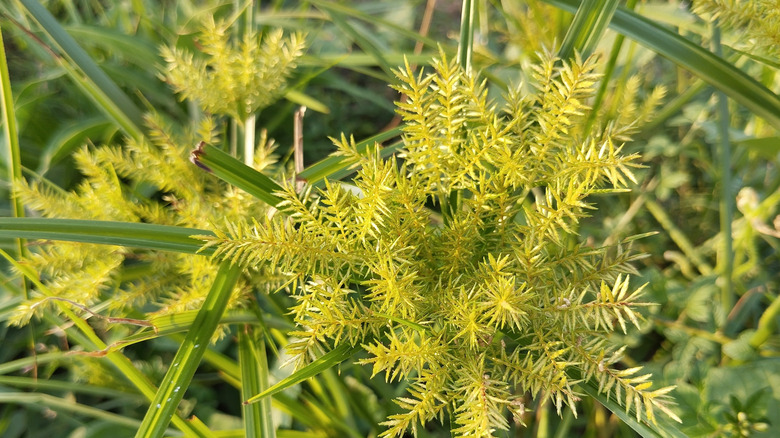
Another problem plant that grows throughout the United States, yellow nutsedge (Cyperus esculentus) can be identified by its yellow-green, fast-growing, V-shaped blades. It often grows much quicker than the grass surrounding it, especially if the soil is sun-soaked, moist, and loose. And as with many plants, if you'd prefer to avoid yellow nutsedge taking root in your lawn, then it's best to avoid overwatering your lawn.
Has it already established itself? In that case, the best way to remove nutsedge from your lawn is with great care and attention. You shouldn't just try to pull it out when you see it. Yellow nutsedge grows via underground tubers, and if you're not careful, these can easily become detached or broken. When that happens, new plants start to grow, thus making your problem worse, not better. Instead, you should dig around the affected area and aim to lift the plant out of the ground — roots, tubers, and all.
In the case of serious infestations, treatment with herbicide may also help. Products with active ingredients like sulfentrazone and halosulfuron are recommended, and can be surprisingly effective when sprayed directly on the plants. Whichever method you try, check back in with the affected area periodically, and repeat the process. Again, any leftover tubers are likely to sprout new nutsedge plants, meaning it may take a few rounds of control work to fully negate your nutsedge problem.
Quackgrass is slightly thicker and taller than regular cool-season grass
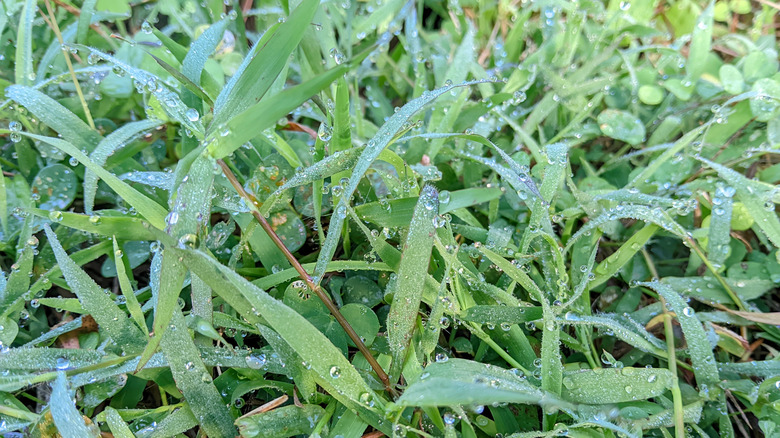
Identified by the blades' small "arms" that wrap around the stem where they meet, quackgrass (Elymus repens) is another aggressive spreader that needs quickly nipping in the bud. It's a cool-season grass type, commonly found between hardiness zones 3 to 9. In other words, it enjoys sunshine, but it'll also quite happily put up with partial shade. It's not especially fussy about the soil type, and because of its chemical make-up, it can actually act like a herbicide to the other, more desirable plants around it — not what you want near your roses!
It grows with underground rhizomes, which means that if you find it in your lawn, you should avoid removing quackgrass by pulling it out of the ground. If you do, and you leave even a tiny piece of rhizome in the ground, a new plant will start to grow. Instead, you should dig around the plant carefully, and lift everything out as one. You may also need to use a non-selective herbicide, depending on the extent of your infestation. If you can, dig it out whenever it appears. Do that, and be consistent with your efforts, and you may be able to stay ahead of the problem and actually eradicate it.
Annual bluegrass dies off in the heat of summer, often leaving unsightly brown patches
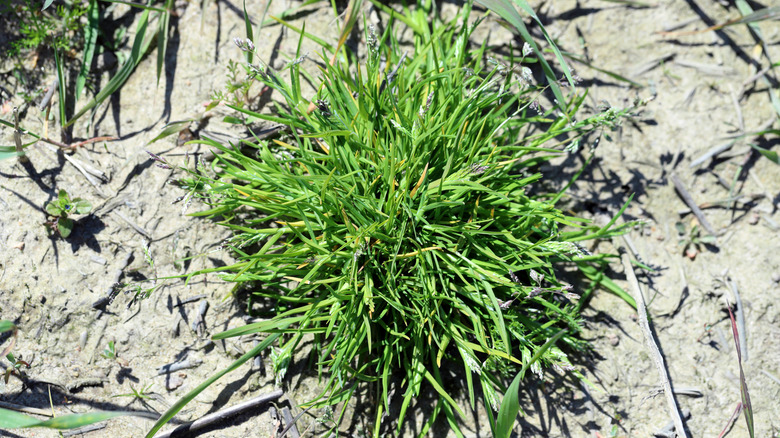
With its aggressive tendency to spread and overtake areas, the sight of annual bluegrass (Poa annua) is enough to sow fear into even the most experienced gardener. However, despite such speedy spreading, it's often quite easy to remove poa annua from your lawn. First, though, you need to be sure that you've correctly identified it as bluegrass. This plant has small, needle-like blades, which usually appear in the fall. They're lighter in color than regular grass, and form "tufts" of fine foliage. These eventually develop white seed heads, even when mowed short.
In the summer, especially in warmer climates, you may notice your patch of annual bluegrass dying back and "browning." To control it, the best bet is to wait until it dies back, then mulch over the affected area to ensure any seeds don't spring to life come autumn. If it doesn't die back, then pull the plants wherever you find them, again being sure to mulch the area when you're finished. To avoid future infestations, try to ensure your lawn soil doesn't become too compacted, and avoid overwatering your grass. These can both help pave the way for an infestation, effectively "predisposing" your lawn to invasions.
Bermudagrass can spread aggressively in areas you don't want it to
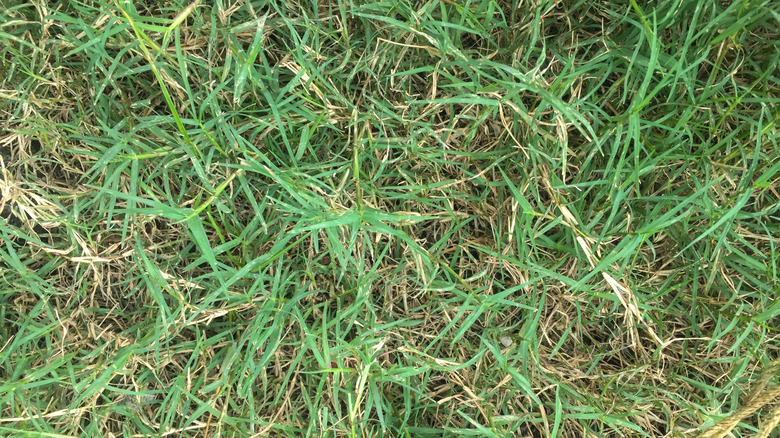
Depending on where you live, a flourishing patch of Bermudagrass (Cynodon dactylon) could either be a sign of a problem, or a reward for your gardening efforts. It's widely used in hotter climates for lawns, and it remains a perennially popular choice for golf courses in the hotter parts of the United States. Elsewhere, it's often considered a weed — one of the worst grass weeds in the world. It grows readily between hardiness zones 5 and 10, with thin, sharp-tipped leaves, and it has a green or blue-green color. It feels slightly rough to the touch.
In order to properly control Bermudagrass growth, it's important to know how it grows. In fact, it grows in three separate ways, which is what makes it so hard to control. Firstly, it utilizes stolons, which rather look like vines spreading over the soil's surface. It also grows via rhizomes — those underground roots that make quackgrass growth such a quandary. Just to be sure, Bermudagrass also self-seeds, making it something of a "triple threat" in gardens where it's not wanted. To control it, non-selective herbicides, like glyphosate, can be used in areas where no other plants are likely to be affected. For larger infestations, you may wish to dig it up, root and stem, to ensure everything in the area is removed.
Goosegrass thrives in compacted, high-traffic areas
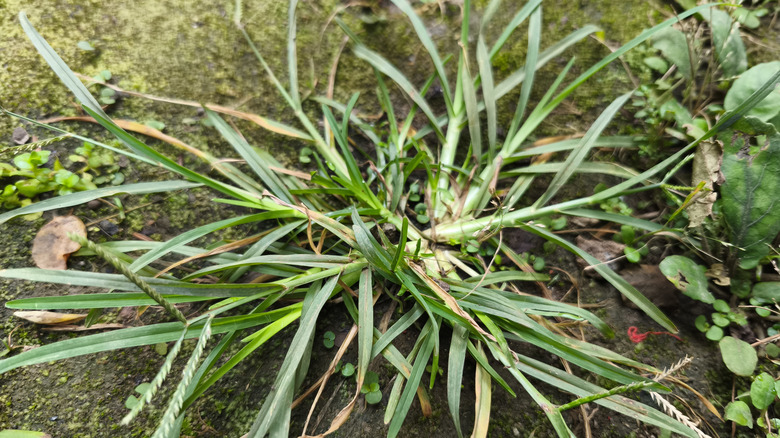
Similar to crabgrass, but with tougher roots, goosegrass (Eleusine indica) can be identified by its growth style. It grows readily between hardiness zones 8 and 11, forming a flat rosette with a distinct white center where the blades meet the root. It's often found in high-traffic areas, since those are where the soil is most likely to be compacted and the grass short or thin. Once it's established, the roots can be hard to pull out. On the plus side, it doesn't spread as quickly as other annoying species. However, like the rest of them, the key to keeping it at bay is prevention rather than cure.
One of the biggest mistakes you can make when removing goosegrass is waiting too long. If it's allowed to set seed, it will spread, and if you fail to get the entire root system, that may also cause it to return. In other words, if you see it, then pull it up straight away, and be sure that you pull out as much of the central taproot as possible. If you have lots of goosegrass growing in your garden, then again, remove as much as you can, but be sure to treat the area the following season with a pre-emergent herbicide.
Bamboo should be dealt with as soon as you spot it
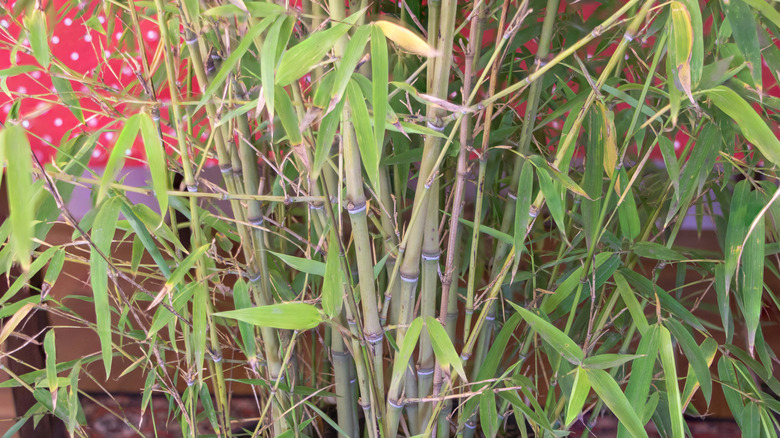
There's a reason that you should never plant running bamboo (Phyllostachys spp.) without first installing barriers, and that's because it spreads — like wildfire. Honestly, it does not care about boundaries, and if planted without the installation of a barrier, can quickly become a bone of serious neighborly contention. It displaces native plants as it goes about its business, and if allowed to do so, can naturalize an area in its entirety.
Bamboo initially grows with small, grassy shoots, which is why it's so often confused as grass. In actual fact, it is technically a member of the "grass" family. However, those shoots will just keep on growing upwards, and defending on the type, can eventually "bush out" with fellow shoots and start to dwarf your fencing. The key with bamboo is to act fast, and get rid of it as soon as you can. You need to remove as much of it as you can, too, and you may find yourself removing new growth for years. Even a small piece of bamboo rhizome, if left in the soil, can turn into a new plant.
False brome colonizes shady areas fast
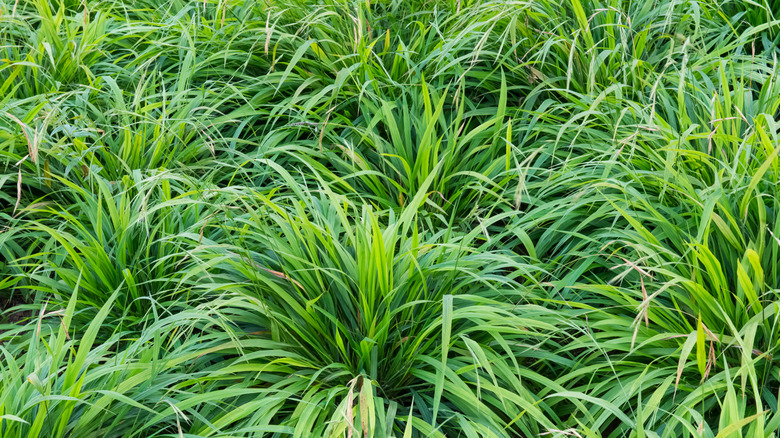
Common in the Pacific Northwest and along the East Coast, false brome (Brachypodium sylvaticum) thrives in forested and shaded spots. It tends to outcompete native plants, too, which means that getting rid of it promptly is important in order to preserve the rest of your yard. Now, the issue, as with every plant in this guide, is that this weed looks an awful lot like grass. To discern the two apart, look for wide, grassy blades that arch as they get longer, and for patches of it that grow in "clumps."
Once you've identified your issue as false brome, ask yourself: how extensive is the problem? For small infestations that have yet to get out of hand, you may be able to keep on top of it by mowing, especially for brand-new growth that's yet to seed itself. Alternatively, you may need to dig the plant out. Just make sure you dig deeply enough to fish all of the roots out. This invader grows from underground roots, and if you leave any behind, it may come back. You can also use herbicidal control, although even then, it's usually best to dig the problem out to be doubly sure it doesn't return.
Horsetail is tough to remove once it finds its way into your yard
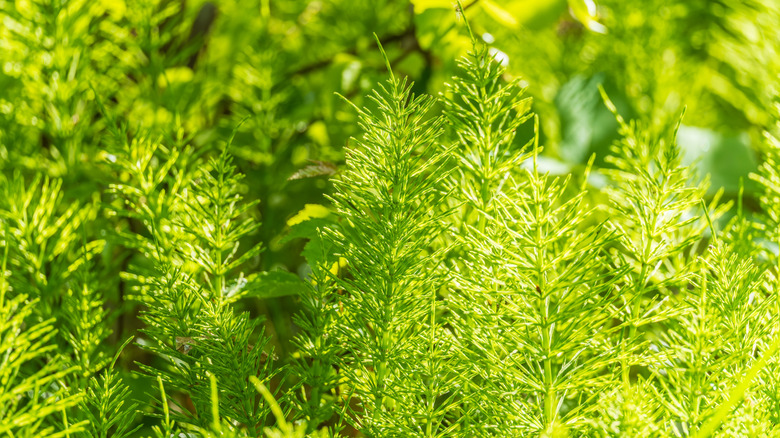
While they're easily mistaken for grass when they first appear, horsetail (Equisetum spp.) plants are actually weeds, and they're unruly ones, at that. They thrive anywhere between hardiness zones 3 and 11. They grow with jointed stems, with thin, wispy leaves that grow out of a central spine. They usually grow in dense patches, too, especially in areas with moist soil. This means that addressing drainage problems in your yard can help to mitigate against horsetail incursions. And that's certainly something that's worth doing.
Once it's established, horsetail is immensely difficult to remove altogether. Pulling it is pointless, since it grows anew from scar tissue left in the ground. Herbicides are rarely that effective, and neither are home remedies, like salt and vinegar. And before you shake out your trusty tarp, you should know that trying to smother the plant is one of the biggest mistakes you can make when dealing with horsetail.
Instead, it's best to ensure your yard drains properly, and if you can, make the soil nice and fertile. If you still find horsetail starting to grow, then according to the Michigan State University extension, herbicidal products like Casoron are a good choice. Just know that it may take several years of application to fully work its magic, and it's likely to injure other plants growing in the same soil. Alternatively, you could dig the plants out, although you'd have to dig down to at least 6 feet to ensure all elements of the root system are fully removed.
Pampas grass is beautiful, but highly invasive and hard to eradicate
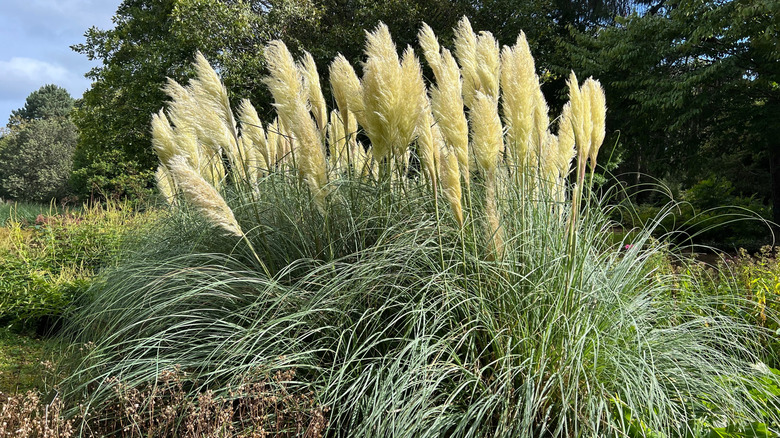
Known for its tall, beige stems and pure-white feathery plumes, pampas grass (Cortaderia selloana) is often hard to tell apart from other grasses when it first starts to grow. What's more, once it's established, it can be very difficult to eradicate. It grows well across hardiness zones 7 to 11. It grows in mounds of medium-green foliage, and once it's rooted, those mounds get bigger every year. They eventually become quite stubborn, and if you're not careful, its foliage can cut your hands when you try to pull it out.
For these reasons, identifying it early — and then removing it — is key to minimizing your headaches with this imposter. Keep mowing over them to keep their growth in check until you have time to do the digging work, and if your plants send out feathery plumes in the fall, remove them. Make sure you remove them promptly, too. One of the reasons planting pampas grass is such a mistake is that each plume contains thousands of viable seeds. In other words, what was intended as a pretty ornamental can quickly take over your entire garden.
Common carpetgrass may be a worth leaving in place if you've struggled growing other types
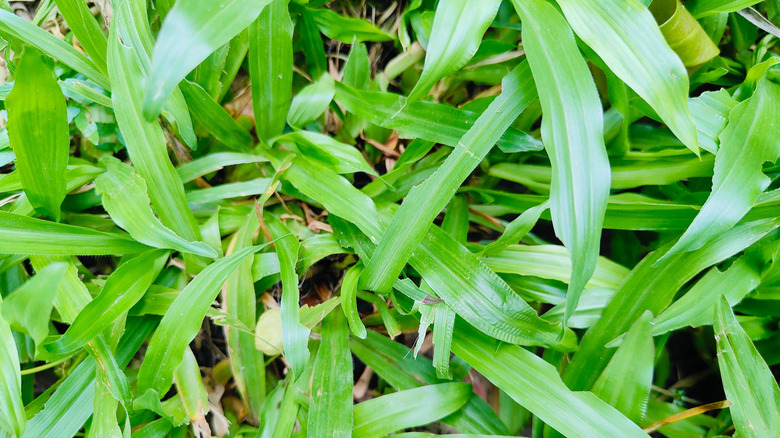
Being native to the United States, there's nothing inherently "wrong" with this particular weed. In fact, there are several benefits of using carpetgrass (Axonopus fissifolius) in your garden. One is that it can actually be a viable lawn alternative, especially if you've struggled to grow other lawn-grass seeds successfully. It likes warm weather and wet soil, and it appreciates plenty of sunlight, so provided you can give it those, it could well be worth a shot.
Just know that if you want the deep-green hue you're used to seeing on the back yards of Pinterest, then it may not necessarily be the best grass for you. Instead, carpetgrass starts out a light green, eventually turning red as it matures. However, it's hardy in its native range (zones 7 to 10). What's more, its flat, blunt, round-tipped leaves form an excellent, low-maintenance ground covering. It can easily be grown from seed, too – just sow your seeds after the first frost, then water daily for the first couple of weeks. After around 10 weeks, your new lawn should be well established. On the other hand, if you want to control this type of grass, then you'll need to amend your soil. Carpetgrass isn't fond of acidic conditions, and it tends to favor poor-quality soil. In other words, adding some fertilizer and lime may help deter your carpetgrass problem from proliferating.
Foxtails can cause serious complications for pets who come into contact with their seed heads
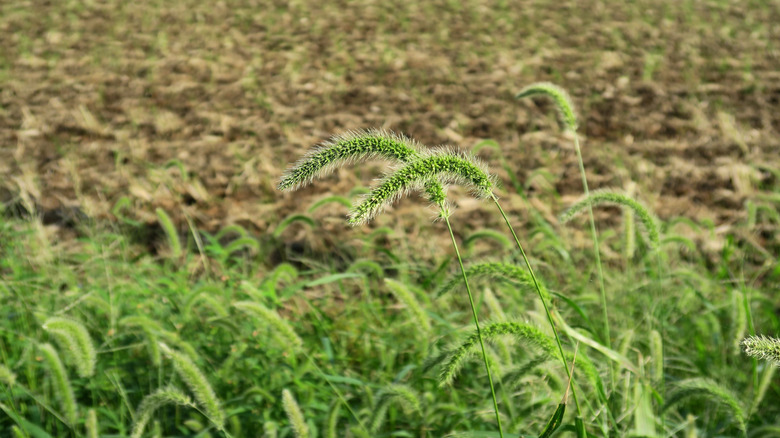
Looking much like a narrow-bladed grass, foxtails (Setaria spp.) seem fairly innocuous. The trouble is that when they develop their characteristic "bottle brush" shaped seed heads, foxtails can cause cats and dogs all kinds of horrible health problems. The seed heads have barbs, which can get stuck in their throats and noses. They can also become lodged in their tails, eyes, and paws. The plants tend to grow best in hardiness zones 5 to 9, especially in dry and sunny spots. They especially love areas with disturbed soil, making newly-tilled flower beds and lawns likely areas.
If you spot foxtails starting to grow in your garden, mow them frequently to prevent them from developing their seed heads. The following spring, treat the affected area with pre-emergent herbicide, before they start to re-emerge. For established plants, use post-emergent herbicides. Alternatively, you can cut them down in the spring, then mulch over the top with cardboard, effectively starving them of the sunlight they need to thrive. Cover over the top with fresh soil, and give the affected area time for the foxtails to die off.