

The Easy-To-Grow Fern That's Perfect For Filling Your Shady Yard
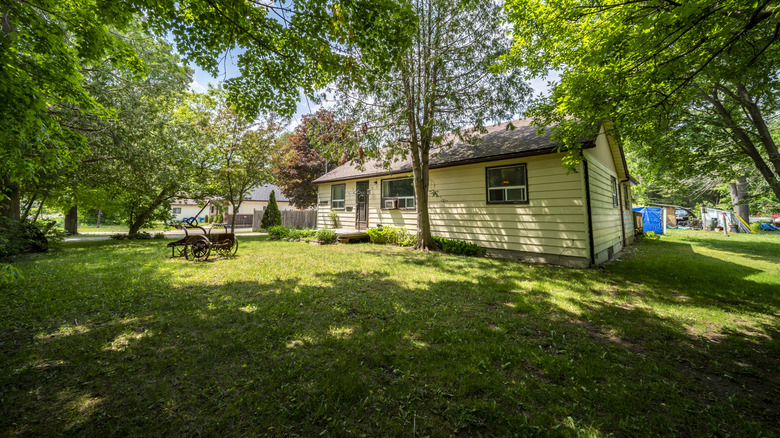
If you have a shady yard, you probably already know that plants often struggle to grow without adequate sunlight. Shade causes many problems for plants. Sometimes plants remain small, and at other times they fail to flower or bear fruit. Luckily, many plants grow well in shade, too. Take, for instance, the easy-to-grow marginal woodfern (Dryopteris marginalis). It is a perennial evergreen that grows naturally in shady crevices of bluffs and rocky ledges. It is so well adapted to growing in shade that it can even thrive with as little as two hours of direct sunlight per day.
Plus, it looks really good, too. It has a natural vase shape and grows about 2 feet tall and wide. Its leathery fronds emerge in circles from the base of the plant, giving the marginal woodfern a graceful, cascading look. You can plant it in woodland-style gardens nestled between rocks for an elegant, evergreen feel. This plant forms tight, dense clumps that bring color to shady spots. It also behaves well in the garden and isn't prone to colonizing the whole space.
When it snows, this plant provides visual interest in winter gardens, and its vibrant green fronds create a wonderful contrast with the white background. Just keep in mind that marginal woodfern is only hardy in USDA Hardiness Zones 4 to 9. If you live outside these zones, you will have to look into other no-mess shade plants to add to your garden.
Growing marginal woodfern in shade
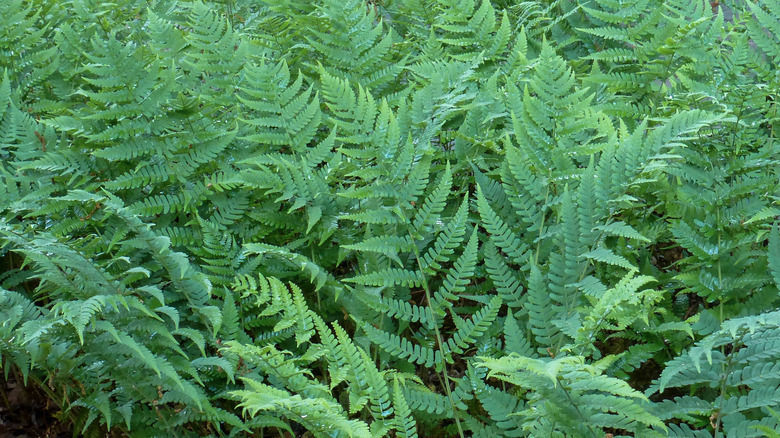
The first thing you want to do when planting marginal woodfern in your yard is to make sure that the soil is slightly acidic. While this plant tolerates slightly alkaline soils, it prefers acidic soil overall. You can easily check the pH of your garden beds using home-based soil testing kits. If the soil is acidic, you can go ahead and plant marginal woodfern. However, if it is too alkaline, you can make your garden soil acidic by using sulfur. Also, make sure that the soil is moist and well-drained. The marginal woodfern can thrive in sunny spots as long as it is watered well and doesn't become too dry.
Once the soil is ready, dig a hole in the ground and plant your fern so that its roots sit about 1 inch below the soil. You can even grow it in containers indoors and outdoors. Just make sure to choose the right container and a well-draining potting mix. Then repot it every one to three years as the plant grows, using a larger container every time. Also, if you are growing it in containers, make sure to water it more often. Containers dry faster and need to be watered more frequently.
If you plant your marginal wood fern in rich soil, it does not typically need any extra fertilizing. However, you can feed it with a water-soluble, balanced fertilizer diluted to half of its strength and applied during the growing season. Don't overfertilize, as it can be harmful to the marginal woodfern. As always, make sure to follow the label directions on your fertilizer.