

Design Takeaways From Ree Drummond's Filming Kitchen
We may receive a commission on purchases made from links.
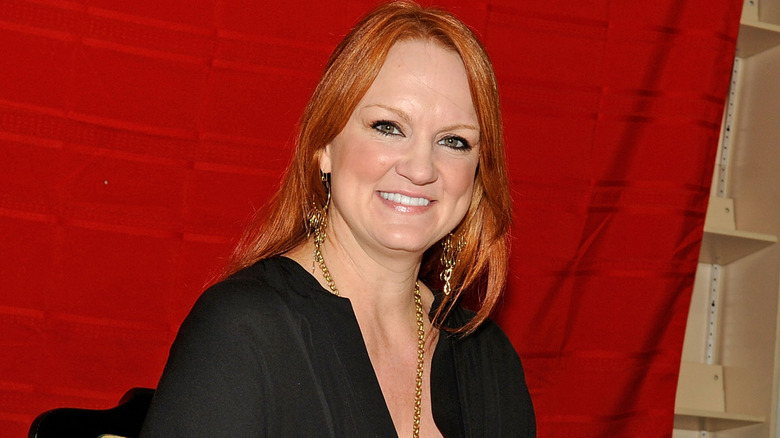
There are plenty of design takeaways from Ree Drummond's filming kitchen. Yet the spacious ranch-inspired location isn't a Hollywood set at all, but rather the very real kitchen on Drummond's sprawling property in Pawhuska, Oklahoma. "The Lodge is a guest house on our ranch, and when we filmed the pilot for my Food Network show back in 2011, I decided to do it there because I often used The Lodge kitchen for events and gatherings ... and because my house was full of kids at the time," Drummond shared with readers on The Pioneer Woman blog.
Sure, there are things that make this rustic space TV-ready (like the long counter with an extra stovetop, angled against the perfect backdrop of well-organized shelves), but Drummond has also created an incredibly user-friendly, thoughtfully designed space — that would work on or off the show. Her masterful blend of cool natural stone and warmer wooden elements, offset by bright, floral accessories, is classic enough to suit a midwestern farmhouse or a condo in New York City. If seeing this design inspiration online isn't enough, you can even visit The Lodge and see the property for yourself if you're ever in Oklahoma.
Engineered marble is a cost-effective and durable countertop option
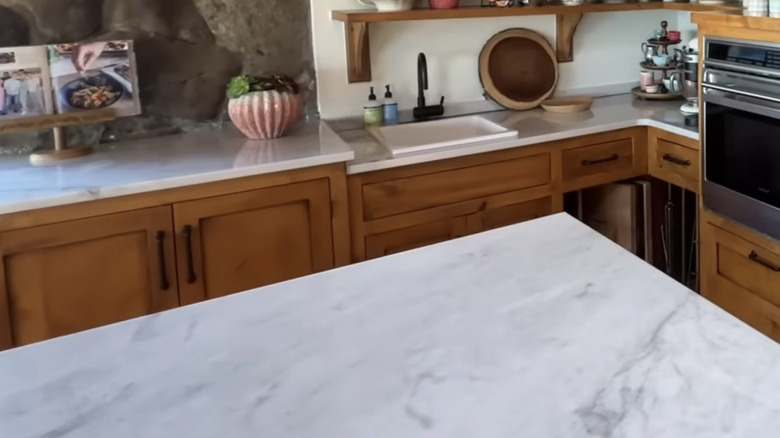
Drummond has an engineered block of Portofino marble in her filming kitchen at the Lodge. She chose the material to sidestep some of the common maintenance issues with solid marble, while still achieving a classic look. "We finally decided on this marble aggregate product after an endless back-and-forth about what to put on the baking island," she wrote for The Pioneer Woman. As solid marble slabs can be expensive or harder to work with, this was the perfect happy medium. "It's a product made from chunks of reclaimed marble countertops held together by a binding material. It has the look and feel of marble, but is less expensive and much more consistent in color," she continued.
Drummond also likes engineered marble because of its practicality in a busy kitchen. Marble requires careful maintenance, and there's a lot to know about how to best protect and care for marble countertops to avoid damage. Drummond prefers this engineered option as it is "less porous than straight-up marble slab and is much less subject to staining." This is a design win, and it also makes for a more user-friendly kitchen that doesn't lose any of its original elegance.
Consider butcher's block surfaces to counter cooler elements
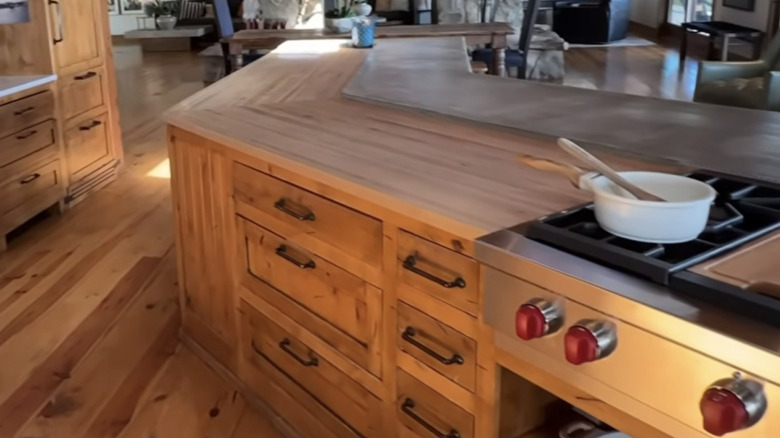
While Ree Drummond does love engineered marble, it doesn't take up all that much countertop real estate in her kitchen. She also warms up the space with a touch of wood. "Our cabinet maker built this hickory butcher block countertop, which covers the entire side of the main island in the Lodge kitchen," she shared on The Pioneer Woman. "I don't know what to say other than the fact that if I could marry a countertop, this would be it." The presence of the butcher block immediately softens the use of colder materials in the surrounding kitchen, ensuring the room feels inviting and homey instead of stark. It also introduces the ever-important "lived-in" quality that sleek surfaces can lack on their own.
The grain of hickory wood also adds nice visual variations to the patterns present on the stone, giving the kitchen more texture. This high-contrast combination creates a slightly rustic, "collected over time" feel and matches the energy of a generational family ranch, rather than a showroom kitchen — even though the Lodge was renovated in the tail end of the 2000s. If you're borrowing this idea, consider limiting butcher block to a dedicated zone like Drummond has, rather than the entire kitchen. There are some downsides to butcher block countertops to consider, such as potential staining, cracking if the wood dries out, and water damage. Keeping these surfaces contained to smaller areas in your kitchen creates a visual pop without any of the hassle.
Open shelving requires some level of styling
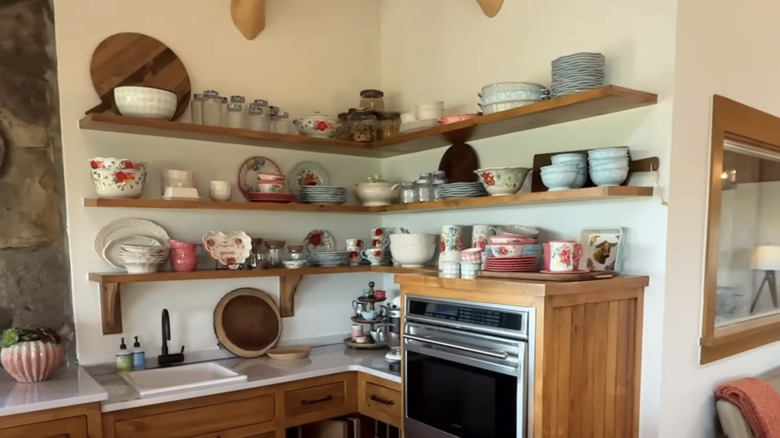
Yes, there are a few things you'll regret organizing on open shelves, and Ree Drummond is no stranger to this. "These shelves are very visible when I film my Food Network show, and I almost always feel like they should look better than they do," she wrote for The Pioneer Woman. "When my TV crew from England was here, they would help me organize and dress up the shelves here and there, but the default state is 'random.'" After her crew gets things TV-ready, Drummond states that everything looks much more intentional. However, Drummond clarifies that even in between shoots, when the shelf styling veers a little more lived-in, they're still an attractive feature.
If you want to style your own open shelves intentionally, think about two main things: Anchor pieces and a thematic through-line that ties together what's on display. For example, during filming, her open shelves aren't a hodge-podge of everything in her kitchen. She has a clear theme of dishware with larger floral bowls as anchor pieces. This helps ground the display, while other items like large serving dishes and glass jars are layered to create a sense of order. You'll also notice that even with the stacks, nothing is brushing the tops of the shelves above it. This final touch leaves negative visual space, so the shelves don't seem too cluttered.
Keeping pots and pans out makes your kitchen look accessible and lived-in
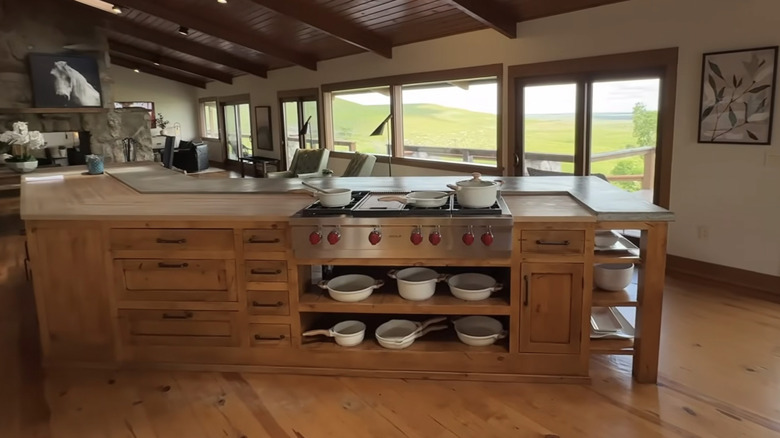
There are plenty of outdated kitchen trends you can leave in the past, but leaning into warm "lived-in" spaces isn't one of these. As styles continue to shift away from cold, showroom-like spaces toward more nostalgic, accessible aesthetics, Ree Drummond's Lodge kitchen offers some key design takeaways. For one, she keeps her pots and pans in view, proving she's been ahead of the curve for years. "I was afraid it would be more for decoration," she wrote for The Pioneer Woman, discussing her pot rail in her home kitchen. "But having the skillets right there actually makes me want to cook more." This concept of open storage for cookware also features in her Lodge filming kitchen, in the form of two open shelves under the stove for easy access.
This choice might not seem bold at first glance (it seems reasonable for a high-use kitchen to have cookware that's easy to get to), but keeping things visible also effortlessly ties into the "organic modern" kitchen trend that is currently very popular in 2026. In addition, open storage visually breaks up cabinetry, so the space doesn't feel closed off or overly formal, contributing to the homey aesthetic that The Pioneer Woman is known for.
You can use dishware as décor
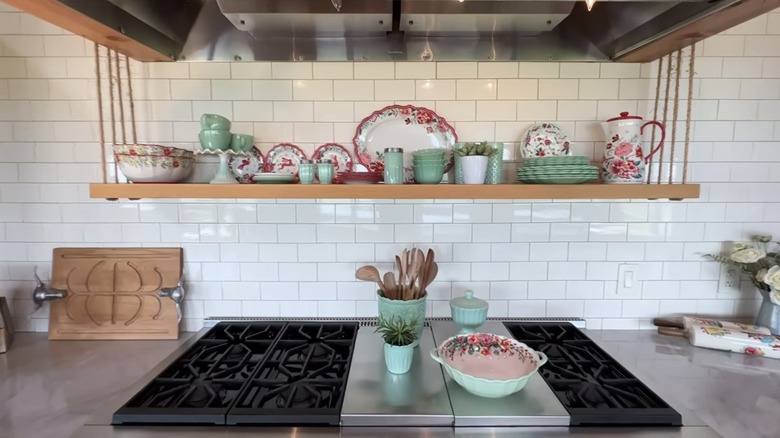
Minimalistic kitchens are no longer dominating design, and are instead giving way to softer, more inviting spaces that feel more traditional. Designs that create an atmosphere that feels more authentically lived-in, instead of purely chic and trendy. Ree Drummond's Oklahoma kitchen has been leaning into this idea for more than a decade. She stores dishware on full display in her filming kitchen to create whimsy and floral fun against a Southern-style backdrop that is full of richer colors. As we've already seen, she has these dishes on both the open shelving in the far corner of the kitchen, but it's also on full display above the stove. Longtime viewers will notice that the style of these pieces rotates seasonally, using florals in spring or deeper tones in fall.
You can easily decorate your home with flea market finds to recreate this nostalgic kitchen design, but you can also achieve a similar look using pieces from Drummond's The Pioneer Woman dishware line (most of the offerings are in this rustic style). For example, you could display the Floral & Retro Dot 12-Piece Dinnerware Set, which looks like it's straight out of your great-grandmother's farmhouse kitchen, or the 6-Piece Bamboo Melamine Bowl Set with Lids, which is perfect for stacking.
Take advantage of all available light sources
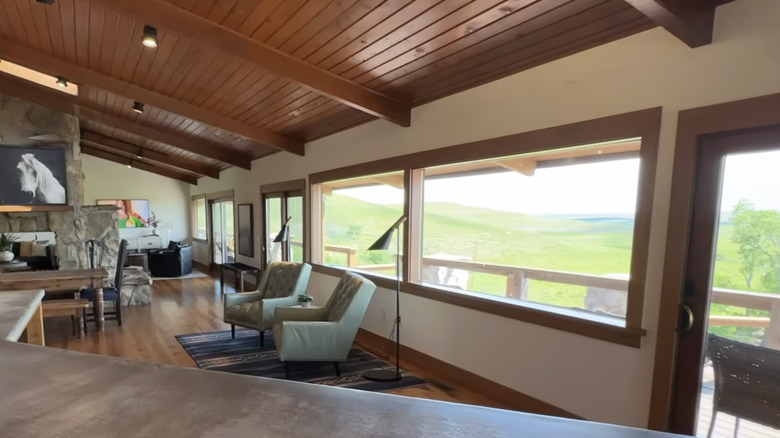
A well-lit kitchen is an inviting kitchen, and natural light plays a huge design role in Ree Drummond's Lodge kitchen. Drummond's filming kitchen is lit by both the stage lights present during filming and a row of large windows that run the entire length of the house. This window set doesn't have any shades or blinds to inhibit the flow of light into the space. On a sunny day on the Oklahoma plains, these windows provide most of the light in the room, assisted by rows of track lighting on the kitchen's soaring ceiling.
The best type of lighting to use in your kitchen is layered lighting. Ambient light sources keep the space bright, while task lighting comes in behind it, so you can see what you're doing when working on more specific tasks. For the best results, follow Drummond's lead and lean into natural light. Keep the windows in your kitchen unobstructed and use track lighting to fill in the gaps around dark spots or work areas, like countertops or above the stove. Drummond didn't fuss too much over the fixtures themselves, either, choosing black because they are so out of the way.
Draw on local culture for decoration inspiration
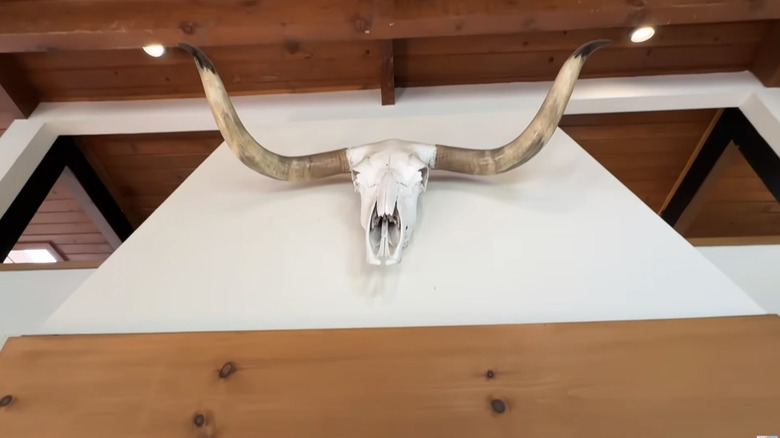
Ree Drummond brings real personality to her filming kitchen by incorporating local culture into the décor. For example, it tracks that she would have plenty of ranch-inspired pieces in a house on the Oklahoma plains, like the cattle skull wall mount just above the stove. Now a member of a storied ranching family, Drummond is passionate about her Oklahoma roots and the history of the prairie that comes along with them. She lets this shine in her kitchen. "The pace in the country is just a little bit more relaxed, it's just kind of removed from civilization a little bit," she said in an interview with Midwest Booksellers, per YouTube. "You know, I get my inspiration from the Prairie because the Prairie does kind of calm me down and takes me to a quieter place and a simpler place."
You can create a similar design in your own home by incorporating your local cultural and visual history into its design. You can hang prints by local artists that reflect your area's landscapes or landmarks. You can pull color inspiration from the natural palette of your region, like desert reds in Arizona or coastal blues in Florida. You can even use building materials inspired by the natural history of your region, like oak cabinets or tables in Texas. Because this design idea is based on specific local elements, these touches won't feel overly theme-y, but still retain plenty of authenticity.
Farmhouse sinks are as beautiful as they are practical
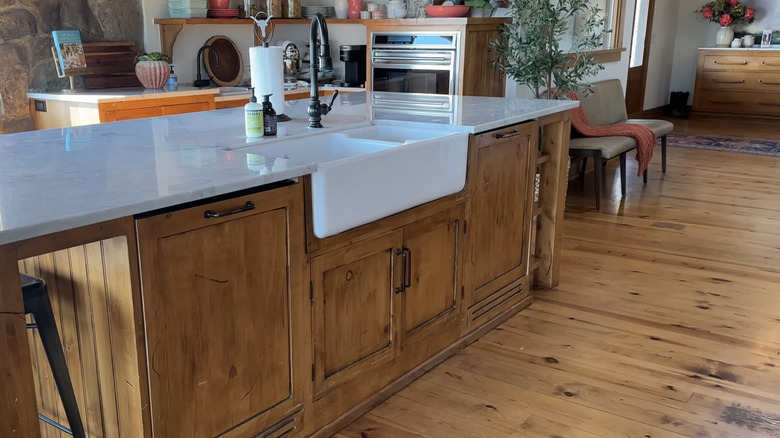
Ree Drummond is always cooking up a storm at the Lodge, whether it's for an episode of her show or for her family. Her farmhouse sink gets a lot of use, so it makes sense that she has a double one, which is perfect for the amount of dishes generated in this environment. Farmhouse sinks are also one of the best sinks for small kitchens because they are so deep. Their depth feels more substantial and high-end than smaller sink styles. It also makes them extremely practical because they can hold so much — even if you only have one of them.
Not only this, farmhouse sinks are lovely to look at, as well. Especially in the way that Drummond has positioned hers. Her farmhouse sink naturally acts as a focal point in this large kitchen. The visual contrast created by a change in material from wood to porcelain and back again adds a real sense of intention to the design, as many kitchens simply run cabinetry in a continuous line. So in this instance, the exposed front of the basins breaks up the long stretches of cabinetry, introducing a more layered look to the kitchen. On a purely practical side, apron front sinks are also a bit more ergonomic, as you can stand right up against the sink, instead of leaning over a narrow strip of counter.
Hiding appliances helps keep your kitchen on-theme
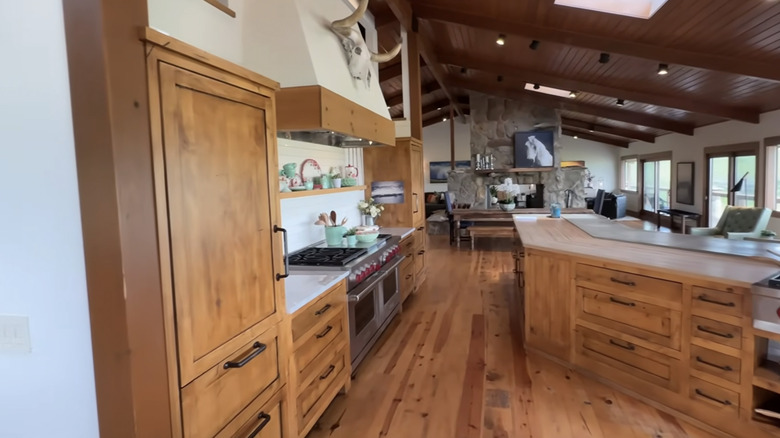
Creating cohesion by ensuring the appliances match the surrounding cabinetry is one of the best design takeaways from Ree Drummond's Lodge. Chrome appliances can clash with the visual narrative, especially in a kitchen with such a strong traditional Southern aesthetic. However, even though the kitchen at the Lodge was redone in the late 2000s, Drummond was ahead of her time in hiding appliances to keep the design theme intact.
By concealing the refrigerators (especially because there are two of them — one on either side of the stove), Drummond was able to maintain a more unified farmhouse aesthetic in her space, rather than veering off into industrial show-kitchen territory due to the overabundance of chrome present. There are plenty of discreet ways to hide a refrigerator in plain sight, and using wood paneling like this is one of them. Nowadays, most popular brands make panel-ready appliances, including LG, Bosch, KitchenAid, Sub-Zero, and Thermador. Panel-ready options do cost more, and require custom installation. But, if a hulking stainless steel refrigerator is going to seriously mess with your kitchen's design, going the paneled route is a sure-fire solve.
Choose seating that adds some tension or contrast to your main design
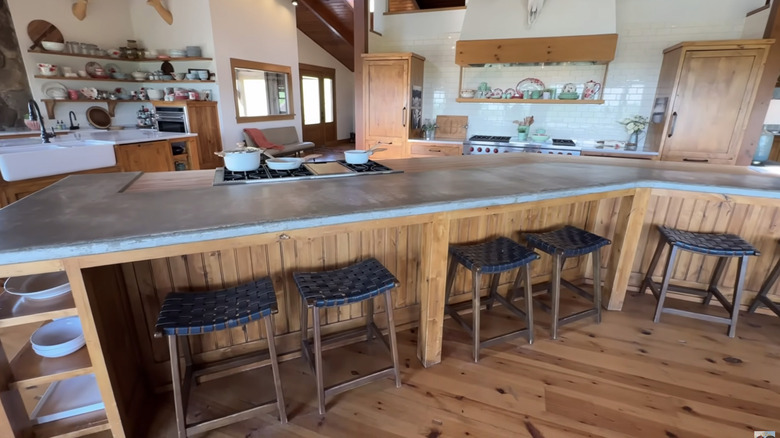
If your kitchen is heavy on wood like Ree Drummond's Lodge, consider bringing in seating options made from other materials. Adding metal, upholstered, or even leather seats for your kitchen table or breakfast nook can help your space feel more intentionally designed. "They're sturdy, stable, and bring a little bit of industrial charm to the very woody kitchen," Drummond wrote for The Pioneer Woman about the stools lining her kitchen's bar. Reaching for options like this, instead of perfectly matching sets that can feel flat, adds more personality and makes a space read authentic. It looks more like objects have been collected instead of carefully purchased, which adds essential character.
Even subtle shifts can make a huge difference in your own space. This could mean choosing bar stools with slimmer metal frames to offset heavier cabinetry, or opting for a different finish or tone from what's already dominant in the room (think chrome legs against brushed brass finishes). Remember, you aren't trying to make a bold statement or incorporate something that immediately draws the eye — so don't go for pink velour just to stand out. Instead, keep things simmering just under the surface. You want just enough variation in these accent pieces to keep the eye moving and to make the space feel thoughtfully curated.