

The Reason Your Lawn Clippings Are Clumping & How To Fix It
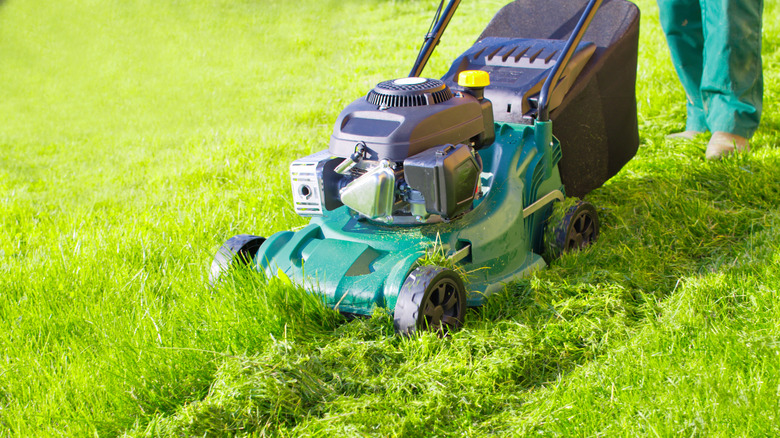
Mowing your lawn and leaving the cuttings on the turf is a great way to add nutrients back into the earth and reduce the amount of waste going to the landfill. But, if you are leaving cuttings on your grass, you may face clumping. This is a pretty common issue, and it can really impact the health of the lawn. When grass cuttings clump together, they can not decompose quickly and will suffocate the turf that is underneath, causing damage. There are a few reasons why clumping occurs, and knowing the cause can help you avoid it occurring again and allow your lawn to stay healthy over the seasons. Clumping may happen because of the type of lawn mower you are using, the conditions in which you are mowing, and how often you are mowing your lawn.
To figure out why clumping occurs for you, consider the conditions and weather. Clumping naturally occurs when the grass is wet. If you aren't mowing on wet days, clumping may be due to your lawn mower. You may not need a mulching mower, but these mowers do shred the grass into smaller pieces and do the job better. Standard mowers will only prevent clumping if their blades are sharp enough to cut and disperse the grass efficiently.
Finally, consider if you are mowing your lawn too infrequently. Clumping may happen if you have left the grass to grow too long and have mowed it short. The leftover grass cuttings left behind are too long to decompose quickly.
How to fix lawn mower clumping
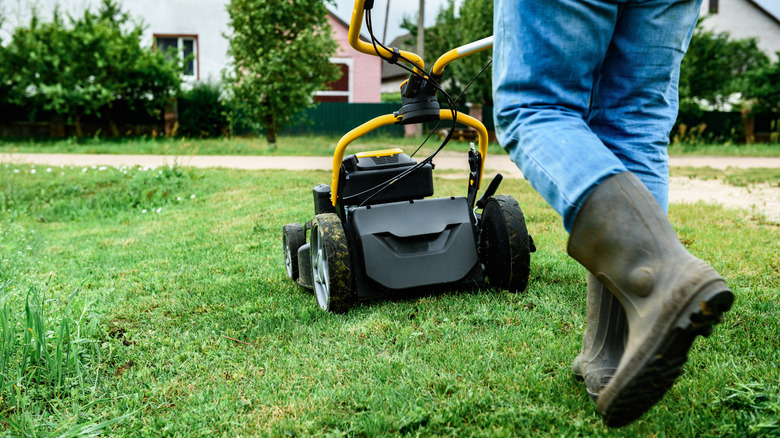
If your lawn mower has produced clumps of grass, you can mow over them again to break them up and disperse them. If they have clumped due to being wet, wait a few days until they are dry to do this. Or, you may wish to gather the clumps of grass up and put them in your compost to get them out of the way and keep your lawn healthy.
However, it is best to fix lawn mower clumping by avoiding the issue in the first place. Prevention is always better than a cure! If the clumping is happening because of wet conditions, this is a pretty straightforward fix. You simply need to only mow your lawn when it is dry. If clumping is occurring because you are mowing grass that is too long, follow a mowing schedule to avoid this. In the spring and summer months, it is best to mow your lawn every 7 days to avoid long cuttings that may clump. Never cut more than one third of your turf when you mow, as not only can long cuttings cause clumping, taking off too much can also stress the grass and cause damage.
You may also want to consider the type of lawn mower you have and its overall condition. You may need to sharpen your lawn mower blades to ensure it is cutting the grass correctly. You may also be able to use a kit to switch your standard mower to a mulching one so the grass can be cut into finer pieces. Thankfully, this is a fairly affordable and easy switch to do.