

Help Tomatoes Grow Big And Healthy With A Soil-Boosting Companion Plant
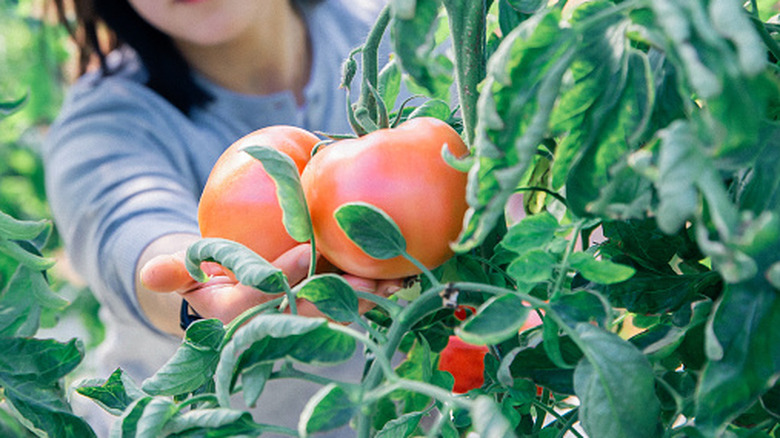
If you've never bitten into a juicy tomato that you've just picked from the vine growing in your garden, you may not actually be aware of how good vine-ripened, homegrown tomatoes can taste. While they're fairly easy to grow as long as weather conditions are right, tomatoes are relatively heavy feeders and need a good balance of nutrients to initiate strong growth and produce those luscious fruits that slice up beautifully to grace a sandwich or add richness to a healthy summer salad.
To begin with, tomatoes need nitrogen to stimulate all that green vine, stem, and leaf growth. One trick to boosting your soil with a nitrogen injection without resorting to chemical-based fertilizers is to plant legumes as companion plants. Legumes are primarily pod-producing plants, such as beans, peas, edamame, clover, alfalfa, and lupins. In fact, there are almost 23,000 different legume species on the planet. But as we're focused on growing edible crops, pairing your tomato plants with plants like beans and peas will provide you with many benefits, including another crop of vegetables you can harvest for your dinner table alongside those big, healthy tomatoes.
On top of nitrogen, tomato plants need phosphorus for strong root development and adequate amounts of potassium for lots of luscious fruits. There is a range of DIY tomato fertilizers that will help your plants thrive, but don't forget to add organic matter, such as compost or well-aged manure, to provide your plants with these nutrients. By growing legumes alongside your tomatoes and adding ample organic matter, you should end up with nice, productive plants that will feed your family all summer long.
How legumes help tomato plants
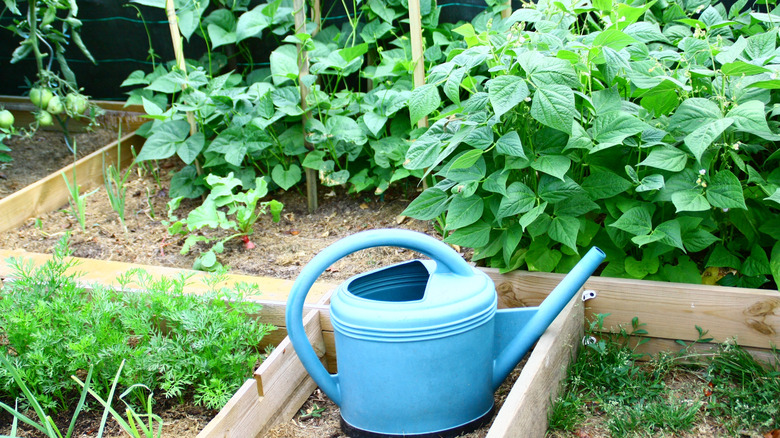
All legumes have this special ability to absorb nitrogen from the atmosphere and fix it to the soil that they're growing in. They do this through the symbiotic relationship their roots have with bacteria known as Rhizobium. The roots of leguminous plants have tiny nodules that house the bacteria, which in turn can fix the nitrogen to the soil, so it becomes an available nutrient to other plants that are growing nearby. That's also why green beans pair so well with spinach in the garden.
The beans and peas will use quite a bit of the nitrogen that their roots have fixed to the soil, but some may end up in the surrounding soil for the roots of your tomato plants to use as well. Because some bean varieties — like bush beans, which make perfect companions for tomatoes — may only live and produce for a much shorter time than it takes for tomato plants to grow their fruits, even more magic happens if you leave the roots of the spent legume plants in the soil to decompose. When this happens, the remaining nitrogen is released and becomes available for your tomato plants.
Of course, you can sow more bean seeds alongside these roots and end up with a continuous supply of not only fresh beans but extra nitrogen as well. Finally, don't forget that there are plenty of other companion plants you should grow next to tomatoes in your garden for their various benefits.