

The Sustainable Driveway Material You Can DIY
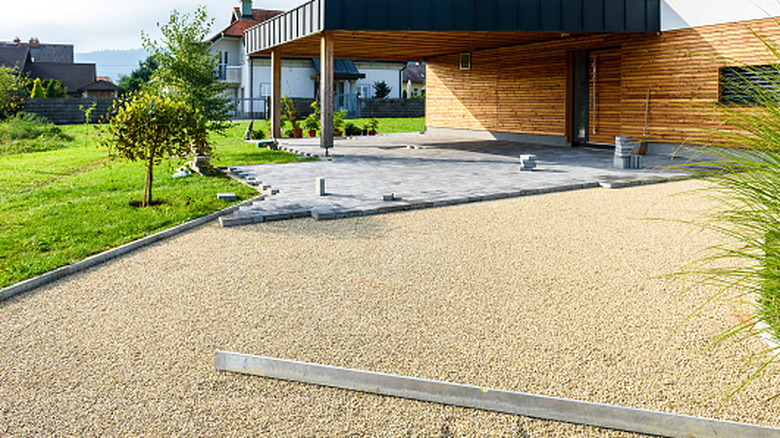
Before you default to redoing your driveway with standard concrete, open yourself up to the possibility of something a little different. There is a wide array of driveway materials to explore. If you're looking for a sustainable alternative, consider a geo grid driveway. Even with a little more effort for installation at the start, you'll be ready to say goodbye to concrete for good once you discover how incredible this DIY option is.
Geo grid driveways, also referred to as permeable pavement systems, are made up of an interlocking network of flat stones. Unlike typical driveways that guide rain towards drainage or retain it, geo grids allow moisture to soak into the earth. This helps to combat pooling and undue erosion. It's tough enough to withstand heavy vehicles and works to naturally filter environmental pollutants. This driveway is not only sustainable to implement but can also improve the surrounding environment. It works to decrease copper and zinc levels, cut down on motor oil presence, and help to maintain healthy groundwater levels. In some flood-prone areas, such as Houston, Texas, some homeowners may even be eligible for tax incentives when installing this type of driveway.
While it is an ambitious project, you can absolutely DIY a geo grid driveway. However, it's important to assess whether or not your property will be a good candidate for one. It's best to avoid installing a geo grid in areas with shallow foundations, excessive tree roots, or a gradient steeper than 20 percent.
Planning and installing your geo grid driveway
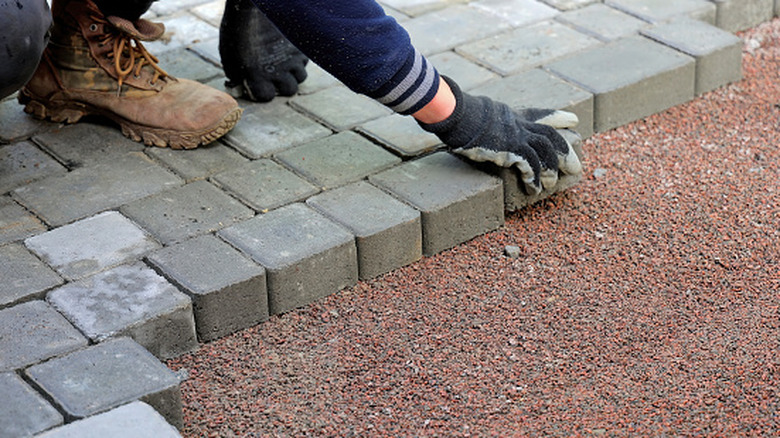
For this project, start by selecting your paver blocks. There are tons of amazing alternatives that may replace concrete driveways in the future, such as mycelium bricks or clay pavers. Once you select your stones, measure your work area, keeping the size of your pavers in mind. Map out a space that you can fill in almost completely with your stones. Draw inspiration from other clever driveway layouts to merge style with functionality. Next, mark the area with pegs and strings.
Now, you'll need to excavate the area. Calculate the necessary depth by factoring in the sub-base, layering course, and stone pavers. A depth of roughly 10 inches is a safe bet for most installations. At this point, it's time to start constructing your driveway. Install reinforced edges along the peg and string outline you created before to hold your pavers in place. You can choose to install a geo textile over the sub-grade; however, this isn't always necessary.
The sub-base is next. This layer is made from compacted, crushed rock. Then, fill in the gaps with damp sand. Lay this layer down as flat as possible. Now, it's finally time to lay down your blocks. Start by filling out the space as much as possible with your pavers. Once you get to the point where you're encountering spaces smaller than your pre-cut stones, you'll need to measure these gaps and cut the stones to size. Fill the gaps in with sand, and finish it off by sealing it all in place with a plate compactor. While it may seem like a lot, you'll end up with a sustainable, durable driveway that looks great, too!