

What To Do If You Find A Turtle Nesting In Your Yard
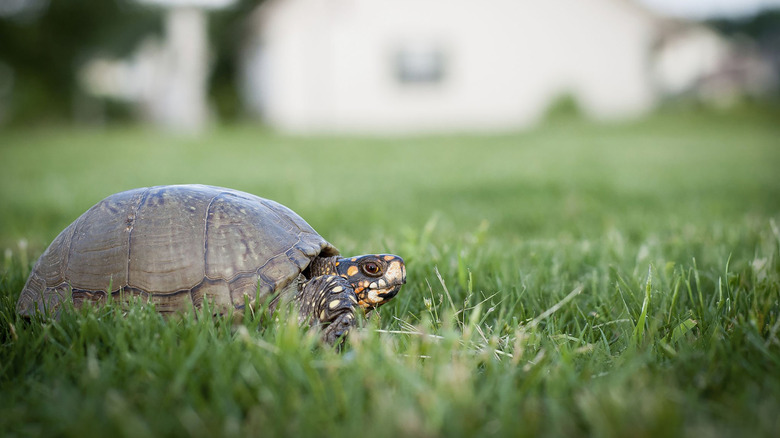
Depending on where you live, your yard may have frequent visitors, from birds and squirrels to the occasional predator. It's important to know what to do in certain situations, like if you find a baby bird lying in your yard or discover a snake has shed its skin on your property. A similar and exciting scenario you may encounter as the weather warms up is a turtle nesting in your yard.
Female turtles tend to lay their eggs in the late spring and early summer and usually pick a sunny location with well-draining, loose soil. Your backyard could become their chosen spot, and once they decide on a nesting site, it can be tough to dissuade them. The general rule of thumb if you find a turtle nesting in your yard is to leave it alone. Several species of turtles are endangered and protected under state and federal laws, so you should avoid interfering with the turtle's nesting process at all costs.
Once the turtle has finished nesting and laid her eggs, she'll leave and return to the water. You can help to protect the nesting site from predators by gently spraying some water over the area to mask the scent left by the mother turtle. If you're concerned a turtle nest will be damaged by a predator like a fox, raccoon, or coyote, you can also lay down a nest cage or chicken wire over the nesting site. Be sure to bury the edges a few inches into the ground so predators can't dig under it. You should also remember to remove the caging before the baby turtles hatch so they're able to get out safely.
Steps to take if the nest is in a dangerous spot
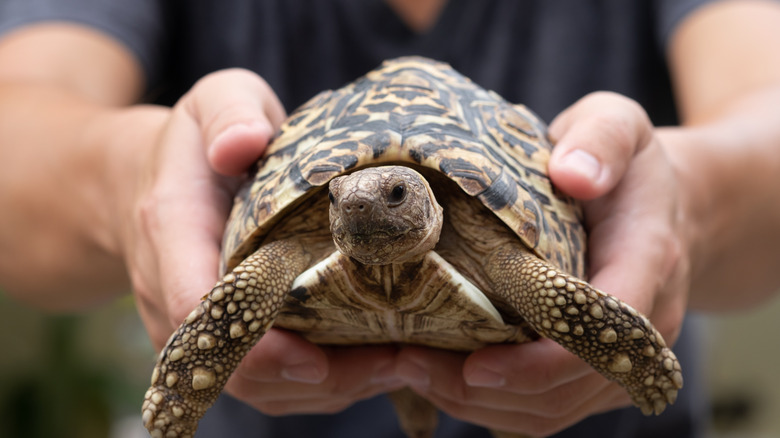
While mother turtles try their best to pick the ideal nesting spot, they'll sometimes choose a dangerous or uninhabitable location. If you find a turtle nesting in an area prone to flooding, near a construction zone, or in a high-traffic area that isn't safe, relocation may be the best option. The first thing to do is contact your local wildlife rescue or turtle rescue organization for guidance and assistance.
If you spot a turtle in your yard that is actively trying to nest in a dangerous spot, your local wildlife professionals may recommend you gently pick her up and relocate her to a better area. Be cautious of snapping turtles, which, as their name suggests, can cause serious injury if they bite. Snapping turtles are usually larger than the average turtle, have a longer tail, and don't have colorful lines or spots on their shells.
Ideally, you should move the turtle as little distance as possible and avoid crossing any roads. You can lay down some cardboard, scrap wood, or another object over the original nesting site to discourage the turtle from returning and attempting to nest in that spot again. In instances where the nesting turtle has already laid her eggs in a dangerous spot, contact your local wildlife professionals for help with relocating the eggs to a safe location.