

What To Do If You Find A Pile Of Sawdust Along Your Wall
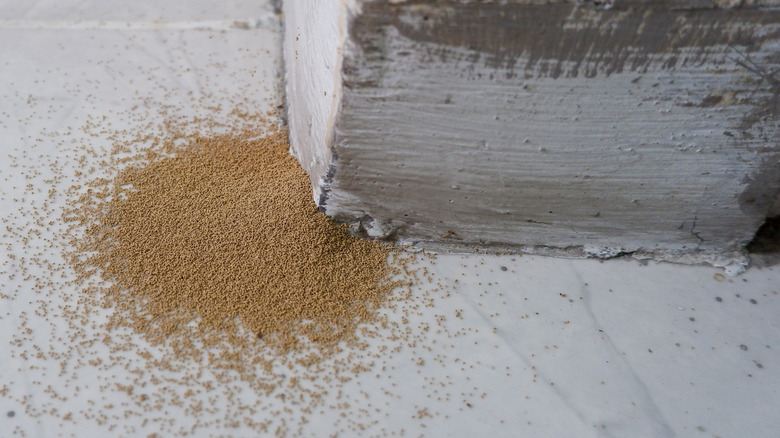
Some threats that could cause significant damage to your home are plain to see. A big storm that may have driving rain and strong winds is usually preceded by dark, towering storm clouds and lightning in the vicinity. When you see these conditions, you may start wondering whether your homeowners' insurance covers hail damage. Other signs of potential home damage are far more subtle. For example, if you see a small pile of what looks like sawdust at the base of a wall in the house, it might be a sign of a large problem.
Although the sawdust could be the result of a someone failing to clean after a home improvement project, the most likely culprit when you see a random pile of sawdust is an invasion of insects. The sawdust pile is potentially one of the signs that you have a termite infestation or a colony of carpenter ants living in the walls.
Understanding the differences between damage caused by termites and carpenter ants will determine which steps will eradicate them. Each type of insect requires a different type of treatment for the best results. Regardless of which type of insect you believe caused the pile of sawdust inside your home, you'll want to deploy treatments as soon as possible to prevent further damage. You should rely on professionals to take care of the issue, as it's not a project made for even those who enjoy doing DIY work.
What to do if the sawdust comes from termites
If you believe you are seeing sawdust that could be related to insects, inspect it more closely. Instead of resembling fine particles that make up sawdust, you might notice that the individual particles have more of a pellet or oval shape with rounded ends. If so, this means the particles are likely frass, which is excrement from termites. Each pellet of frass is extremely small and measures about 1 millimeter in length, so it might be difficult for homeowners to instantly recognize what they're seeing.
In addition to the frass that resembles sawdust, you may have a termite problem if you're seeing small holes in wood and drywall near the frass pile. Blisters near the surface of the wood may also indicate an infestation. Look along the foundation outside your home for signs of mud tubes, which the termites use as tunnels to safely move from the ground into your house.
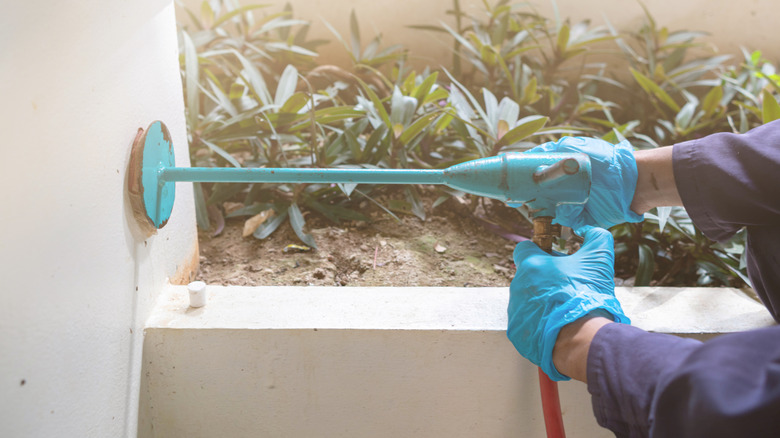
If you see these other clues in addition to the "sawdust," or if you just want to be certain about what you're seeing, call a professional for help. The professionals will inspect both the interior and exterior of the home, even if you're only seeing frass inside the house. The pros look for the presence of termites, but they also determine whether conditions near your home are conducive to a termite infestation. If they find termites, the professionals will determine which treatments will deliver the best results, whether it's a soil treatment, a chemical wood treatment, or installing bait stations.
What to do if carpenter ants are causing the sawdust
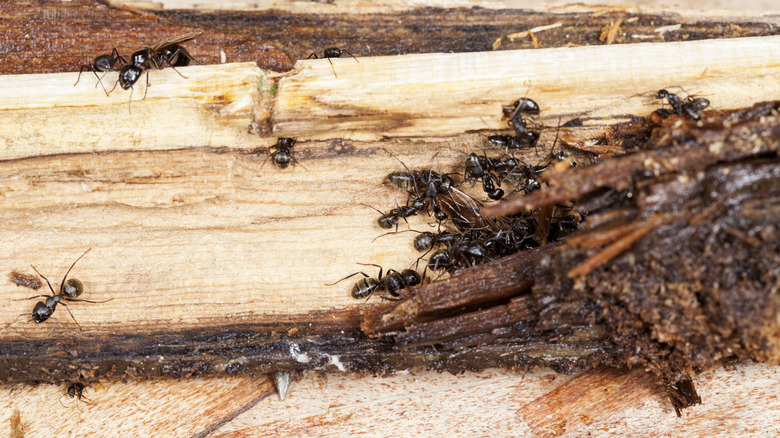
If you see sawdust that is coming from carpenter ants inside your home, it is also called frass. However, it will look different than termite frass because it's not carpenter ant droppings — it's actually mostly sawdust. Upon closer inspection, the carpenter ant frass will consist of a mixture of sawdust, soil, and insect parts. Unlike termites, carpenter ants don't eat wood. They simply bore into the wood and move the sawdust they create out of the tunnels, which creates the sawdust you're seeing. Termites eat the wood and create the frass droppings from it.
If you see small pinholes in the drywall and wood near the sawdust piles, this is a sign of a carpenter ant infestation. You may also hear quiet rustling inside your walls if you have carpenter ants.
If left untreated, carpenter ants can damage the wood inside your home, ruining structural supports and weakening your home's framing. Even though termites are far more destructive and can cause more damage faster than carpenter ants, you should still call for professional help if you believe the sawdust you're seeing relates to a carpenter ant infestation. Professionals will perform an inspection of the house and then use chemical pesticide treatments, usually consisting of bait. The professionals use their treatments to target and kill the queen, which will cause the colony to die soon afterward.