

Keep Aphids Out Of Your Garden With A Companion Plant They Can't Stand
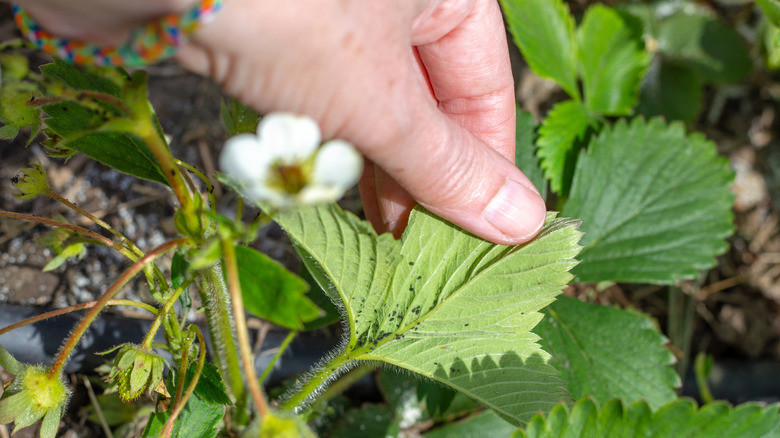
Growing your own fruits and veggies is a very rewarding hobby. From seeing those new, delicate seedlings emerging from the soil to harvesting delicious crops, the whole process is full of excitement and wonder. This means there's nothing worse than seeing pest damage on crops that you've nurtured, fed, and watered for months. A common culprit of crop damage is aphids. These annoying pests can stunt growth, impact the health of your plants, and even spread viral diseases. But you don't have to get the chemicals out to keep aphids away from your garden. Instead, you may wish to use companion planting and opt to plant ginger (Zingiber officinale) near your crops.
There are many plants that work as natural pest control, and they work for a variety of reasons. Some plants encourage natural enemies that keep pests at bay, while others have a strong scent that deters damaging insects. Ginger has insecticide properties that directly repel aphids, with its key compounds — gingerol, shogaol, and zingiberene — being a natural way to keep these pests away. A 2025 study published in Horticulturae found that using ginger shoot extract on crops significantly repelled aphids, showing us a clear link between the plant and the pest. However, it must be said that this study, and other similar ones, focus on ginger shoot extract over the plant itself. Still, it may be helpful to explore using ginger in aphid management alongside other methods.
How to use ginger for aphid management
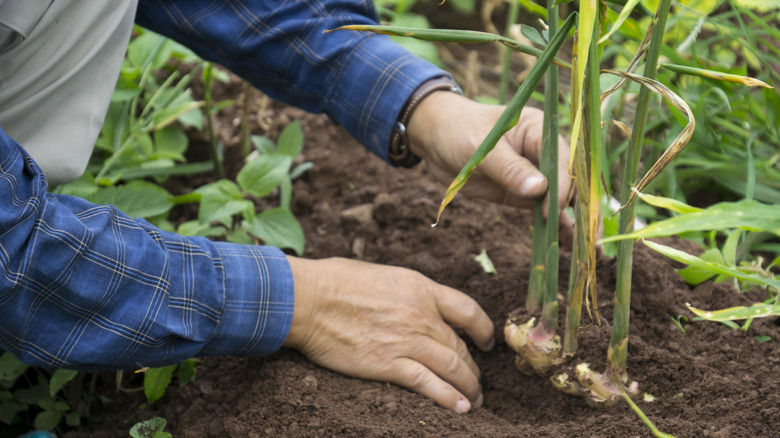
When using ginger for aphid management, you need to first consider whether you can grow ginger in your garden for companion planting. This means thinking about the space, plants, and conditions you have. Ginger rhizomes stay shallow in the soil, growing horizontally, so it is best to match them with plants that have deeper roots. Planting ginger alongside shallow-rooted crops, such as garlic, can mean they are both fighting over water and nutrients. However, deep-rooted plants that are commonly impacted by aphids, such as squash and tomatoes, should do well when planted with ginger.
Ginger can be grown in full sun or partial shade, depending on how hot your climate is, which means it is fairly versatile in regard to where you can add it to your veggie garden. When using ginger to protect your crops from aphids, you need to map out and space your garden veggie plants to ensure they all have enough room to grow to their mature size. Ginger should have 6 to 8 inches of space for each plant. Check the spacing for the other plants, and plant accordingly.