

Not Size Or Scale: The Simple Design Element That Make Your Garden Feel Bigger
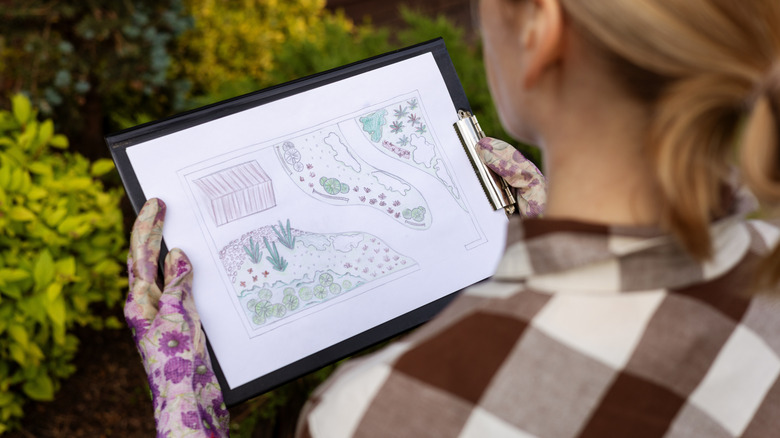
When trying to make a small garden work, most people simply adjust the scale of the plants they choose to grow. While planning a garden based on plant size will make a small space look bigger, such careful species selection may prove challenging for a beginner gardener. One of the main reasons it is such a tough project is that plant size shouldn't be your only consideration. You risk mixing foliage and flower colors in a way that detracts from rather than enhances the beauty of the space — and may even make your already small garden look positively diminutive.
If you're looking for a way to make your garden feel bigger and already have size mastered, your next step is careful color matching. "Correct placement of colors can give the illusion of a more open, balanced space without actually changing the physical footprint or garden contents," Christopher Murphy MBE, founder of Dunster House and gardening specialist, told Real Simple. Growing a lot of plants with dark-colored foliage or flowers, especially in the front and center of your plot, can perceptibly shrink the space.
"Lighter tones help reflect light and can make an area feel more open and spacious," Murphy explained to Real Simple. "Darker shades work well around the edges of your garden. Fences, walls, or boundary planting in deeper tones can recede visually." In other words, understanding how color contributes to garden design allows you to engineer impressive illusions, especially when you combine the technique with other unique ways to make your tiny garden look much more spacious.
How to use colors to make your small garden feel bigger
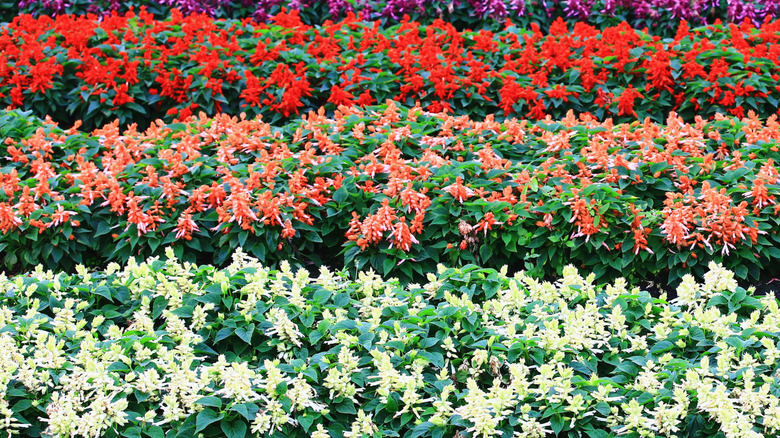
Applying this method to your garden is relatively straightforward. Plus, you get to play around with any mix of colors you like — as long as you follow these few simple rules. Plants with warm-hued flowers go in the center of a garden bed or wider garden layout, while lighter and cooler-toned options grace the edges.
You could, for example, plant greenery with blooms in cool blues, purples, whites, pale yellows, or greens round the edges of a raised garden bed. It's not the spot to use Pantone's beautiful 2025 color of the year in your garden. Then fill the center with botanical species boasting warm-colored flowers — think bright oranges, yellows, and reds. They invite the gaze and the pollinators. Not a fan of kaleidoscopic backyards? You can create a single-color garden that's just as interesting and beautiful by adding plants that bloom in the lightest shades of a single color — let's say, violet — in the front of your outdoor space. Then adorn the edges with flowers in deep burgundy, plum, and dusty grape.
Blooms aren't the only way to play around with color in the garden. There are lots of plants with colorful foliage, too. For example, the rich, deep greens of the bigleaf ligularia (Ligularia dentata) cultivar 'Britt-Marie-Crawford,' which is hardy in Zones 4 to 9, pop when planted deep inside a garden bed. Complement this dramatic plant with a light, bright border of silver-leaved lamb's ear (Stachys byzantina).