

Kitchen Trends Designers Don't Want To See Coming Back In 2026

We may receive a commission on purchases made from links.
There are certain kitchen trends designers don't want to see coming back in 2026. In this House Digest exclusive, we spoke to six interior designers about trends of years past and why they shudder to think anyone might actually include them in their kitchens in the future. Luckily, these outdated options have fallen by the wayside for totally valid reasons.
Our experts have rejected each design choice because it's either proven to be more hassle than it's worth, or simply isn't functional. Even if you don't believe in trends and haven't even thought about updating your kitchen, there will probably be at least one exclusion on this list that you've been warning others about avoiding for many years — or at least cringing every time you see it featured on your favorite HGTV shows. Eliminating some of these choices is as simple as a hardware swap, but others will require a total kitchen remodel.
Matte black and living brass fixtures that just don't last
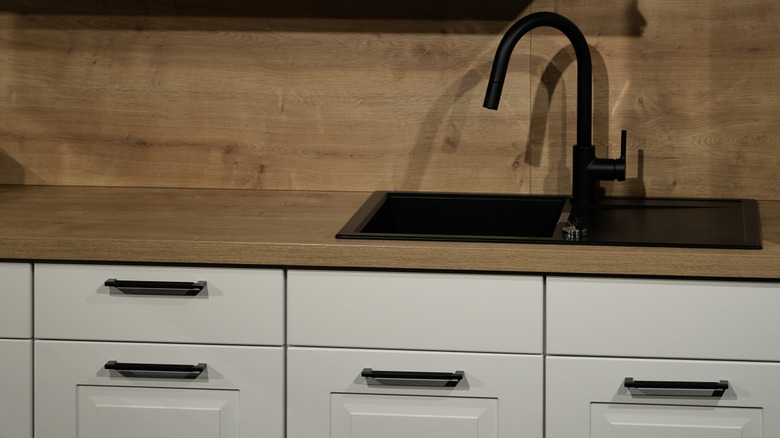
You've likely seen plenty of matte black across kitchens in the past decade, marketed as a timeless look. However, our experts think both matte black and living brass fixtures are best left in the past. "I'm also ready to retire matte black and living brass fixtures," Kim Gordon, founder of Kim Gordon Designs, tells House Digest. Her reasoning is simple: Kitchens are high-use spaces, and you need decor that can withstand a lot of wear and tear. "Matte black tends to chip and wear in a way that looks unintentional, and living brass rarely ages as beautifully as people expect," she says. "It often ends up looking uneven or gritty."
Instead, if you really want to go timeless, Gordon encourages you to reach for options that will maintain their allure over time, even in a busy kitchen. And you don't have to change the visuals too much. For example, she loves fixtures with a black nickel finish. They present a similar visual profile to matte black, but feel a bit warmer overall. They also don't scratch or corrode very easily, making them a good choice for a busy kitchen sink faucet or cabinet drawer pulls.
No variation in cabinet hardware, which creates a visually boring kitchen
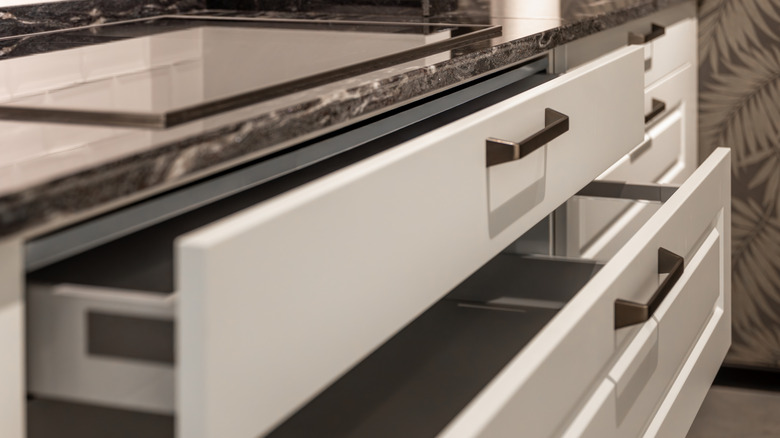
A kitchen where everything matches doesn't necessarily mean you've got a design home run, according to Behin Forghanifar, founder and principal designer of Behinteriors. In an exclusive interview with House Digest, Forghanifar explains that she tries to avoid "matching cabinet hardware, like using all knobs or all pulls," as it "can make a kitchen feel a bit flat." In 2026, kitchens are moving away from builder-grade uniformity and towards spaces with real personality. You want your kitchen to reflect your unique style, not just look straight out of a showroom or like everyone else's on the block.
Instead, Forghanifar recommends a more nuanced approach to kitchen design. "What gives a space a more custom, layered look is mixing hardware types, like pairing bolts with simple knobs or combining different styles across drawers and doors," she says. This doesn't mean you need to go full whimsical and install these Soffee Design Metal Birds Cabinet Knobs – despite how cute they are. Instead, try using simple hardware. Keep the same colors on your finishes, but just change their shape in alternating patterns to add some visual interest.
Engineered surfaces like quartz, which aren't too durable
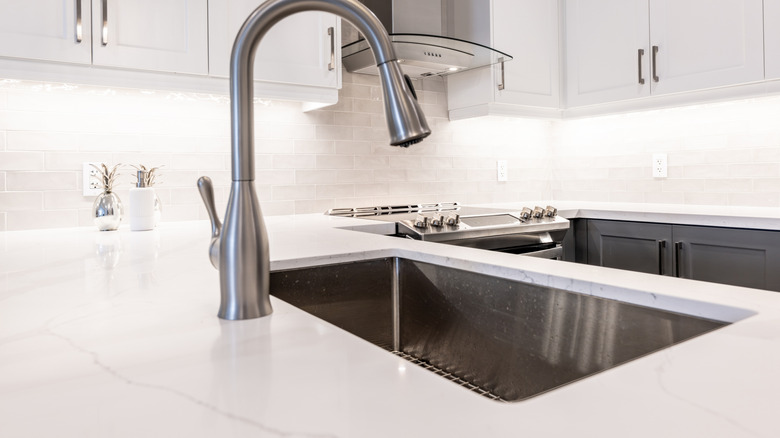
Choosing the best kitchen countertop material is one of the most serious decisions you'll make in your kitchen. But be warned, there are a few options our experts never want to see again. "High-maintenance or low-performance countertops shouldn't be coming back," Kim Gordon says. "There's a misconception that engineered surfaces like quartz are more durable, but many quartz options are prone to chipping and limited in heat resistance." There are so many pros and cons of marble, quartz, and granite when choosing the right countertops, but for Gordon, there are still clear winners.
She recommends settling on a natural stone, like quartzite or marble, for the best results in your kitchen. They are "far more resilient, handle heat better, and bring a level of depth and timelessness that's hard to replicate," Gordon explains, when comparing them to quartz. She also points out that a stain here and there is actually preferable to imitation stone veins. This, of course, refers to the level of babying that marble countertops often require. For Gordon, grabbing a specialized option like Marblelife Counter Cleaner and responding more quickly to any spills is worth it for the increase in durability.
Small mosaic backsplashes were supposed to add whimsy, but they just look cluttered
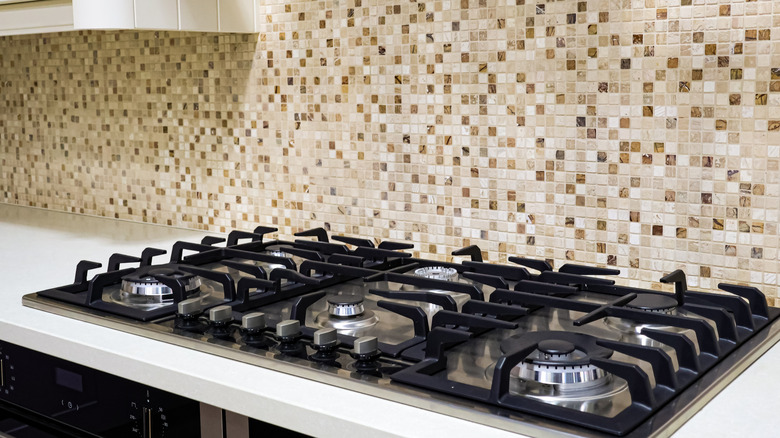
There was plenty of design flexibility within the small mosaic backsplash trend. Early adopters used it to play with color and shape, adding pops of both to their kitchens. However, for our experts, the trend got too out of hand to remain popular. "I hope this trend doesn't make a comeback, because it creates too much visual clutter and requires a lot of grouting, plus it's harder to maintain," Evelina Juzėnaitė, principal interior designer at Planner 5D, exclusively dished to House Digest. "I prefer tiles in a different format or larger sizes."
A great way around this trend — without sacrificing any of the whimsical visual interest that made it so popular in the first place — is letting the tile do the heavy lifting, instead of the pattern. For example, by learning what Zellige tile is, you can apply the same principle of a unique backsplash, but one that looks more organized. As Zellige tiles, like these Jeffrey Court Beige Zellige Tiles, still have a certain homemade variation to each piece, they offer plenty of texture without overwhelming the eye like small mosaics tend to do.
Artificially aged cabinet fronts that look cheap
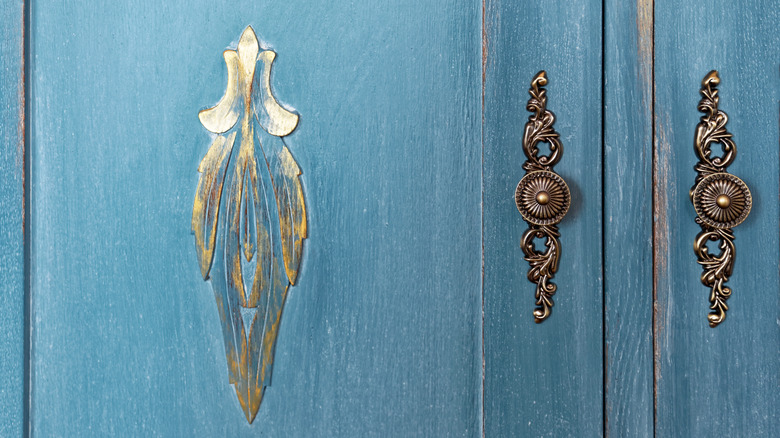
Patina has to be earned — you can't just slap some chalk paint or antiquing wax on the outside of a builder-grade cabinet bank and expect it to pull the same visual weight as the set in your great-grandmother's kitchen. Yet as warm, lived-in spaces continue to dominate recent design trends, many try to get there artificially instead and preemptively age the wood in their kitchen. "It looks very unnatural, cheap, and unattractive; the kitchen loses its value. It's better to choose wood that ages naturally over time," Evelina Juzėnaitė warns readers thinking about participating.
Solid wood options like cherry, walnut, or maple will naturally deepen in tone over time, which will give you an aged look. They also appear refined and classic in the meantime. If you don't want to buy new and wait, you can learn how to decorate your home with flea market finds and source vintage wood for the most authentic look. Even with newer cabinets, you can introduce age in a more believable way through unlacquered brass hardware, plus vintage furniture styled in the rest of your kitchen. Don't bring down the value of your home or make your kitchen look a bit kitschy instead of classic.
Hanging pot racks in the center of the kitchen can create a messy look
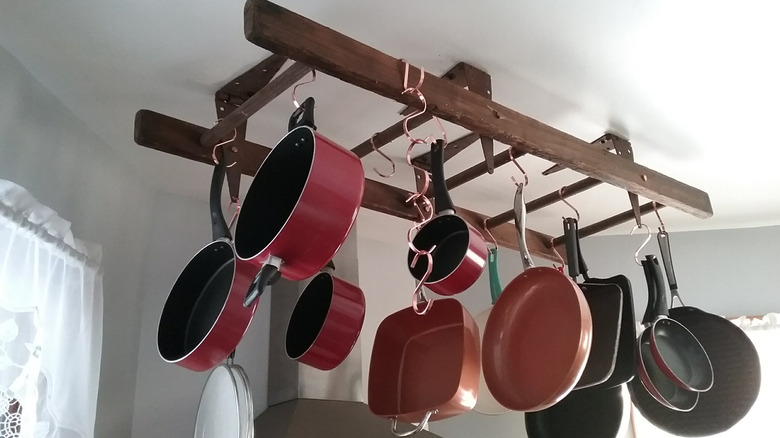
The pot rack hanging from the ceiling above the kitchen island has long been a mainstay of any rustic farmhouse-inspired space, and has waxed and wained into favor for decades. They can also lend an industrial-style feel, reminiscent of commercial kitchens. But our experts hope 2026 won't see hanging pot racks make a comeback. "They create a very cluttered look, and they're also unhygienic because you have to clean everything thoroughly every time, since they collect a lot of dust," says Evelina Juzėnaitė. Once thought to make cooking more accessible because everything was always in reach, Juzėnaitė is correct that this open display actually tends to require more cleaning, both before and after each cooking session.
As an alternative, she recommends "storing all such items in hidden storage systems" instead of displaying them, hung up or otherwise. If you find that your cabinets often just turn into a mess, consider organizational systems to help make the most of the space you have. The Mudeela Pots and Pans Organizer Rack for under the cabinet can keep things in a row, so you don't have to unstack everything each time, which can be a real hassle. The Medeela 8-Tiers Adjustable Pot Rack is a vertical option, suitable for tall cabinets.
Upper cabinetry overload that creates cramped kitchens
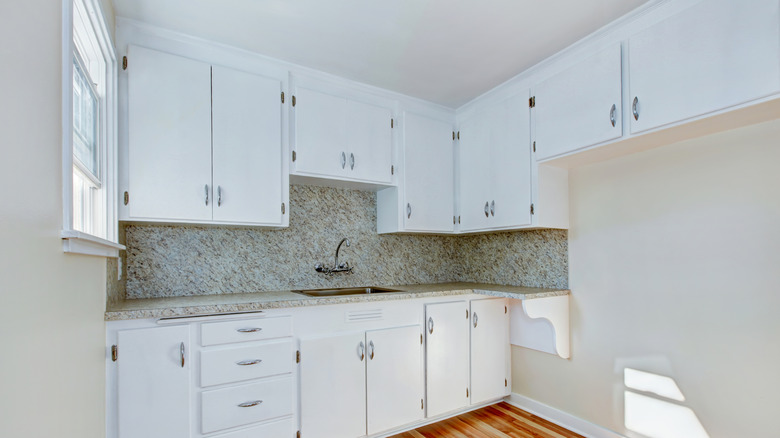
In 2026, your kitchen should feel like an extension of your living and hosting space, not just a workhorse that's closed off. Because of this, designers are seeing things trend towards not necessarily open plan rooms, but layouts that aren't top-heavy — so they still feel light and accessible. One of the things that prevents this from really taking hold is a full bank of upper cabinets. "Excessive upper cabinetry that closes off the space visually is losing relevance," Artem Kropovinsky, owner of Arsight, tells House Digest exclusively. "Kitchens became part of open living environments a while ago, and heavy top cabinetry can make the room feel smaller and less connected to the rest of the home."
There are plenty of alternatives to this to break things up, but each has pros and cons. The first is glass-front cabinetry, which goes hand-in-hand with open shelving options. These can immediately reduce the visual weight of having an upper bank, yet there are plenty of things you'll regret organizing on open shelves or translucent cabinets — so you need to work hard to reduce visual clutter. The other thing you can do is to paint the uppers a lighter color than the lowers, which gives the kitchen a more balanced, airy feel without sacrificing any storage space.
All white kitchens with little to no contrast are dead
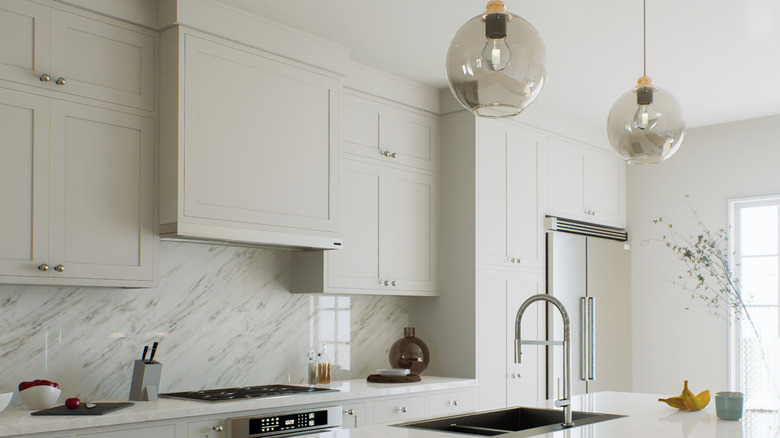
You've likely heard it for years: All-white kitchens will never go out of style! And while this was long thought to be totally true, there are a few caveats. "Completely white kitchens without any contrast feel flat and uninspired today. While white will always have a place in kitchens, the trend of everything being stark white from cabinetry to countertops to backsplash removes personality from the space," Cara Woodhouse, founder and principal designer of Cara Woodhouse Interiors, tells House Digest in an exclusive interview. These rooms feel too much like a sterile showroom and not like a place where people actually live. In today's world, kitchens are warm, accessible gathering places, and yours should visually reflect that it's truly the heart of the home.
Luckily, you don't need a full remodel to bring your space up to speed. "Kitchens should feel layered and dimensional," Woodhouse continues. "Incorporating warm woods, stone with movement, or subtle color creates a more interesting and livable environment." While incorporating these elements in the major players in your kitchen (cabinets, countertops, etc.) will have the most impact, you can still accomplish plenty of depth without a single demo day. For example, display warm wooden cutting boards on your counter, paint your flat white cabinets an earthy green (Hidden Gem is one of Behr's 2026 Colors of the Year), or incorporate more contrast through colorful textiles, like rugs and hand towels.
Overly industrial farmhouse aesthetics that feel theme-y, not authentic
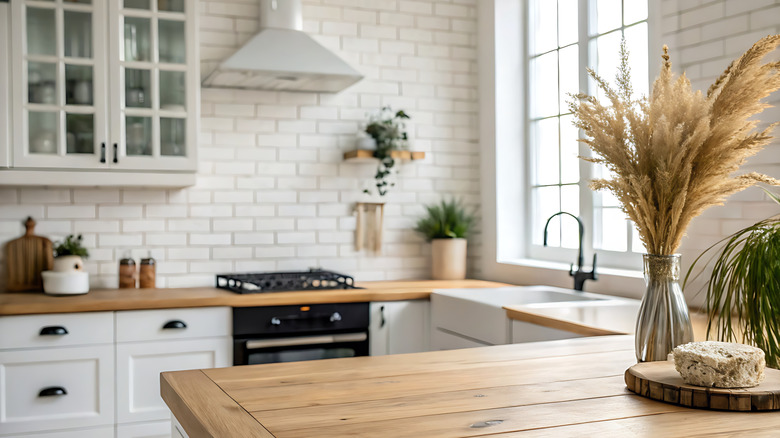
Farmhouse chic was everywhere in the 2010s, propelled to stardom most likely because it was the favorite of HGTV darling Joanna Gaines on "Fixer Upper." However, the time for it has passed, according to our designers, and they don't want to see it in 2026 or any year after. "The heavy farmhouse look with distressed woods, sliding barn doors, and overly rustic finishes feels dated," says Cara Woodhouse. "That style had a huge moment, but design is moving toward something more refined and sculptural."
Instead, modern kitchens are less easily categorized into a single trend. "Kitchens today are becoming more architectural, with curved elements, custom millwork, and thoughtful materials that feel timeless rather than themed," Woodhouse continues. This shift also reflects a broader move away from overly literal design trends that try to replicate a specific look or era. Instead, as Woodhouse points out, kitchen trends are now less about one-note designs to copy and paste into your own space. Homeowners are prioritizing kitchens that feel personal to their specific needs, as well as aesthetically beautiful and functional for years to come.
Perfectly matching materials are predictable and boring
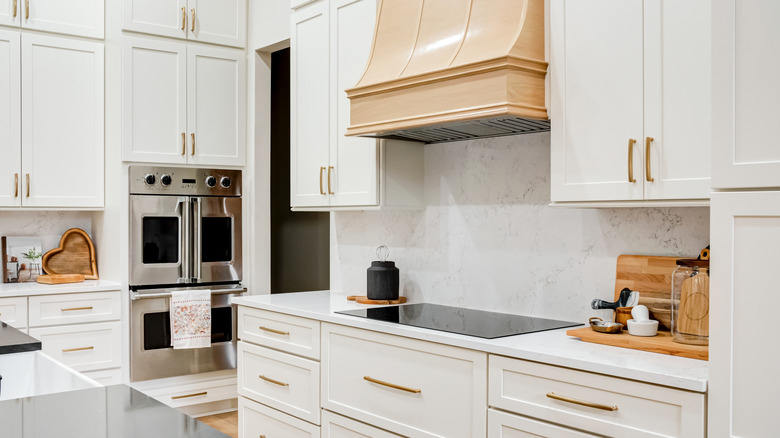
For years, cohesive design often meant choosing one type of finish and repeating it everywhere within the kitchen. Think matching cabinet and island colors and identical metals for every finish, plus coordinating materials for countertops and backsplashes. While this approach can certainly create a clean, uniform look, it can also read quite flat and lacking in personality. "Perfectly matched kitchens where every surface and finish is identical can feel overly predictable," Cara Woodhouse says, warning readers of things to avoid.
Instead, as kitchens trend more architectural, "the most compelling kitchens today combine materials with intention. Mixing woods, metals, and stones adds depth and makes the space feel more custom and collected." That said, you don't want to create visual chaos by going overboard with this idea of mixing. Instead, you can still achieve Woodhouse's suggested vision by repeating a few finishes throughout the space or sticking to a complementary color palette with paint or dècor. Knowing how to mix metals in your home decor can help you add to the layered effect, without creating a chaotic feel.
Open shelving everywhere can be a disorganized mistake
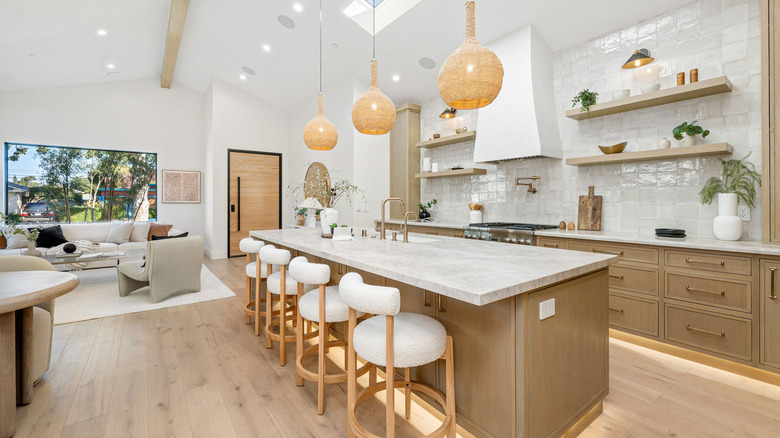
The inclusion of open shelving in kitchens has long been controversial. It's even one of the outdated trends that HGTV's Property Brothers swear are ruining your home's vibe. Our experts can't help but agree. "Another kitchen trend I think should not return is the excessive use of open shelving. A small amount of open shelving can be beautiful when it's styled well; however, too much open shelving is not practical for everyday life, and the shelving ends up feeling cluttered or unorganized," Craig Gritzen, founder and principal designer at Curated Style Collective, laments to House Digest in an exclusive interview. This is the same gripe shared by the Property Brothers: Styling vast expanses of open shelves can be hard — and many people simply don't have the time to keep the shelves perfectly neat — so they just become eyesores instead of being practical in any way.
Yet Gritzen isn't opposed to a well-placed attempt. "Kitchens are hard-working spaces, and I think homeowners should strive for a good balance between open and closed storage. This helps keep the kitchen feeling beautiful and organized," he continues. This ties in perfectly with Artem Kropovinsky's previously mentioned suggestion that heavy upper banks of cabinetry close kitchens off. While open shelving can be introduced as a great mitigating solution for this issue of visual weight, it shouldn't be the only kind of storage that you have available.
Entirely open concept kitchens that don't have enough storage
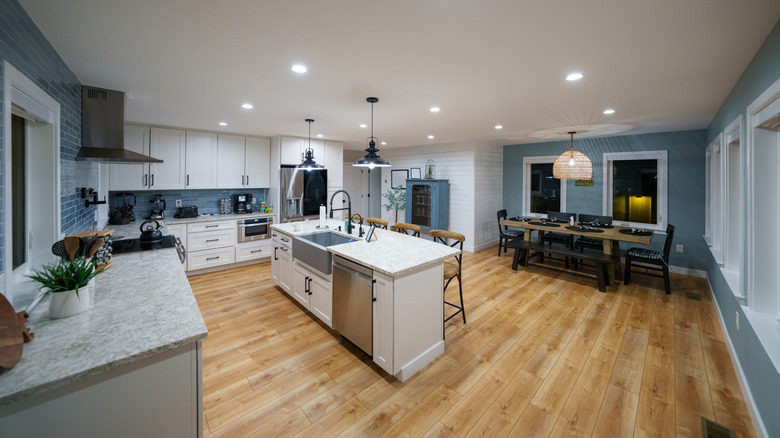
Open concept kitchens have dominated modern home design for years. We've praised them for their seamless flow into living and dining areas and the way they make homes feel larger and more social. As 2026 kitchen trends emphasize accessible, well-loved, well-used gathering spaces, you would think they would be perfectly included in the trends. But this isn't quite the case. "These layouts have great sight lines, but come at the cost of reduced storage and an increase in visual clutter," says Craig Gritzen. "I think 2026 will continue to favor a balance between feeling open enough to feel connected to the rest of the home, but well designed with purposeful zoning to improve storage and keep clutter and excessive appliance noise at bay."
In practice, this shift doesn't have to mean closing kitchens off again. You don't need to put up and tear down walls as trends shift. Many designers are simply rethinking how space is defined within an open-concept area. To that end, they are increasingly using subtle techniques like kitchen islands to add back some of the storage lost if one is not already present. Islands also function as architectural statements and can add real personality to kitchens that are lacking. In addition, even something as simple as an area rug can go a long way in creating division, at least visually.