

What To Do If You Find Animal Tracks In Your Yard
We may receive a commission on purchases made from links.
There are lots of animals that take shelter in any patch of green space they can find. You might not see them, but there are likely a few animals that visit your yard regularly. So, finding an animal track or two might not be surprising. If it's not a print you recognize or it looks like it's from something big and scary, though, you probably want to find out what it was. It's important to snap a picture, use a resource, such as a book or online, to identify them, and then take whatever precautions needed (if any) to secure your yard.
Knowing what animal left the tracks can help you determine how to handle the situation. Rabbit tracks, for example, might be a warning that you need to add protection around your plants, while small rodent tracks could signal a mistake with your fall yard cleanup that is attracting rats into your home. But before you jump into worrying about that, you have to know how to tell the differences between common wildlife tracks.
How to quickly narrow down common animal tracks
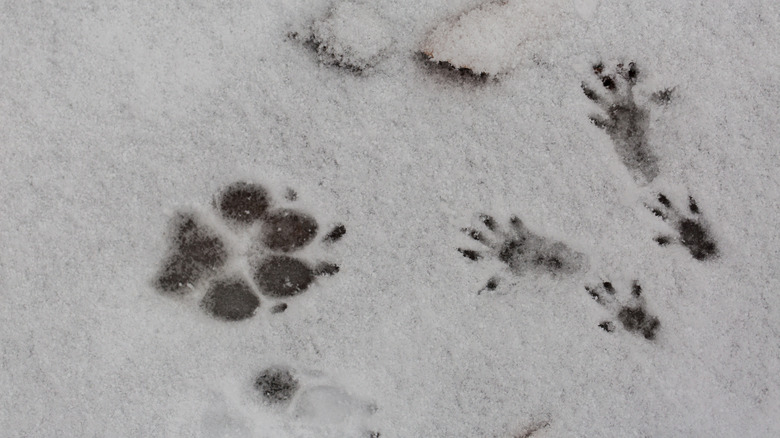
A good first step when you find animal tracks in your yard is to take a clear picture of them. That way, you can compare them to other animal prints online to give you a general idea. If you frequently encounter new animal tracks in your yard, it may be handy to have a quick identifier, such as the Animal Tracks Pamphlet by James Kavanagh, which you can get on Amazon. Consider if they might be canine or feline tracks to start. These are very similar in appearance, with four toe prints, and faintly triangle- or 'm'-shaped heel pads. The easiest way to tell them apart is to look for nail marks. Dogs can't retract their nails, so they should always have them, whereas cats often keep theirs hidden until needed.
Hooves are a dead giveaway that it's an herbivore like a deer, elk, or moose. Birds are simple as well, involving some form of long and skinny 3-pronged toes. Think dinosaurs, but smaller. Bears have large, five-digit paw prints and a large difference between the front and back feet. Reptiles and amphibians often have long toes and may show webbing or tail-drag marks between the left and right tracks. Some, like snakes, may just leave a wavy dragline.
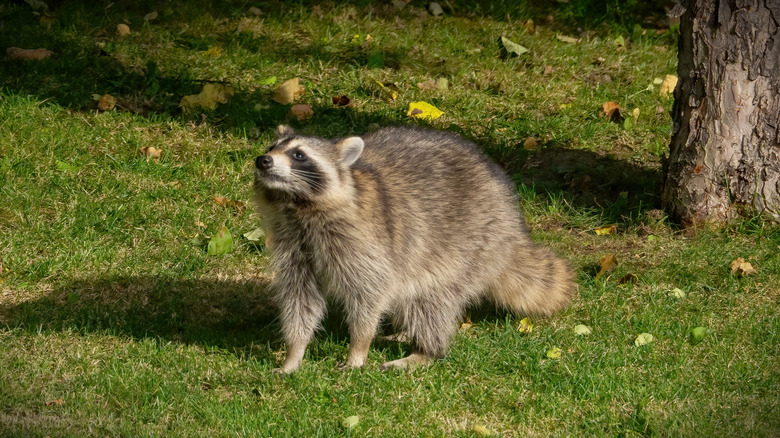
Small mammals are harder to categorize, since they vary widely. If you don't think they match any of the animals above, you can consider common small animals. The best way to do this is to search online for prints of local ones and compare. They're pretty easy to tell apart based on shape. For example, a raccoon's front paw prints tend to closely resemble a baby's hand, while a skunk's look like a mix of a dog print with fingers and long nails.
What to do after identifying animal tracks in your yard
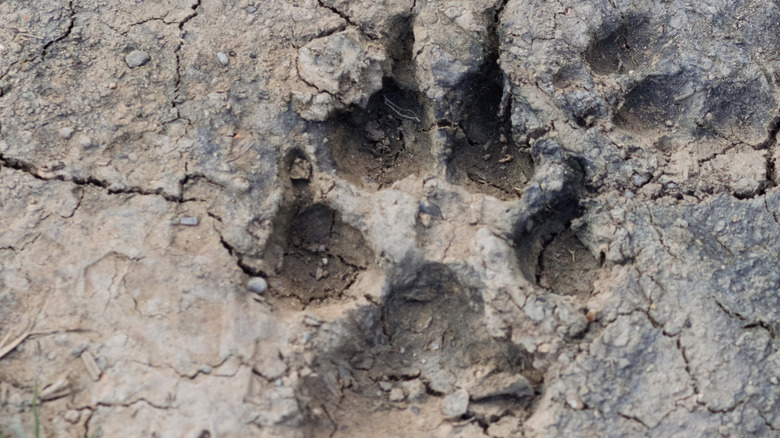
If you need to narrow it down further, look at the size of the prints, which animals live in your area, and compare them to other examples of tracks to get a better idea of which specific animal might have visited your backyard. Then, decide how you want to handle it. For example, if you find deer tracks in your backyard, a fence and deer-resistant plants often help. In fact, tall fences can keep out several kinds of animals. You can also use preventative measures and deterrents like secure trash cans, removing access to food, and installing motion-sensor lights, sounds, and water sprinklers.
An animal like a bobcat, coyote, or bear might be a little frightening to know was in your yard, but this is still not an immediate cause for concern. After all, they could have just been passing through. If the tracks appear regularly, though, it may be time to take action. Take time to call your local wildlife agency. Even if the animal in question has done nothing wrong, it provides information about movements, and they can decide whether it should be moved somewhere else. You may also want to take steps to reduce hiding places or areas of shelter, such as trimming bushes and hedges. Additionally, you could try creative methods, like the powerful solution people use to repel coyotes in their yard — ammonia— to see if it works.