

Say Goodbye To A Plain Fence By Growing This Climbing Plant For Beauty
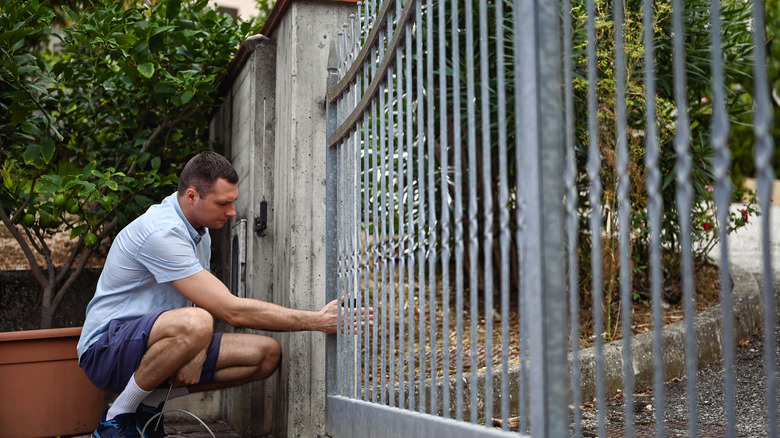
One of the most challenging parts about enjoying the great outdoors in a bustling neighborhood is adding privacy to your backyard without losing the open feel. Shrubs are an ornamental solution but can take too long to reach the height you need. Fences offer immediate concealment, but they can be eyesores. The ideal compromise? A privacy fence covered in a lushly blooming vine. Among the climbers that meet that description is Carolina jessamine (Gelsemium sempervirens), which you may also know as yellow jessamine or evening trumpetflower.
A familiar sight throughout the Southeast, yellow-blooming Carolina jessamine thrives both in the wild and in cultivated gardens. The vine is famous for its heavenly scent and cheerful yellow flowers. Although it's the state flower of South Carolina, Carolina jessamine is a reliable perennial throughout USDA Hardiness Zones 7 to 10. You may also be able to overwinter it in Zone 6 with some extra protection. If you have even more specific needs, consider cultivars of the vine, such as compact 'Lemon Drop' for a shorter fence or 'Margarita' for cooler climates.
Carolina jessamine is among the climbing types of plants that can make your backyard a cozy oasis. Each vine grows up to 20 feet long and is shrubby in nature, making it ideal for adding additional privacy. Its showy yellow flowers are trumpet-shaped and intensely fragrant. It's the "just right" kind of vine because it grows quickly to cover fences and trellises yet isn't so heavy or aggressive that it will pull down or overwhelm these structures.
Give this yellow beauty a sturdy fence to climb along with plenty of sun
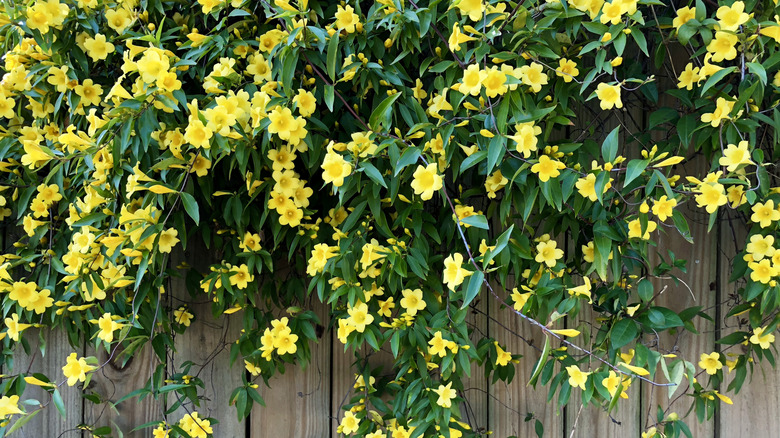
It isn't challenging to care for Carolina jessamine, one of the yellow-flowering climbers that pollinators love. To get it off to a good start, plant it in rich, moist soil. Carolina jessamine is best suited for fences located in full sun. Sections in light shade will still grow, albeit more slowly, and also won't flower as profusely. Carolina jessamine's leaves will drop if you forget to water it, but it will quickly rebound.
The vine is a natural climber, but you can encourage its growing direction by using soft plant ties in strategic places. Position each young plant near a fence post, if possible. In the right conditions, the vine will grow 3 to 5 feet each season, quickly covering portions of your fence. New plants could take several years to bloom, but once they do, you can prune the vine in late spring and early summer to promote new blooms and to keep its growth in check. This climber is ideal for homeowners often bedeviled by rabbits and deer in the garden. These creatures tend to avoid Carolina jessamine. In addition, this vine is not troubled by insect pests or garden diseases.
If you have small children, grow Carolina jessamine with caution. The nectar may seem as sweet to drink as vines like honeysuckle are, but the entire plant is severely poisonous. Potential consequences to ingesting any part of the vine include respiratory failure. Use gloves when pruning to avoid skin irritation. Another point of caution: Because the plant is highly flammable, it's best to grow it on fire-retardant fence that isn't too close to your home.