

The Pretty Perennial With A Long Flowering Period That Pollinators Can Enjoy All Season
When you're looking to start a low-maintenance flower garden with perennials to bring scores of bees and butterflies to your yard, consider the under-appreciated field scabious (Knautia arvensis), also known as blue buttons. Reminiscent of bee balm but with a light lilac hue and mop-headed charm all its own, field scabious' long-flowering season lasts from June to September. Meanwhile, its numerous flower heads are full of nectar and make for a veritable buffet for bees, butterflies, hoverflies, and other pollinators. Caterpillars may also appreciate the foliage for shelter and food. Whether you're trying to nail the beautiful meadow garden trend or just bringing a little "wildness" to staid perennial beds, field scabious may represent the perfect solution.
For its compact size, field scabious really packs a punch, as each plant can produce as many as 50 blooms at a time. The plant grows about 1 to 3 feet in height and bursts with shaggy, pink or light purple blooms, as well as plentiful gray-green foliage. Bear in mind that field scabious is listed as invasive in Wisconsin and in Alberta, Canada. If you live in these jurisdictions, growing or selling this plant could be illegal and harmful for local ecosystems. When it doubt, consult your local extension service or an invasive species database.
Give field scabious a sunny spot and well-drained soil
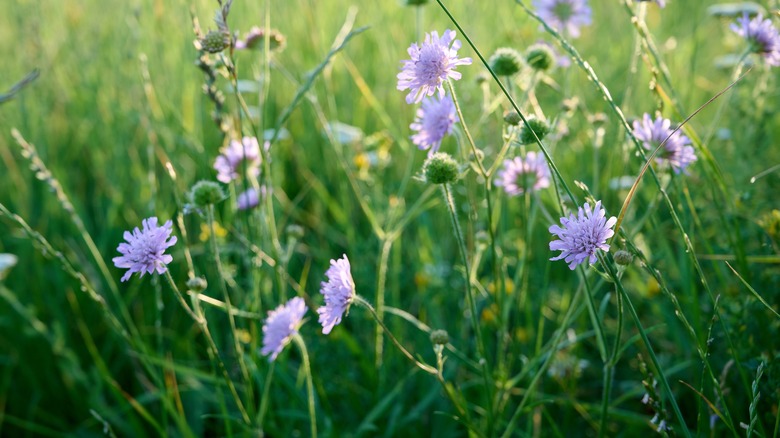
Although it was brought over to North America from Europe as an ornamental flower, field scabious is considered something of a wild child in the United States. Other species in the genus, such as Knautia macedonica, may be better recognized as garden plants. Yet field scabious also deserves a place in the sun; it's an easy-care perennial that has plenty of aesthetic appeal.
Field scabious' pale purple blooms, which bring more bees into your yard and garden and feed them late into the season, make it appropriate for a pastel-themed cottage garden or as visual relief in a raucous meadow of red and yellow wildflowers. Just make sure to give it plenty of space to branch out, given that the plant can self-seed with hundreds or even thousands of seeds! If you're interested in giving it companion plants for a pollinator garden, consider such perennials as purple top (Verbena bonariensis) or meadow sage (Salvia pratensis). These perennials are durable enough to stand up to field scabious' sometimes aggressive nature, while also echoing its shades of purple.
As a tough wildflower, field scabious grows dependably in USDA hardiness zones 3 to 9. Plant it indoors from seed, then transplant into the garden. Alternatively, look for plug trays of the young plants. It prefers a sunny site with well-draining soil. In general, you won't need to fuss much with this flower. It doesn't require special fertilizers, can withstand drought conditions, and isn't bothered by pests or disease. Although little maintenance is required from field scabious, pruning back in the fall and removing spent blooms encourages additional flowering to continue attracting pollinators all season.