

Outdoor Furniture You Should Always Get From The Thrift Store
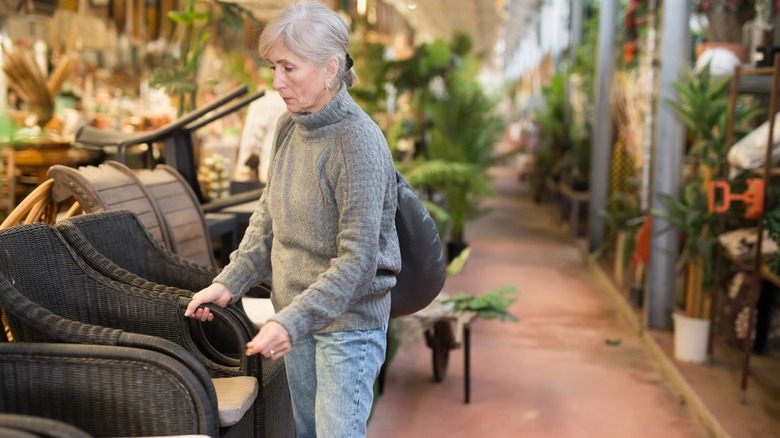
Shopping for outdoor furniture isn't always as fun as it sounds. In fact, it can get frustrating. You walk into a store thinking you'll grab a simple patio set, and suddenly, you're staring at an overinflated price tag that rivals what you dropped for your new couch. The thing is, you don't have to spend a fortune to create a beautiful outdoor space. Thrift stores, estate sales, and yard sales are full of hidden gems. However, you need to know what to look for because not every secondhand piece is worth hauling home. Two types of outdoor furniture, in particular, stand out time and time again: iron and wicker.
These classics have been holding their own on porches and patios for generations because they tend to age with grace, and they're an easy way to bring in charm and texture to any backyard. Not to mention, finding a well-loved wicker or iron piece typically means scoring something with way more character than anything sitting in a big box store. The detailing of these furnishings just evoke something more intentional and storied. Lucky for you, secondhand iron and wicker furniture tends to show up frequently in the wild, and often at prices that feel like a steal. Plus, if you know what to look for, you can walk away with pieces that still have plenty of life left in them.
Why secondhand iron and wicker furniture are worth a snag
Knowing the differences between wrought iron and cast iron furniture could affect which you buy, so they're worth examining before you shop. Wrought iron is shaped by hand, giving it that ornate, intricate scrollwork it's known for. Because these pieces are hand-worked, they carry an artisanal quality, feature unique designs, and have a level of detail you just don't see anymore. Cast iron is poured into molds, so it tends to look thicker and comes in more uniform styles. It's also more brittle and susceptible to rust, so it requires a little extra care and maintenance. That said, both cast iron and wrought iron furniture are built to last for decades. Additionally, each is sturdy and weather-resistant, making them a solid secondhand investment. Plus, designers love the patina that can develop over time, adding to their appeal.
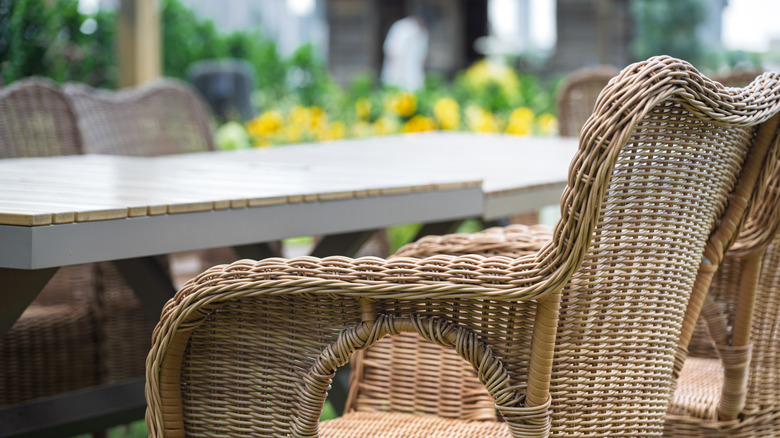
When thrifting, you should also look for wicker pieces. Likely, you've heard the terms wicker and rattan used interchangeably, but there is a difference. Wicker is a weaving technique, while rattan is one of the most common (and coveted) natural materials used in wicker furniture. You might also come across synthetic wicker, which is designed to mimic the look but handle the elements better. Either way, secondhand wicker furniture is always worth snagging. Generally, it tends to be long-lasting and low-maintenance. There's also something to say about its versatility, and how well it can lean into almost any color and style: modern, coastal, boho, cottagecore, you name it! All in all, it creates a relaxed, layered look that makes any patio feel more inviting.
Tips for thrifting and reviving iron and wicker furniture
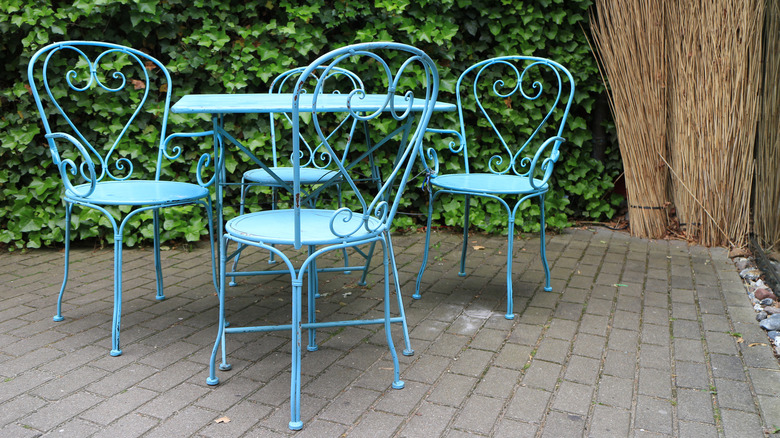
Got your eye on a good iron piece? Give it a magnet test; if your magnet sticks, chances are it's wrought or cast iron. Otherwise, you might be dealing with a cheaper alternative, such as aluminum. From there, determine what kind of iron you have. Wrought iron usually has smoother, more organic lines, and is free of the mold lines you can spot on cast iron pieces. Cast iron also feels bulkier and more rigid.
Next, check for rust. Avoid anything with deep rust that eats into the metal, but don't shy away from a little surface rust. You can make rusty furniture new again with simple hacks, such as using a baking soda paste; some white vinegar; or completely transforming your thrifted treasure with nothing but a quick scrub, some sanding, and a bit of spray paint. Before buying, don't forget to also inspect the joints and any welded areas to make sure everything feels secure.
For wicker furniture, verify the weave is tight, intact, and has no large breaks or unraveling sections. Small imperfections are fine, but large gaps can be hard and expensive to fix. Also, look for brittle areas, and check that the frame underneath still feels strong. If you're dealing with natural wicker, such as rattan or bamboo, examine it closely for signs of mold or mildew. Natural wicker lasts longer under your porch or another covered space, but anything synthetic can handle full outdoor exposure. With a little dusting and cleaning, both can look amazing and right at home on your patio. To keep your wicker furniture looking its best all year, regularly clean it with mild soap and water.