

Not Paint, Not Vinyl: There's A Better Way To Switch Up Your Honey Oak Cabinets
We may receive a commission on purchases made from links.
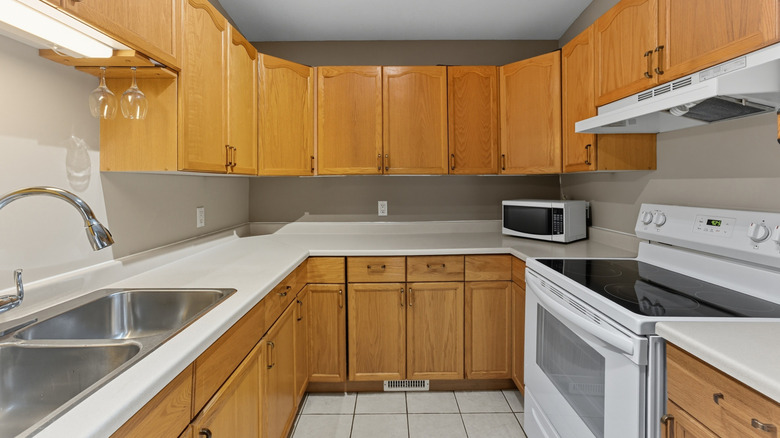
Although oak cabinets may be coming back into style in modern kitchens, the yellow-brown-toned, honey oak color and style often found with them isn't. Because honey oak was the primary stain color choice for many kitchens during the 1990s, it's now considered outdated. There are multiple ways to update honey-toned cabinets on a budget, though, meaning you don't necessarily have to undertake the expense of replacing them.
You could paint them using certain color palettes that modernize dated honey oak cabinets. You could also add a vinyl wrap to the cabinets, completely changing up their look. However, if you prefer to continue clearly seeing the wood grain, vinyl and paint will likely cover it up. Instead, you could consider using an all-in-one stain that creates a darker brown color to give the kitchen a modern look.
Many older honey oak cabinets had a clear coat applied to them at the time of manufacturing that eventually gave the wood an orange or yellow tint. Unfortunately, that tint that develops over time, creating an undesirable look. If you don't want to redo the entire kitchen or change the wall color to better complement orange-toned cabinets or the yellowish tint, a little bit of DIY work will give the wood a fresh look. You'll just need a few supplies to get started.
Cost and prep work for staining honey oak cabinets
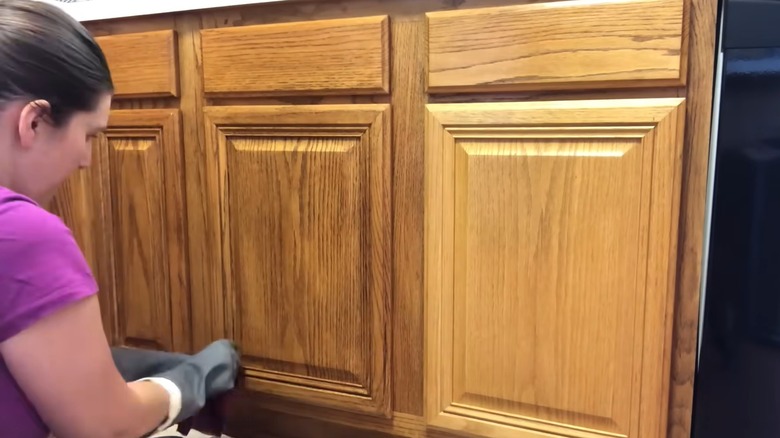
At the time of writing, expect to pay around $30 to $35 for a 16-ounce can of all-in-one stain, which covers about 140 square feet. Four rolls of SmaringRobot Premium Painters Tape is available on Amazon from $5.99, while the Tangibay Pre-Taped Masking Paper is under $10. These are important since they'll protect the rest of your kitchen. Inexpensive paint brushes, such as the Redtree Industries 14002 Chip Bristle Disposable Paint Brush, can be bought for around $3 to $5. If you had to purchase everything from scratch, it would probably cost $50 to $60.
Staining kitchen cabinets isn't for everyone, as it can take a long time. The process of removing the doors from the cabinets and taking off all the hardware before staining is the main time killer, but skipping this part could leave you with an uneven finish. You might end up with drips near the holes where the pulls and knobs were attached or near the hinges when the doors are hanging vertically if you don't remove them. Using an all-in-one gel stain should reduce the risk of having drips or runs while applying it, which is important if you really want to leave them hanging while working on them.
If you want to leave the doors in place, use painter's tape where the top edge of the honey oak cabinets meets the ceiling, protecting the surrounding area from the stain. Certain stains can drip, so protect the countertops, backsplash, and sink with masking paper or tarps. You could also utilize paper used to protect flooring during a construction project.
How to give honey oak kitchen cabinets a darker stain
Whether you remove the doors or leave them in place, it's a good idea to do at least some sanding on the existing kitchen cabinets before adding a new stain. By giving the surface a little roughness, the new stain should adhere properly. Note that you should not have to sand them to remove the old honey oak stain or coating; the idea is just to create texture to improve the end product. Some people choose not to sand before adding the new stain to save time, but this could leave you with an uneven stain color that looks blotchy. Finally, clean the wood to remove grease buildup from the kitchen or any sawdust from sanding.
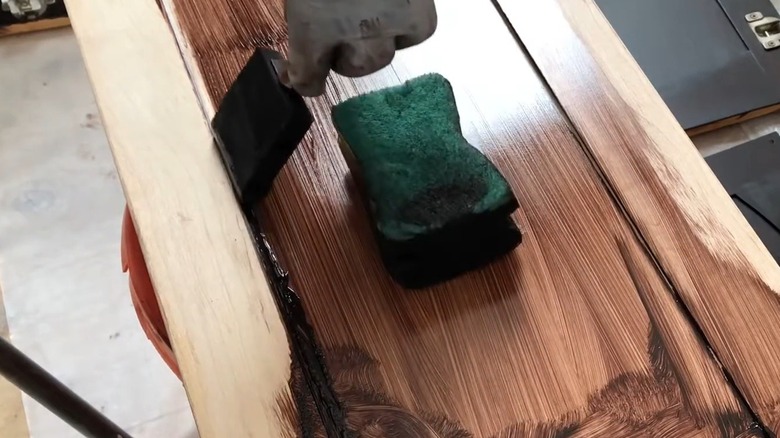
To apply the stain, you should be able to use a standard paintbrush. Apply the stain against the grain of the wood first to ensure all the rough spots are covered. You can then work the stain in the direction of the grain in subsequent coats to ensure an even coating. You may have to give it multiple coats to achieve the desired look. Generally, a darker stain color, such as coffee, will deliver the modern design change from the honey oak cabinets while both concealing the orange tone and still allowing the wood grain definition to stand out.