

Skip Boring Plain Concrete: There's A More Textured Option For Your Patio
We may receive a commission on purchases made from links.
Is there an unfinished area of your yard that is just begging for a landscaping upgrade? If you're a devoted DIYer who's handy with exterior building tools and materials, pouring concrete is probably something you've already tackled. Let's say you want to create new outdoor living space — if you're wondering how to choose the best concrete patio finish to add instant charm to your backyard, don't settle for a boring smooth slab. Consider a more practical, visually appealing option: broom-finished concrete.
Plain concrete is widely used for patios; it's simple and works with almost any outdoor aesthetic. It does, however, have one notable downside: the moment it gets wet, whether it's from the sprinklers or heavy summer rain, it becomes slippery. This can transform your patio from a relaxing oasis into a dangerous place, especially for mobility-challenged people, not to mention overly excited children or pets running wild across the backyard. A broom-finished surface resolves this issue.
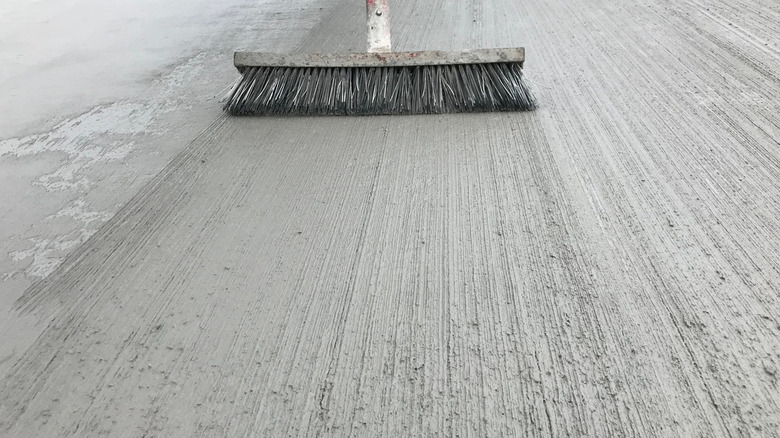
Broom-finished concrete has been a go-to for patios for many years — and for good reason. By simply dragging a stiff-bristled broom across still-curing concrete, you create tiny, uniform ridges that provide traction for feet, paws, and patio furniture alike. A brushed-finish solution is affordable, making it the ideal option for homeowners with lower renovation budgets, while still looking clean, classic, and slightly elevated. A concrete patio could even boost your home's value! If you already have some bags of concrete mix, all you need are a few simple supplies and a little time to finish the job.
How to achieve the perfect broom finish on your DIY concrete patio
Ready to tackle this project and create a stylish patio space without breaking the bank? The secret to a flawless broom-finished concrete patio slab lies in the timing. First, pour your mixed concrete into your patio frame. Ensure the material is level by pulling a straight, flat board across the top of it — this is called striking off. Next, use a flat smoothing tool called a float to gently press out any bumps and even out the surface.
Now here is where your patience pays off. Wait for the shiny layer of water on the top of the concrete slab — called bleed water — to evaporate before grabbing your broom. If you brush the surface of the concrete too early, the texture may not hold. If you wait too long, the concrete will have set so hard that you can't add any texture to it. A good rule of thumb is to wait until you have to use a decent amount of force to press a finger into the surface without feeling much springback.
At that point, grab a wide broom with stiff bristles, like this Hushee Aluminum Backed Concrete Broom for about $124, and gently pull it across the slab. Make your strokes in the direction you want water to drain to prevent puddles. Lift the broom carefully after the first pass, rinse the brush off in a large trough of water, and start the next pass with a little overlap. Finally, leave the textured concrete slab to fully cure before walking on it — about 28 days. You can speed up the curing process by spraying on a good quality curing compound or covering the slab with polyethylene sheets.