

What's The Fastest Way To Grow A Spider Plant? Use These Easy Tips
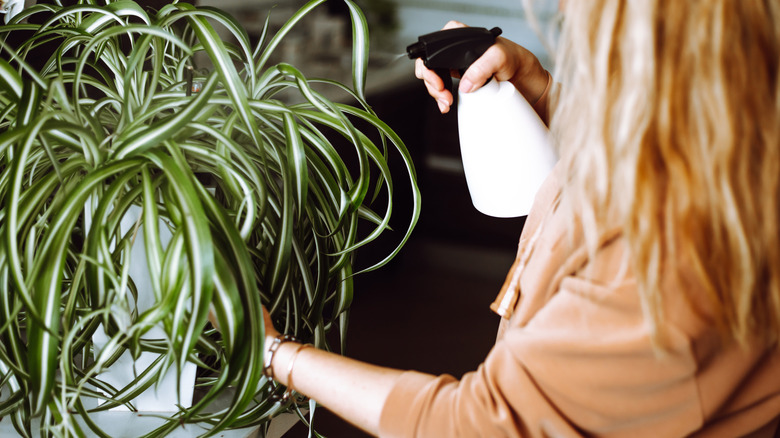
Every houseplant enthusiast has heard that spider plants make the perfect indoor house plant. These popular plants, scientifically known as Chlorophytum comosum, are relatively easy to grow thanks to their ability to tolerate a variety of lighting, temperature, and soil conditions. Although spider plants can survive a certain amount of neglect, they won't grow as quickly or truly thrive without proper care. If you want your spider plants to flourish, you can easily create the ideal conditions for rapid growth and full plants.
Spider plants are native to parts of Africa and grow to around 2 ½ feet wide and a little over a foot tall. They are often grown indoors in pots and look great in hanging baskets where their 2- to 3-foot leaves can cascade down, but these plants can also be grown outdoors in USDA zones 9 through 11. The spider plant is among the most recognizable plants, but many people don't know there are actually more than 200 spider plant varieties, which fall into three categories based on leaf appearance: variegated, non-variegated, and curly.
Whether you want to maximize the growth of a new spider plant grown from seeds or propagated from a mature plant, the fastest way to grow a spider plant is to provide the plant with the correct conditions. This includes keeping the plant in a place where it will get plenty of indirect sunlight, maintaining average levels of humidity, and providing somewhat infrequent watering.
Providing the right amount of water and sunlight
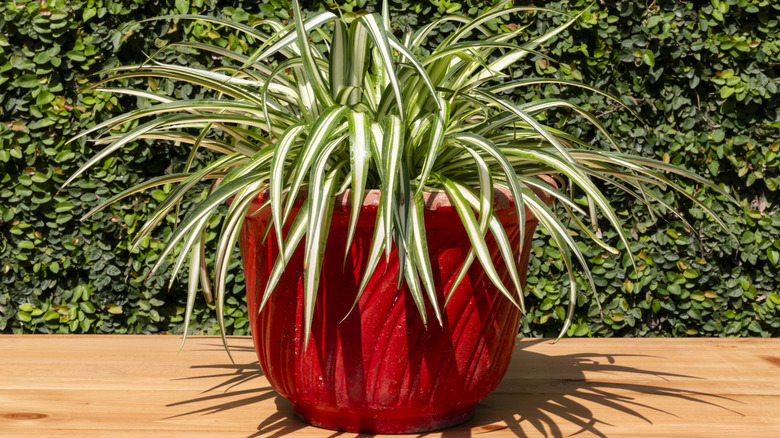
It's easy to grow and care for a spider plant when you give it plenty of indirect sunlight and the right temperature and amount of water. Overwatering can lead to leaf discoloration and root rot, so wait until the top inch or so of the soil is dry before watering. Avoid using tap water since its fluoride contents can cause leaf tip burn. Don't overlook the humidity and temperature in the room, either; these plants prefer average humidity and temperatures between 55° and 80°Fahrenheit, so keep them away from drafty windowsills or heat vents.
When it comes to sunlight, spider plants require striking a balance. Plenty of indirect sunlight is the key healthy growth. If they don't get enough sun, the plants will lose some color. On the other hand, excess sun exposure can negatively affect growth, too — plantlets grow when the main plant experiences less than 12 hours of daily sunlight for a few weeks, and when spider plants get too much direct sunlight, the leaves can burn. Bright midday sun should especially be avoided, so try placing your spider plant in an east-facing window.
Spider plants grow well when slightly root bound, but when the roots have no room to expand, the growth of the plant can be stunted and it will need to move to a pot one to two inches larger. Spider plants can be repotted any time of year, and mature plants will need to be repotted approximately every two years, or as soon as you notice roots growing through the pot's drainage holes or poking above the soil.