

The Best Ground Covers To Plant, Depending On Your Yard's Specific Needs
We may receive a commission on purchases made from links.
Planting ground covers is an amazing way to turn a patchy or hard-to-maintain yard into a landscape fit for Pinterest. Sadly, though, not all ground covers will work well for every yard, and knowing your specific needs ahead of planting can save you time, money, and aggravation. So, how can you know which plants you should pick up and which ones to avoid?
That's where we come in. We've broken down some of the top issues or dealbreakers we've seen homeowners try to navigate when planting ground covers and picked some of the top plants that can fit your landscape. Whether you're dealing with swampy soil, desert-like conditions, or just want to stick to native plants only, we're here to help. We'll break down the considerations you need to keep in mind before hitting the plant nursery, plus offer a few suggestions for plants that can work well for your situation. So, bust out the colored pencils and graph paper, because it's time to do some landscape design.
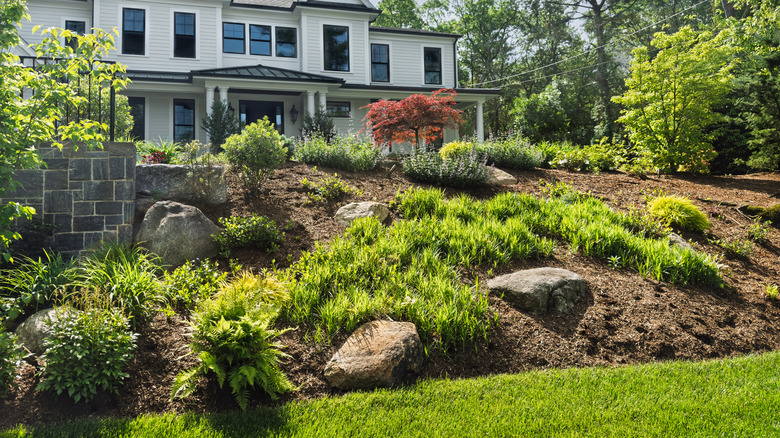
If your yard is hilly, look for ground covers that help prevent soil erosion
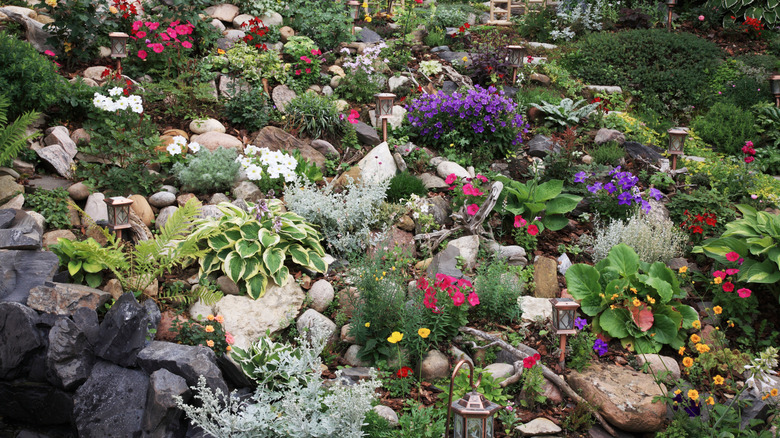
It makes sense that homeowners would want to add a little ground cover to their hilly yard, if only because it makes mowing way less of a pain. But dealing with a slope means that you've got to focus on plants that either have deep roots (so they can anchor into the ground and stabilize it), or form dense mats of roots that lock soil in place. If you're browsing at a garden center, some plants might be marked as useful for reducing soil erosion.
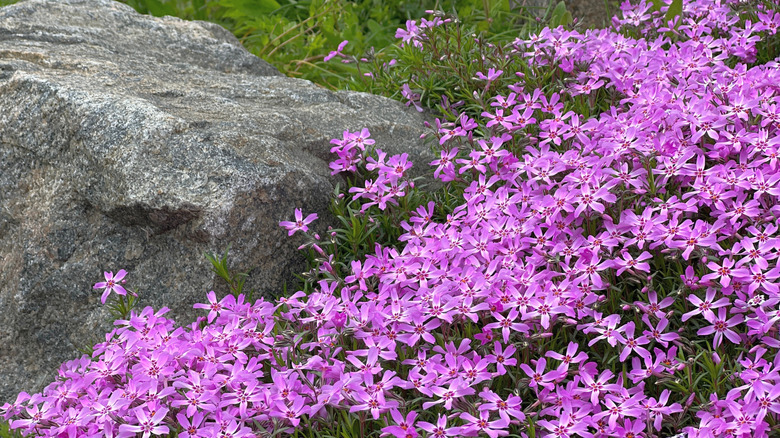
There are lots of popular ground covers that work well for erosion control. Creeping phlox (Phlox stolonifera) is incredibly easy to grow and works well on slopes that get full sun or partial shade. But, if flowers aren't your thing, consider cranberry cotoneaster (Cotoneaster apiculatus), a ground cover from China that has bright red berries in the fall, providing multiple-season interest (as long as you don't plant it in one of the regions where it's considered invasive, like the Pacific Northwest). If you want to keep it simple and prefer native plants, good old Pennsylvania sedge (Carex pensylvanica) makes a great grass alternative that pollinators still love.
Yards with consistently soggy soil need moisture-tolerant ground covers
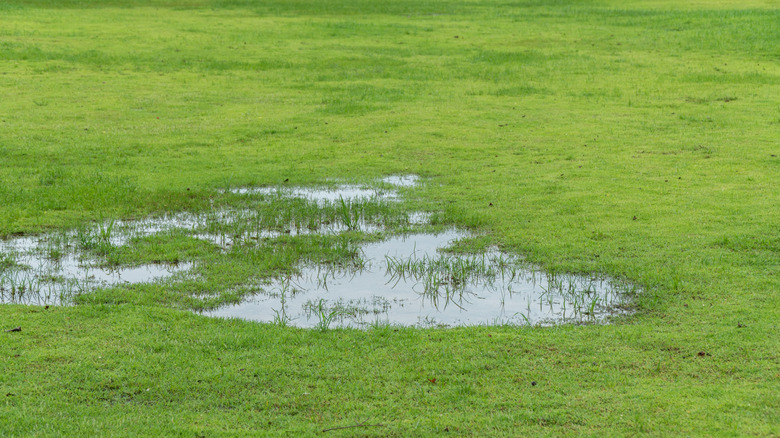
Oof, standing water in your yard is such a heartbreaker because it drowns many common ground covers and makes your yard look like a mess. There's also the worry that it could attract mosquitoes, which just ruins your chance at enjoying your landscape properly. So, you'll need to find ground covers that can help soak up rain and excess water without rotting.
If you've just got a little water, the common blue violet (Viola sororia) or raspberry splash lungwort (Pulmonaria 'Raspberry Splash') are two potential options, since they love consistently moist soil. If your swampy setup gets very little sun, virgin's bower (Clematis virginiana) can still send up pretty little blooms in shade and moist soil conditions. False pennywort (Centella asiatica) is another option if you'd rather not have flowers but still need a shade-and-moisture-loving ground cover, but it can become weedy in warmer, tropical states like Hawaii and Florida. If you're dealing with some seriously soggy soil, look for ground covers that can handle being partially submerged, like Japanese sweetflag (Acorus gramineus), a clumping ground cover that can handle full sun to partial shade and loves being surrounded by swampy setups.
Yards full of arid, rocky soil need drought-tolerant ground covers
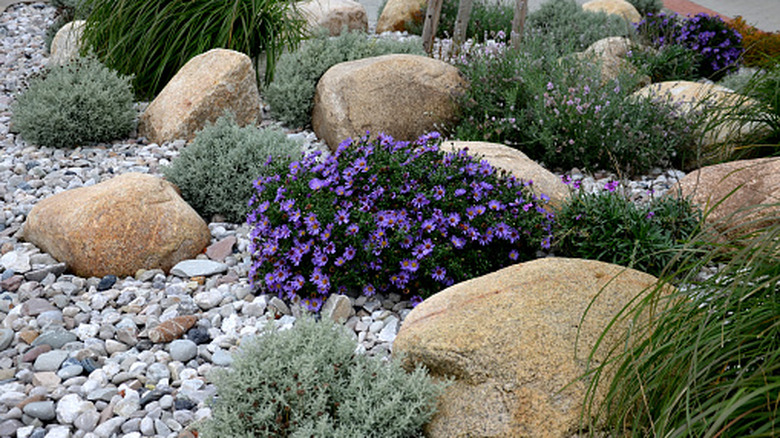
Whether you're living in the desert or just don't have soil that can hold moisture, you know how tough it can be to find hardy ground covers. While many landscape plants prefer not to be in consistently soggy soil, few plants can handle the other side of the spectrum, where it's so dry that water evaporates faster than the roots can absorb it. For this sort of yard, you'll need plants designed for hot, arid conditions.
Desert landscapes do best with xeriscape-friendly ground covers, like succulents and cacti. But if you're not in the Southwest and still deal with dry soil, you've still got a few options. Blue oat grass (Helictotrichon sempervirens) is an ornamental grass that can handle cool temperatures and actually becomes more colorful when its landscape is dry. Beach wormwood (Artemisia stelleriana) is another option that works well in dry, rocky soils near coastlines and has a cool, silvery look to its foliage — just be aware that it can grow aggressively in coastal areas. If you want something that flowers, try the cliff rose (Armeria maritima), a coastal ground cover that throws out the most beautiful pink or white blooms, depending on the subspecies.
A yard that gets lots of strong, direct sun needs tough ground covers
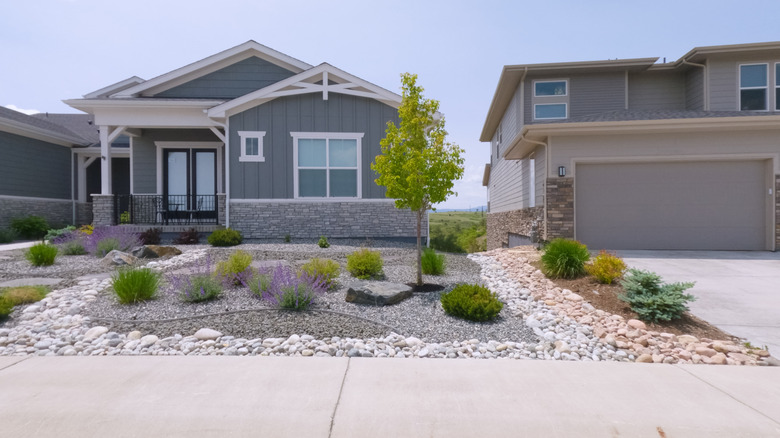
A bright, sun-lit yard may be a great thing to cheer you up after a long winter, but not all ground covers can handle that summer sun. So, you'll need to look for plants that not only tolerate full sun conditions, but happily thrive in them. In particular, you'll need ground covers that don't require sheltering from the afternoon sun when it's at its hottest, or you'll have to plan ahead by getting something like the Cool Area Sunblock Shade Cloth to blocks harmful UV light without affecting photosynthesis.
If you'd rather just opt for ground covers that thrive even in the harshest sun and skip the shade maintenance, we've got some suggestions. Creeping thyme (Thymus praecox) is a sun-loving plant that's both pretty and fragrant underfoot. Field pussytoes (Antennaria neglecta) is another option for hardy ground covers that are sun-loving and low maintenance — it's even right there in its scientific name, neglecta. If grasses are more your thing, the tufted fescue (Festuca amethystina) does great in full sun and prefers as little shade as possible.
Yards with very little sunlight need shade-tolerant ground covers
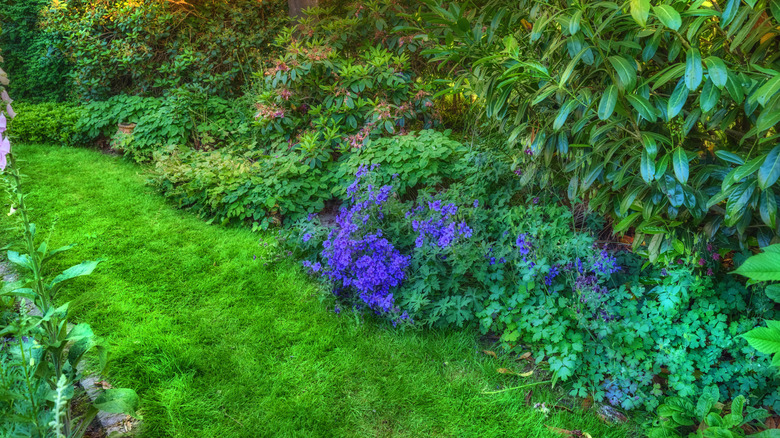
Yards with heavy shade are tricky, especially for gardeners who would love a little color in their landscape. Sure, there are lots of shade-loving plants out there that could work well as ground covers, but they can often look pretty ho-hum or uninteresting. Luckily, there are some ground covers that not only love shade, but will also make a dynamic-looking landscape by popping with color.
Sweet woodruff (Galium odoratum) is one option that loves shade and still manages to produce delicate white blooms that look like jasmine but smell like a nutty vanilla. Just be aware that it can grow rapidly via its underground rhizomes. Bugleweed (Ajuga reptans) is one of our favorite shade-loving ground covers, though, because its pretty purple flowers look like the native lupine but on a smaller scale and in shadier conditions. Just be cautious not to plant it in areas where it's considered invasive, such as the Pacific Northwest and Mid-Atlantic.
Look for resilient ground covers if you want a low-maintenance yard
We know that not everyone wants to add "landscaping" to their list of full-time jobs. But does that mean you're stuck with a boring-looking yard? Far from it! There are lots of low-maintenance ground covers you can add to your yard that look impressive but do best when mostly left alone. In particular, you'll want to look for plants that are pest- and drought-resistant while still able to handle a variety of growing conditions.
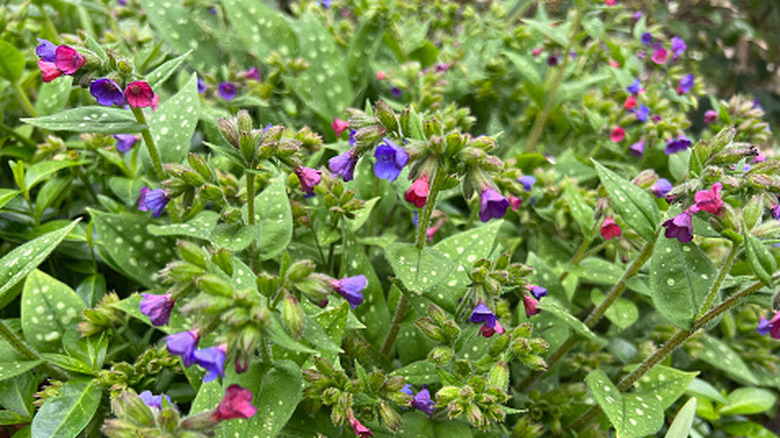
'Raspberry Splash' lungwort (Pulmonaria 'Raspberry Splash') is a good one because it has no significant pests or diseases, loves partial or full shade, and still manages to push out the coolest pink and purple blooms on polka-dotted leaves. The Bearberry cotoneaster (Cotoneaster dammeri) is another option, which has small white flowers, red berries, and is a fast grower once it's established. One word of caution: It can become weedy in some West Coast regions, and is listed as invasive in Oregon. There's also the Virginia creeper (Parthenocissus quinquefolia), a native low-maintenance ground cover that tolerates a wide spectrum of growing conditions and is tolerant of salt, pollution, drought, heat, and deer.
Lawn ground cover alternatives can grow where grass can't
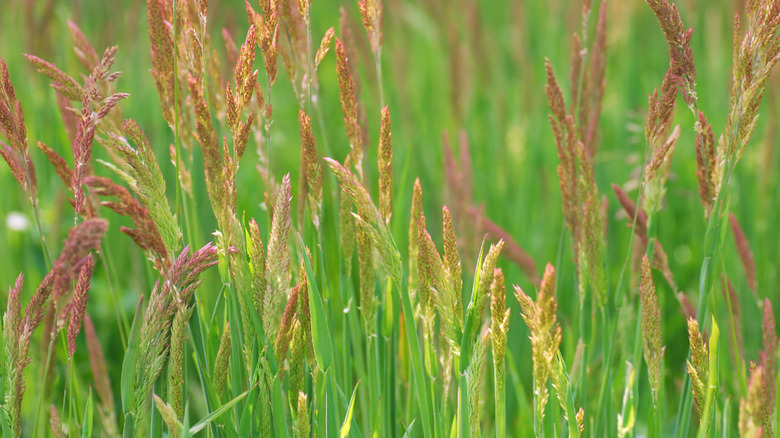
Sometimes, you just need to cover up some bare patches in your yard where lawn refuses to thrive. Luckily, there are ground covers that are in the "lawn alternative" category that can grow where grass can't. These can be used to fill in patchy yards, and some have small flowers, leaving your yard looking simple but lush.
Native sedges (Carex spp.) work great as lawn alternatives since they are able to be mowed right alongside grass and have low mounding forms. However, if you want a little bit of a show, the creeping red fescue (Festuca rubra) has pretty red seedheads that will pop up in the late summer and add just a splash of color — but you can mow these off if you want to keep things demure. Just take note, red fescue is listed as invasive in the state of Oregon, and it can become weedy in the right conditions. The straggler daisy (Calyptocarpus vialis) is another robust option that does well in most sun conditions where grass won't grow and has tiny, bright yellow flowers that aren't showy but just enough to let you know they're there.
If your goal is to grow your own food, look into edible groundcovers
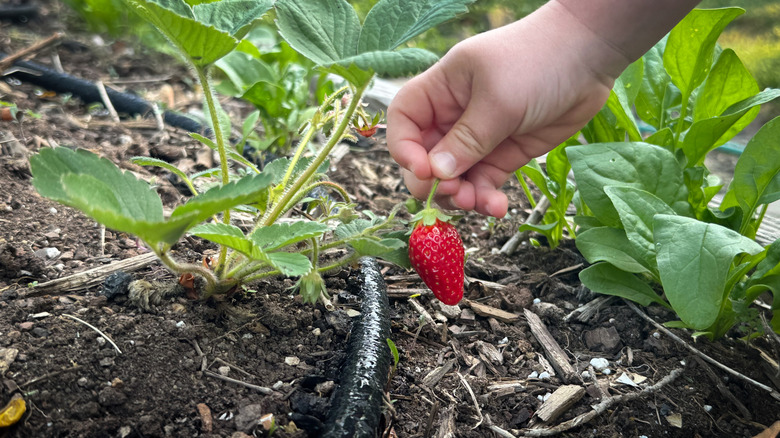
Yards don't need to just be for show — they can be functional, too. If you want to replace your lawn with an edible landscape, there are lots of ground covers that can fit the bill. Not only will they offer tasty treats, but they're less wild-looking than the meadow look, so your grumpy neighbors will have less to furrow their brow about.
If you've got a spot that has moist soil with good drainage, you can't go wrong with planting some strawberries (Fragaria x ananassa); just note that you should pinch the flowers off during their first year to promote fruiting in year two, so you won't get berries right away if you're growing from seed or starter plugs. Common thyme (Thymus vulgaris) is another hardy and edible ground cover that's low-maintenance and looks lovely. But if you want something really unique and interesting, try the creeping blueberry (Vaccinum crassifolium), an edible ground cover that thrives with almost no effort and has color-changing foliage that goes from a blood red/bronze to dark green as it matures.
Native ground covers are a great option if you want to water and fertilize less
Not only are native plants great for your local ecosystem, but they also tend to require fewer inputs. Native plants often need less water (especially once established) and have minimal fertilizer needs. If conditions closely match their natural growing environment, native species also tend to be less vulnerable to pest infestations and plant diseases, which means less need for pesticides, fungicides, etc.
Of course, what's native to your region can vary, so you may want to check your local cooperative extension or master gardener program to find recommendations tailored to your area. However, a few popular ground covers that are native to the U.S. include: Robin's plantain (Erigeron pulchellus), which is native to the central and eastern U.S., coral honeysuckle (Lonicera sempervirens), which is native to the southeastern U.S. — and does great on a trellis, too. The bearberry (Arctostaphylos uva-ursi) is native to the majority of the continental U.S., so should work well in most American yards, while coral bells (Heuchera sanguinea) is native to the southwestern U.S. and northern Mexico but does well in most conditions, as long as the soil has a high organic content and isn't too heavy.
Use pollinator-friendly ground covers if you want to attract more butterflies and bees
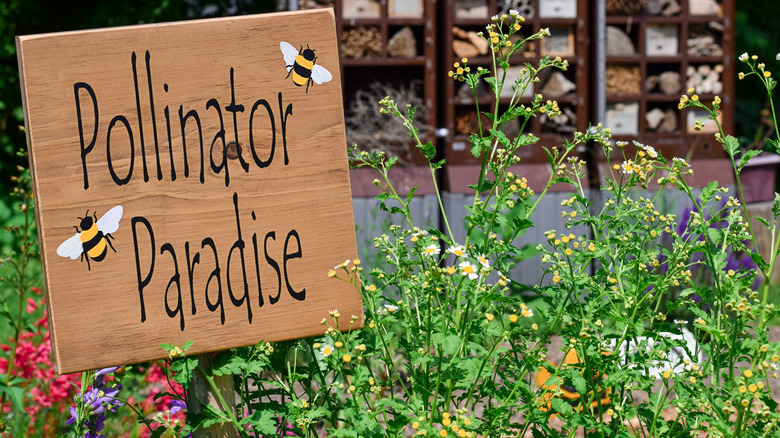
Who doesn't want more butterflies and hummingbirds in their yard? Not only do pollinators play an important role in our world, they're just plain fun to watch flutter around your plants. While native plants are always a great option, there are some other ground covers that attract pollinators, too, so you don't need to be as exclusive with this category as you might think.
Bearberry (Arctostaphylos uva-ursi), Rocky Mountain zinnia (Zinnia grandiflora), and rose verbena (Verbena canadensis) are all native to North America and attract butterflies, beneficial insects, and bees. But if you don't need to stick to native plants, Japanese stonecrop (Hylotelephium sieboldii) and the China- and Korea-native ice plant (Hylotelephium spectabile) are incredibly showy ground covers that bring butterflies and bees right to your yard. Whichever you choose will depend on your soil and sun conditions, so make sure to read their care tags carefully at the nursery before you bring them home.
Ground covers that handle dry shade are suited to yards that have lots of trees
Adding ground covers in a yard full of trees isn't easy. You'll need plants that can handle the shade of your tree's canopy and not be bothered by the thick roots keeping your tree upright. Additionally, the groundcovers you select need to not only be able to handle shade, but dry soil as well. Dry shade areas (where tree roots absorb moisture and spreading canopies rob the ground below of rain) can be tricky to plant in, as many drought-tolerant plants are adapted for full sun.
If you want to fill out the spaces under your trees, opt for shade-happy ground covers that don't require moist conditions, like the Pennsylvania sedge (Carex pennsylvanica), Canada violet (Viola canadensis), or creeping Oregon grape (Mahonia repens). When underplanting your trees with groundcovers, be careful not to dig up or chop into large roots, or mound soil and mulch around the trunk or root flare. Applying a thin layer of topsoil or compost to the planting area can help your newly-planted groundcovers thrive, but aim to add no more than 2 inches.
If you have black walnut trees in your yard, look for juglone-resistant ground covers
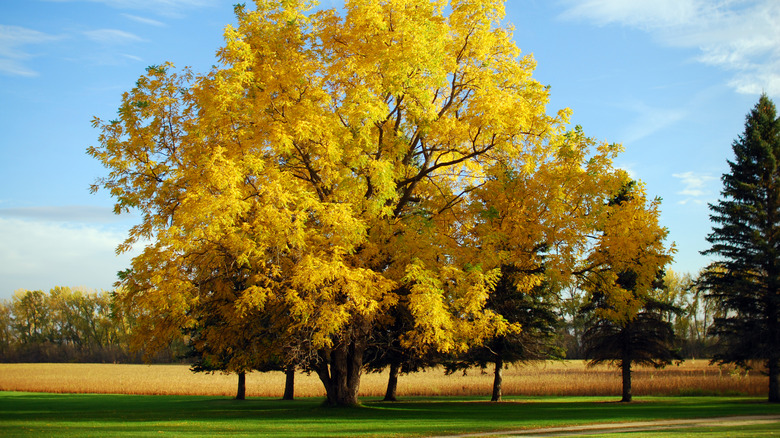
Black walnut trees (Juglans nigra) are gorgeous but can be particularly finicky when it comes to underplanting. The problem is due to juglone, a chemical created by some plants that creates a protective barrier around them to reduce competition for nutrients. Black walnut trees aren't the only ones that create juglone, for the record, but they do happen to be one of the most difficult to deal with when it comes to adding ground covers.
However, it's not hard to combat this; you'll just need juglone-resistant ground covers. Grape hyacinth (Muscari) is an awesome ground cover for planting around black walnut trees, as they're compact, pretty, and juglone-resistant (just take note that they can become weedy, and are listed as invasive in West Virginia). Winter aconite (Eranthis hyemalis) is another option that has pretty buttercup-yellow flowers and compact growing habits. And there's always our old favorite, bugleweed (Ajuga reptans), which is both juglone- and deer-resistant. Just don't plant it in regions where it's considered invasive, like Oregon and West Virginia.
Non-toxic ground covers are key for kid- and pet-friendly yards
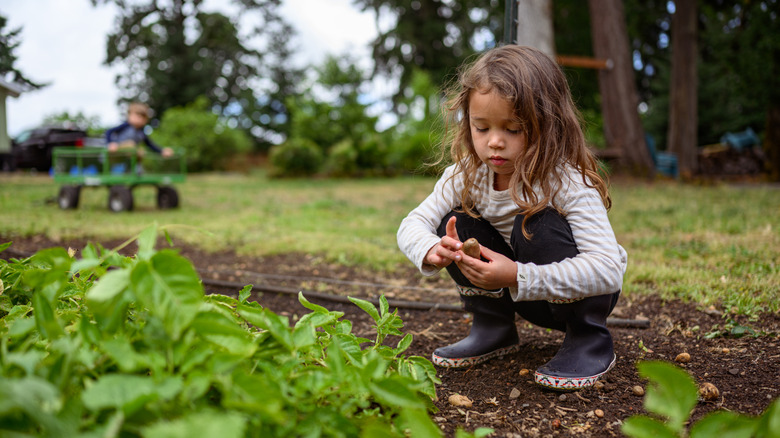
Kids and pets might challenge your landscape planning, as you've got to consider how much they both love to put stuff in their mouths. Sadly, many plants can be toxic to humans and pets, varying from mild skin irritations to full-blown poisonings that require a trip to the emergency room. Since you can't keep an eye on all family members 24/7, no matter how hard you try, it's best to play it safe and look for non-toxic ground covers.
Thankfully, non-toxic plants aren't as exotic as they might sound, and can still be show-stopping bloomers if that's what you're looking for. Lamb's ear (Stachys byzantina) is a wonderful non-toxic ground cover with soft, fuzzy leaves that your kids will love to touch. Sweet alyssum (Lobularia maritima) is another option that makes an excellent carpeting ground cover with delicate, white blooms. Our favorite, though, is star jasmine (Trachelospermum jasminoides), a sweet-smelling vine that works well as a ground cover but can't survive most winters in USDA Hardiness Zones below 8a. However, they're easily propagated via stem cuttings, so clip off a few stems and bring them inside for the winter, then just replant after your last frost.