

Add Summer Color To Your Flower Beds With A Low-Maintenance Annual
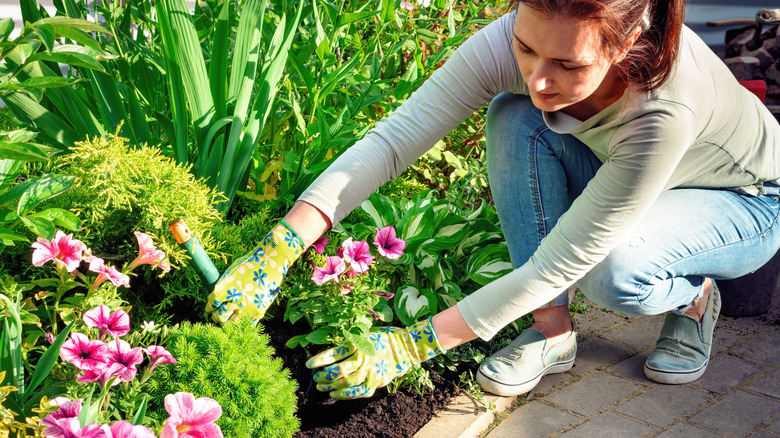
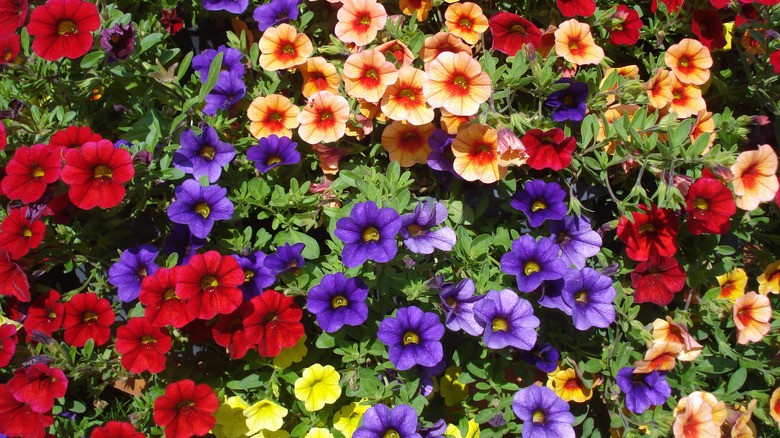
Whether you know them as Superbells, Million Bells, or mini petunias, these colorful flowers (Calibrachoa sp.) have been increasingly popular since they were introduced from South America about 30 years ago. While they may look delicate, Superbells are among the summer-blooming annuals that can take the summer heat. In fact, they'll reliably bloom from early summer to first frost, provided you give them the tiniest bit of attention now and then. If you've noticed these petunia cousins in the garden center, you probably already know Superbells come in a variety of colors, flower types, shapes, and sizes.
Superbells are popular choices for hanging planters because of their cascading shape. Yet the annuals can also thrive in the ground, provided you take care to provide excellent drainage to their garden beds. Superbells' only intense "dislikes" are packed clay and constantly moist soil, which are easily addressed. Best of all, these low-maintenance annuals are among the self-cleaning varieties of flowers that don't require deadheading!
No matter what your preferred color scheme or garden layout, there's at least one Superbell variety to suit it. For pastel gardens, consider pale pink-yellow 'Double Grapefruit' or light purple 'Miss Lilac.' Or opt for variegated, brightly-hued types like 'Holy Cow!' or 'Holy Smokes!' If you like to mix and match, try combining similar colors like bright yellows, oranges, and reds, or pleasingly contrasting ones like purple and gold. When spaceis limited, choose compact 'Tabletop White.' In contrast, a type such as 'Trailing Blue' covers more ground.
Superbells provide bursts of color in exchange for minimal care
When adding superbells to your flower beds, set them out strategically. These low-growers are best used in the front borders of ornamental garden beds, or as a blooming ground cover in an out-of-the-way, sunny corner. You can also set them among rock garden plantings. Because Superbells have a trailing habit, placing them in such a way that they spill over border edging or rocky outcrops can look especially fanciful.
Whether you grow them as an annual or as a tender perennial in subtropical/tropical zones, you won't need to fuss much over these carefree flowers. Wait until your area's last predicted frost date before setting Superbells in the garden. If you have clay soil, plant Superbells in raised beds, or in garden beds in which you've loosened the soil. Either add a slow-release fertilizer during planting, or provide a liquid type every few weeks.
Superbells prefer to be placed in full sun. They will survive in light shade, but probably won't flower as profusely. Water the beds when the soil dries out. Truly among that cherished group of flowers that even the worst gardeners can handle, these colorful annuals won't give you many problems if you provide them with some sun and don't over-water them. They don't suffer from pests or diseases. Not only do the flowers not require deadheading, but they won't even pop up in unwelcome areas the following year. That's because the plants are bred not to produce extra seeds.