

Bring Pollinators To Your Garden By Eliminating One Thing
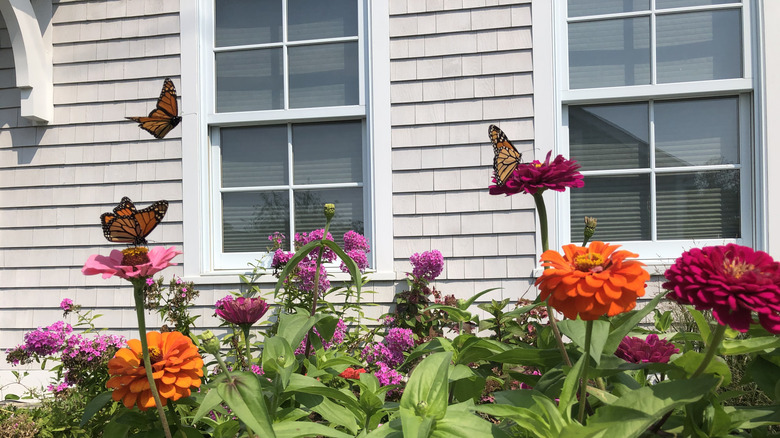
You've started a pollinator garden, made your outdoor space hospitable to wildlife, added brightly colored lawn decorations to draw in more hummingbirds, and set out a bevy of water sources. Yet, it seems like you rarely get visits from the bees, birds, and butterflies that are so important to our ecosystem. While all of these features are certainly beneficial for attracting these helpful creatures, it's also important to consider your surroundings and how items that are a part of your daily routine could be impacting them. While well-lit areas are often more comfortable for humans, artificial light sources can have a major effect on the flight patterns and behavior of pollinators.
You might already be familiar with the concept of light pollution and its massive impacts on animals, such as sea turtles, but it's important to consider its consequences in your own yard, too. For millennia, insects and animals relied on the natural light of the sun and the moon to guide their routines and help them find food. Nowadays, however, streetlights, signage, and nighttime lighting on homes can interrupt these instinctual behaviors. Moths, for example, are often more drawn to bright sources of light than plants, which means fewer flowers get fertilized and the ecosystem suffers as a result. These disruptions are obviously happening on a large scale thanks to our widespread reliance on electric lighting, but if you want to do what you can to minimize the damage, it's time to consider which exterior lights you should leave on or turn off night after night.
What impacts do lights have on pollinators?
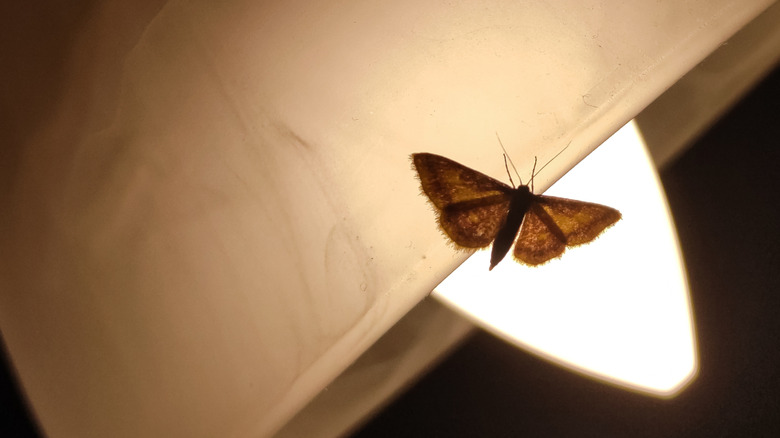
Having lights on at night can cause a few different issues for pollinators. As mentioned with moths, some flying insects are drawn to light more than nearby flowers, reducing the amount of actual pollination that's going on. On the other hand, some pollinators avoid bright lights, meaning they're less likely to stop by your plants while they're illuminated by the light of your porch or the floodlight from your security camera. There's also the issue of well-lit areas being more dangerous to some pollinators, as illuminated spaces make it easier for predators to hunt.
On a wider scale, light pollution can also have major impacts on migration patterns. Birds and butterflies, for example, navigate with the help of the moon and the stars, and if bright lights make these night sky features more difficult to track, they can get thrown off their path. This confusion slows their migration, leaving these creatures weak and worn out as they attempt to find the correct route.
How to reduce your home's contributions to light pollution
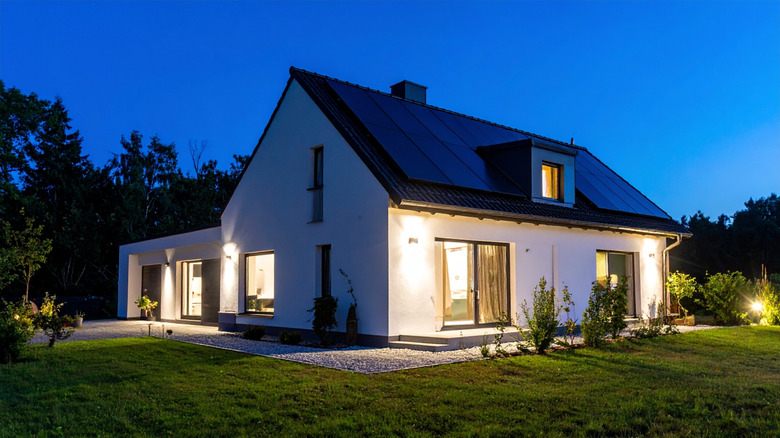
The easiest way to reduce your light pollution and your effect on pollinators is to turn off your lights at night entirely. This all-or-nothing approach, however, isn't always feasible. If there are any lights you need to keep on for safety reasons, feel free to do so, but try your best to turn them off when they're not needed. Additionally, consider investing in motion-sensor lights or lights on a timer that will shut off when they're no longer in use. Even indoor light should be considered in this situation — if you need the lights on inside at night, opt for dimmer lamps or draw the curtains to prevent light leakage.
The type of lights you have installed also matters. Radiant, bright lighting that illuminates large areas is more harmful, so more focused, downward-facing lights can act as a better alternative. Lights on or near bright or reflective walls can also create a radiant effect, so keep this in mind if you have light-colored siding or fencing. To tone down your existing lighting without replacing it entirely, consider swapping out your bulbs for warm-toned lights or adding a red filter to make them appear less harsh. By aligning your home's lighting with the rise and fall of the sun, you'll create a more welcoming space for pollinators. Who knows — you might even save on your electricity bill, too!