

What Is The Best Fertilizer Type To Keep Indoor Plants Thriving?

We may receive a commission on purchases made from links.
If you've been growing them for a while, you'll know that houseplants really do need to be fertilized. This is because all plants need nutrients to thrive, and those growing in pots will soon use up any goodness that was in the growing mix when you first potted them up. So, unless you change the mix every six months or so, which is impractical and unnecessary, you will have to find the best fertilizer type that works for you to keep your indoor plants thriving. There are a number of choices, including slow-release granules, water-soluble liquid or powder fertilizer, and fertilizer spikes. Essentially, the best type of fertilizer will depend on your own cultural practices and how often you want to feed your plants.
Before you settle on the type of fertilizer you want to use, make sure that you're using one that's primarily designed for the type of houseplants that you're growing. Specifically, green foliage plants benefit from plenty of nitrogen, while flowering plants like some extra phosphorus and potassium. All in all, though, you're quite safe using a balanced fertilizer with close to equal amounts of all three major nutrients on most plants. Just make sure that it also contains micronutrients, as well.
Choosing the best type of fertilizer to suit your plant care practices
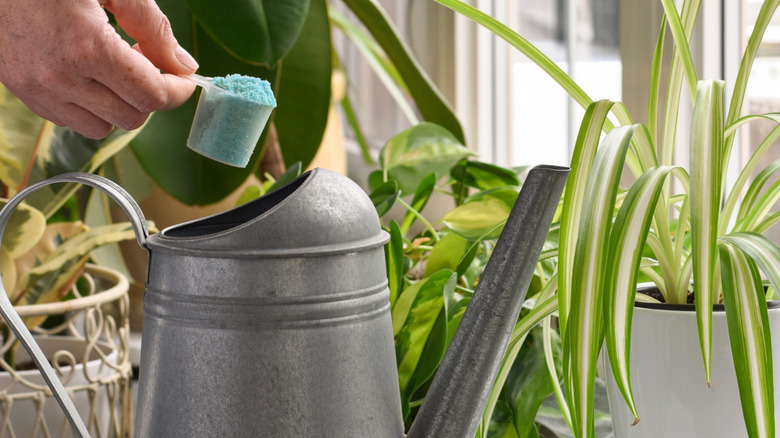
Most houseplants produce their active growth during the warmer months when days are longer, but there are exceptions. This is why you want to think twice before fertilizing your houseplants during winter, and only do so when they're in active growth. If you're a hands-on person and like to feed your plants on a regular schedule, such as weekly, every second week, or monthly, then a soluble fertilizer is best. Just remember that the nutrients in these are absorbed by the plant roots straight away, and any excess is usually washed out through the drainage holes. That's why it's important to repeat their application frequently.
On the other hand, if your life is busy and you're prone to forgetting that your plants need fertilizer, using a slow-release granular product or one of those spikes will suit you much better. It's important to check the label to determine how long these products last, but it could be anywhere from two to nine months. You'll find that there are conflicting reviews about the fertilizer spikes, but as long as you don't damage the roots when inserting them and keep them around 2 to 3 inches away from the stem, they should be fine for most foliage plants.
If you grow succulents, it's important to know that they are more sensitive to fertilizer burn and need lower concentrations of nutrients. That's why it's recommended that you use any fertilizer at half the strength recommended for other types of plants. Most fertilizer spikes are not ideal for these, unless you use succulent-specific ones, like Jobe's Organics succulent fertilizer spikes, which are relatively low in nitrogen and made from natural ingredients such as feather meal, bone meal, and sulfate of potash.
Avoid overfertilizing your houseplants
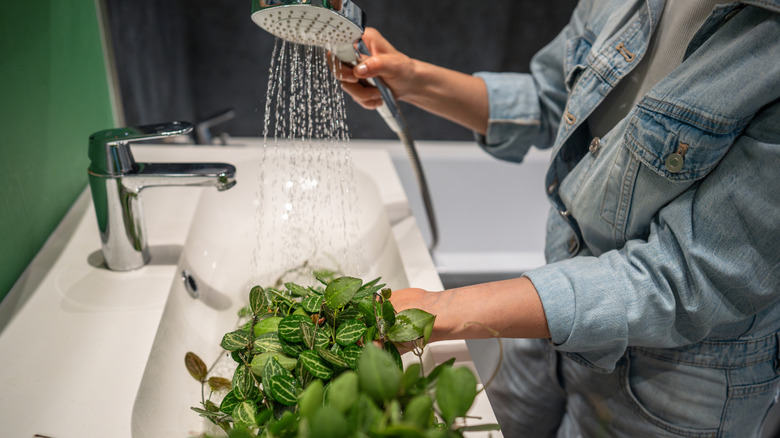
Choosing the type of fertilizer you use comes down to personal preference, as they all have their merits. What's more important to remember is that you shouldn't overfertilize your plants because this can lead to problems, such as brown leaf tips, deformed growth, and wilting. You'll also find that too much fertilizer will result in a white crust forming on top of the soil.
This is because many fertilizers contain salts, which tend to build up inside container plants and cause damage to the roots. This is why you periodically want to flush your plants with clean water to wash out any salts remaining in the soil. It's also a good idea to change your indoor plants' soil by repotting them with fresh, new mix every now and then. As always, follow the instructions on the pack for the type of plant that you're fertilizing and don't exceed the recommended dosage. In fact, you're much better off adding too little fertilizer rather than too much.