

The Colorful Lily Variety Hummingbirds Love That Blooms From Spring Into Summer
Whether you know them by their evocative names of Cape lily or cemetery plant, Crinum lilies (Crinum spp.) can transform your space into a hummingbird heaven. A spring or summer flowering bulb in the amaryllis family, the Crinum comes in colorful cultivars and varieties that range from creamy white to deep magenta. Most thrive best in southern climates.
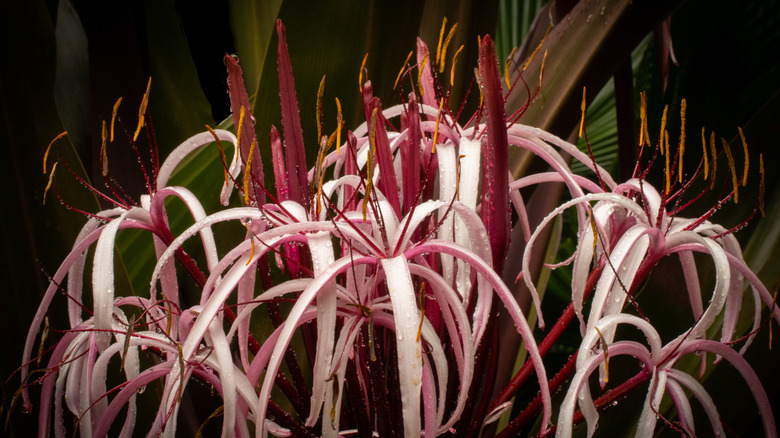
The one Crinum that's native to the southeast, C. americanum, is often called swamp lily or spider lily. The bulb features "spider" flowers with slender white or pink-tinged petals curving gracefully backwards. Several other crinums exist, many with the kind of trumpet-shaped flowers that hummingbirds love. These include cultivars such as 'Milk and Wine,' with its characteristic creamy petals streaked with red, "Rubra," a deep-red Crinum, and the hot-pink "Ellen Bosanquet." 'Princess Bride' is another spider-shaped Crinum, with pale, curving flowers resembling frilly balls.
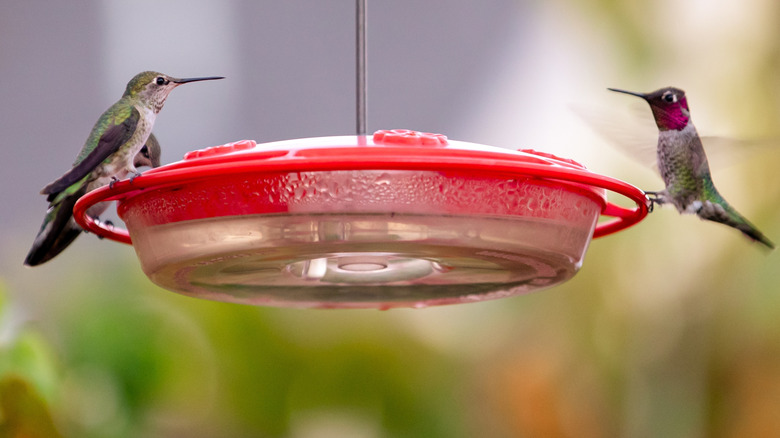
Among the pollinators drawn to Crinums are hummingbirds and butterflies. Pair Crinum lilies with other flowers known to attract hummingbirds. If the flowers you're growing are white or pale pink, consider more vividly-colored companions. Perennials which enjoy similar growing conditions and also attract hummingbirds include red cardinal flowers (Lobelia cardinalis), blue lily of the Nile (Agapanthus spp.), and day-lilies of various sizes and colors. In addition, plant Crinum lily cultivars in deeper shades, such as dark pink 'Bradley.' Having a variety of water sources, feeders set at the perfect height, plus places for shade and protection, is also key to a bustling hummingbird garden.
These vibrant hummingbird favorites prefer moist to wet soil
As a group, crinum lily varieties and cultivars grow about 2 to 4 feet in height. They're reliably hardy as garden plants in USDA hardiness zones 8 to 10. (Check the specific crinum bulb you're growing, however, because some may thrive as far south as zone 11 or as far north as zone 6.) Most will bloom around July and August, making these popular summer bulbs a useful way to stretch the season after spring-blooming bulbs have gone by. They can be planted throughout the warmer months, but it's always wise to double-check your cultivar's instructions.
True to its name, the swamp lily, which grows 2- to 4-feet tall, prefers to grow in standing water, in full sun or partial shade. Other Crinum bulb types also prefer consistently moist conditions, but do best in well-drained soils. Give the plants less water after their blooming season, allowing the soil to dry out between waterings. Crimum lilies will eventually spread to form colonies, especially if its roots are left undisturbed. Because the root systems are sensitive, Northern growers have better luck establishing them in pots, rather than lifting the bulbs themselves out of the ground for the winter.
Please keep in mind that while hummingbirds and other pollinators may love this lily variety, it's potentially dangerous to humans. All parts of this plant, from its roots and petals to its sap, are poisonous if ingested. Be cautious when establishing Crinum lilies if you have small children.