

As A Ground Cover Or In Hanging Baskets: The Silver-Gray Perennial That Looks Good No Matter What
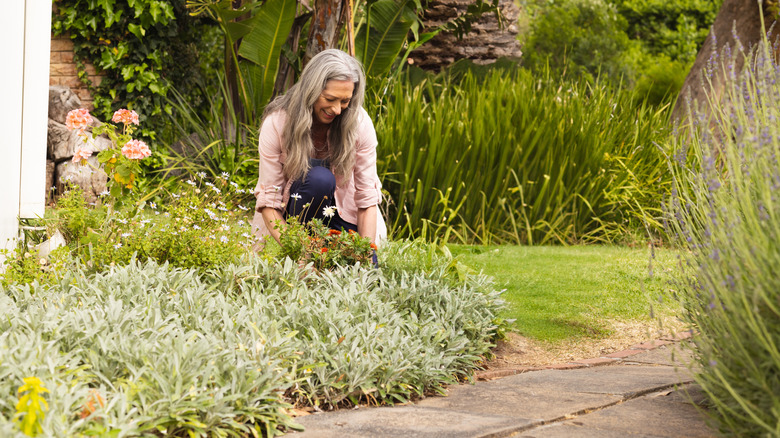
If you want to add a unique plant to your garden, whether you incorporate it as a low-maintenance ground cover or hang it in a basket on your front porch, there is one particular flower you should try. Beach wormwood (Artemisia stelleriana), which often goes by other names such as dusty Miller or sagewort, is a fuzzy herbaceous perennial that can add a stunning touch of silver to your property. Though it is native to Asia, eastern Russia, and western Canada, many U.S. gardeners like to add this ornamental to their lawns, and it is common on Atlantic coast thanks to its ability to survive ocean spray. This perennial is hardy in USDA Zones 3 through 9.
Once it is fully established in your soil, beach wormwood is a low-maintenance silver ground cover that thrives in sunny landscapes and is an excellent choice as a creeping garden filler. It retains its silvery leaves all year long. If you want to bring pollinators to your garden, beach wormwood's yellow, cup-shaped blossoms attract bees and butterflies. If you don't have a ton of space on your property or you prefer to cultivate your plants in hanging baskets, beach wormwood is an easy option that will stand out no matter where you keep it.
Note that beach wormwood can be considered invasive in some northern parts of the U.S., including along the north Atlantic coast in states like Delaware, New Jersey, New York, and Maine. Planting should be avoided in these areas, but even if you're in a state where it's considered safe, it's necessary to keep its growth under control.
How to add beach wormwood to your garden
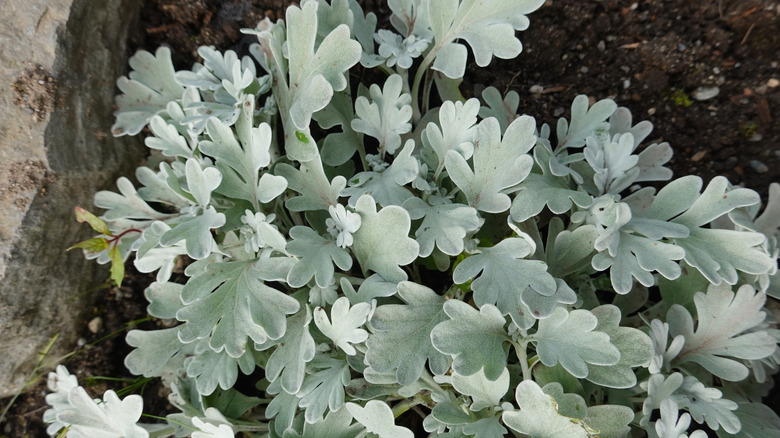
Depending on the size and design of your garden, you add beach wormwood around the edge of your lawn, as a companion plant for other flowers, or as a decorative hanging plant for your home. It's recommended to add beach wormwood to your garden in the springtime, past your area's last frost date. This perennial thrives best in areas with full, direct sun, ideally about six hours a day. You may want to avoid this plant if your environment tends to be humid.
Whether it's directly into the ground or in a hanging basket, beach wormwood should be planted in loose, well-draining soil. If your ground doesn't have a loose consistency, add organic materials to your garden soil like peat moss or your own DIY compost to help the texture. When planting the root ball of a beach wormwood, make sure to bury it in a hole of its own size so that the top of the ball is level with the soil. Ensure it stays consistently watered for the first few weeks. After that, keep watering to a minimum to avoid issues like root rot. It can grow to 12 to 16 inches tall, and usually blooms in early fall. Beach wormwood can add a stunning silvery affect to your garden no matter where you place it, whether that be alongside other colorful flowers or in containers.