

Why Builders Walked Away From Shotgun Style Homes After The 1950s
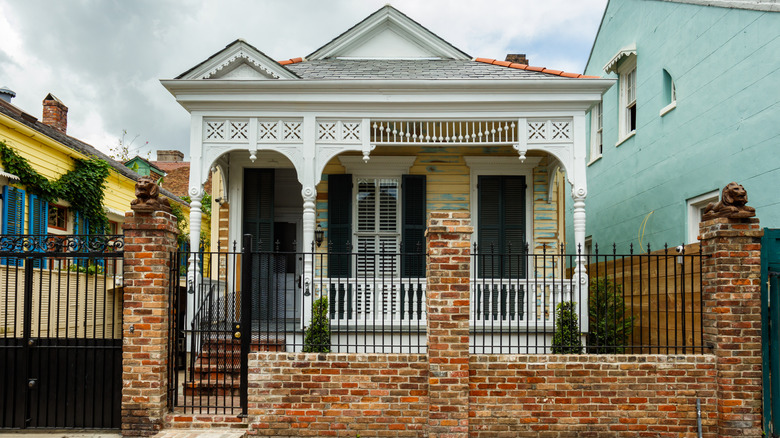
Have you ever been to New Orleans or Louisville and wondered about those skinny, long houses that fill the city blocks? They are what's known as shotgun houses. Shotgun houses were a cheap, simple-construction home style, and because of their unique shape, many could fit on small urban lots. The history and origins of the shotgun-style house are most popularly traced to an influx of freed slaves emigrating to the southern U.S. in the early 1800s, specifically to New Orleans. In the 1910s and '20s, the building of shotgun houses slowed because they were stigmatized as homes for the poor. During the Depression, home building was almost completely stopped, and by the time it picked up again, the shotgun house was being replaced by suburban mid-century modern style homes. As with most changes in home design trends, much of it had to do with changes in desired features, technological advances, and societal shifts.
So, what exactly defines a shotgun house? They were single-story, narrow homes, with the rooms aligned one in front of the other from front to back, often built on supports. They had the living room in the front of the house, bedrooms in the middle, and kitchen and bathroom in the back. While shotgun houses are most associated with freed slaves in New Orleans, they became a standard for working-class neighborhoods of all cultures throughout the South as well as other areas of the United States. These homes provided much-needed affordable housing for thousands of factory workers and their families during the 19th century. After World War II, with the rise of the middle class, more people were moving out of the cities into the suburbs, and many of the shotgun home neighborhoods became less desirable.
Technological advancements and economic shifts contributed to the downfall of the shotgun house
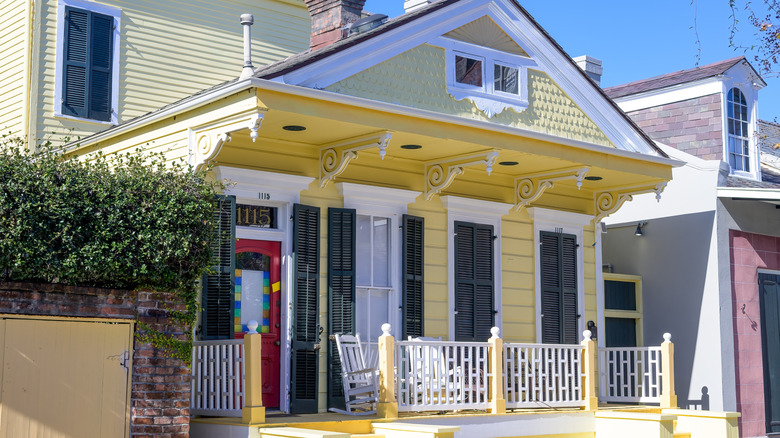
Shotgun houses provided an extremely affordable way for working-class families to own a home in southern cities and during the 19th century, a important factor seeing as that's where the jobs were. With the widespread adoption of the automobile during the early 1900s, the need to live close to your job was no longer a necessity. After World War II, things changed dramatically with the advent of the suburban neighborhood, the creation of interstates, and an improved economy. Many people were wanting to buy single-family homes with more privacy, more rooms, and larger yards outside of the city. With soldiers returning from the war wanting to start families, obtaining government funding to buy larger homes, and having more disposable income, demand for shotgun houses disappeared.
By the 1950s, homebuilders abandoned the shotgun home design altogether because of supply and demand — the market demand was for larger homes in the suburbs. During the 1960s, many of these interesting homes were torn down to make way for newer, more modern city buildings. However, many shotgun houses still existed in New Orleans until 2005 when Hurricane Katrina hit. In the aftermath, many of the city's historical shotgun houses were removed during the cleanup effort, leaving Louisville, KY with the largest number of these homes. There has, however, been a recent resurgence in popularity of the shotgun house, most likely for the original reason they were built: affordability. Joanna and Chip Gaines even restored a shotgun house on their show "Fixer Upper.". It's definitely an outdated home style that might be worth bringing back.