

That's Not Crabgrass: How To Remove This Perennial Look-Alike For Good
We may receive a commission on purchases made from links.
Many gardeners and homeowners across the United States are familiar with crabgrass (Digitaria spp.), a tenacious weed with spiky green blades that is especially common in the grassy patches of the country's warmer regions. While it can be easy to remove crabgrass from your lawn, the best method for removing the weed is not always effective against its lookalike, dallisgrass (Paspalum dilatatum).
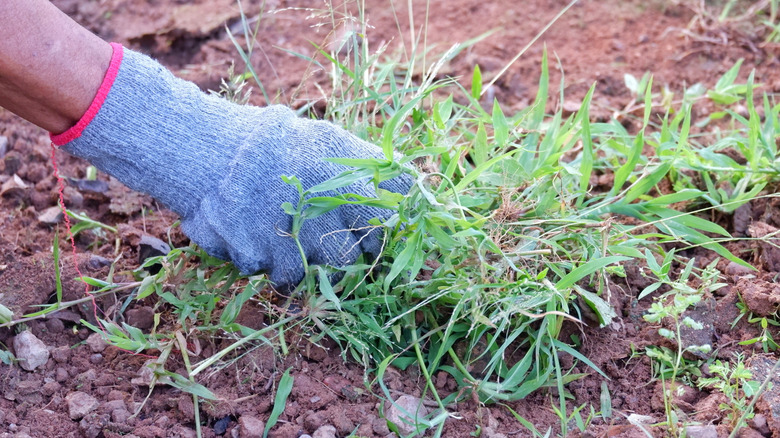
Like crabgrass, dallisgrass thrives in hot, dry environments, and can grow very aggressively. Unlike crabgrass, however, dallisgrass is a perennial, which means that even if the leaves have been cut down, the weed will grow back season after season. Crabgrass, an annual, can be taken care of by aerating the soil and keeping the surrounding grass long so it blocks the sun from reaching the weed's roots. When used against dallisgrass, these techniques don't address the root of the problem, allowing the weed to continuously regrow. That's why the best way to combat dallisgrass is to dig it up by the root.
Dallisgrass has a very extensive root system, with some tendrils reaching over a foot long. Chemical solutions like pre-emergents or herbicides can't always reach far enough into the soil to fully kill the weeds, making manual removal necessary. This isn't the most exciting chore, but waiting for the right weather conditions will make pulling weeds quick and easy.
Remove dallisgrass from the root
Removing larger dallisweed clumps may result in a hole, which you can fill with soil and grass seed to even out your yard. Unfortunately, it's hard to deal with larger infestations of dallisweed without doing some damage to your grass; soaking the weed with a herbicide will kill the weed, as well as all of the surrounding grass in the process. So, before going at your lawn with something like the Fiskars Ergo Weeder Tool, make sure you are in fact looking at dallisgrass.
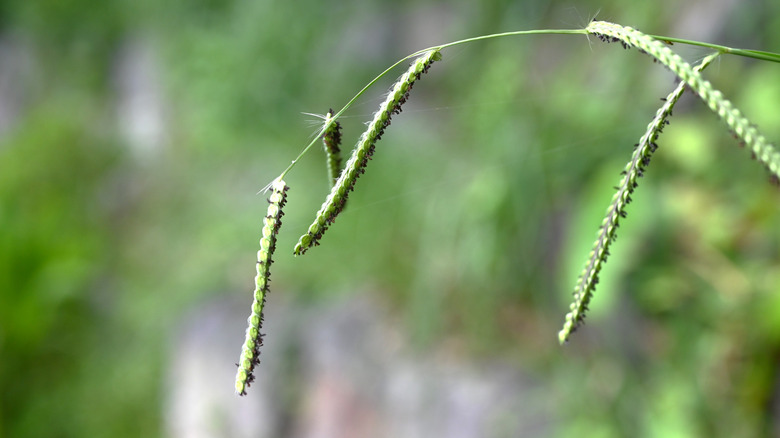
Oftentimes, it's the tiniest differences that allow you to identify common garden weeds. In this case, the two equally green, fanning weeds can be distinguished by their seed heads. Dallisgrass's seeds are thicker, and look a bit like small caterpillars with black specks jutting out along the sides. Alternatively, crabgrass has thin, straight seed heads that branch off from the same stem.
Because its long roots can disrupt so much soil upon removal, you may want to employ the use of grass sod to quickly get your lawn back to its former glory. Once all the dallisgrass has been removed, you can prevent new weeds from growing by regularly treating your lawn with a pre-emergent like Roundup Weed Barrier Granules. It can also be helpful to clean your lawn mower and gardening equipment in case they've been contaminated with dallisgrass seeds.