

Don't Toss Old Compost - Use It To Pot Your Plants On A Budget
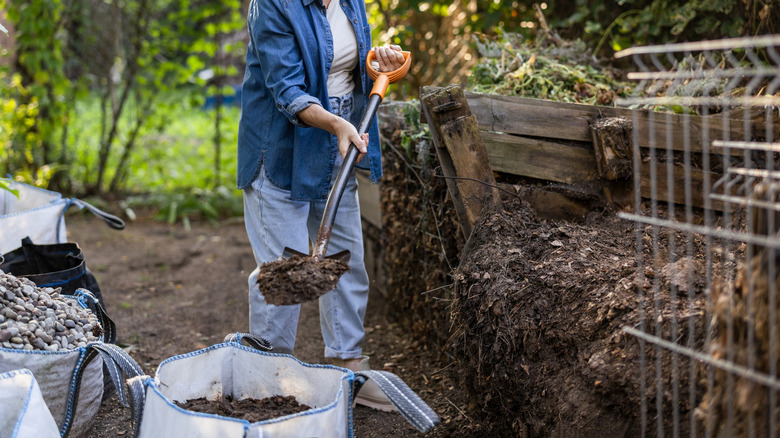
With a new gardening season underway, you may be looking forward to trying out new veggie varieties, sowing fast-growing flower seeds, or repotting your favorite plants. What may not please you, however, is the price of new potting soil, which can total up to a hefty amount when several planters are involved. Luckily, you don't have to outstrip your budget just to keep your gardening hobby going. Instead, you can reuse old compost that was left in a neglected bin (provided it's finished breaking down), commercial bags, or lying half-spent in planters or overwintering bulb containers to pot up new plants.
Although it's a common practice to discard old compost or return it to the compost heap because it's stripped of almost all nutrients, it can still serve as a useful planting medium. However, there are a few caveats. For starters, you have to make sure it doesn't contain any soil-borne or disease-causing microbes. For example, if your plants were affected by vine weevils, verticillium wilt, downy mildew, or were unhealthy and distressed by the end of the season, you're better off not using the old compost, as the microbes may pass through to new plants. Moreover, steer clear of compost that's too old. — if it hasn't been refreshed in many years, it will compact over time. Since roots can't break through it easily, growth suffers. So, stick to compost that's only a year or two old, as it's easier to fluff it up to restore air pockets and pick out any still-remaining old roots.
Potting new plants in old compost
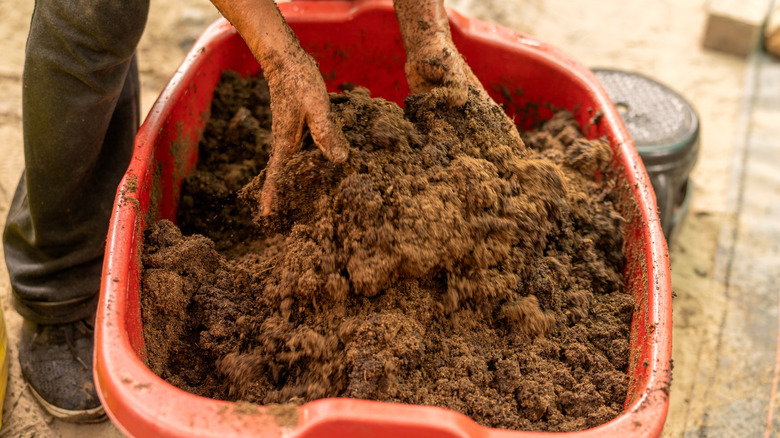
For this method, first examine the old compost's texture. If you notice any chunks, break those apart to loosen it up and make it crumbly. You may also mix in coir, sand, or grit in limited quantities to further improve drainage and aeration. Don't go over 25% of the total volume, as sand can be heavy.
Afterward, combine equal parts of old compost and new potting mix and mix them thoroughly. To restore nutrients, add a slow-release, general-purpose fertilizer. You may also opt for organic fertilizers, such as fish emulsion, seaweed, worm compost, or blood meal, but choose them according to your plant's needs. If this proposition still feels steeply priced, you may change it to a 3:1 ratio. But if you go this route, you'll have to fertilize more frequently.
Although some sources make the case for simply topping the old compost with a 6-inch-thick layer of new potting mix, you may not get as good a growth, especially in a large planter. The reason being, despite your best efforts, old compost may still not be as crumbly. And if overwatered, it can compact quickly, stunting root growth. However, if you're only looking for the best materials to fill the bottom of large planters and don't expect new roots to reach that zone, you may consider this top-up practice. But even then, ensure there is enough potting soil for the roots to be completely covered.
Other considerations before potting in old compost
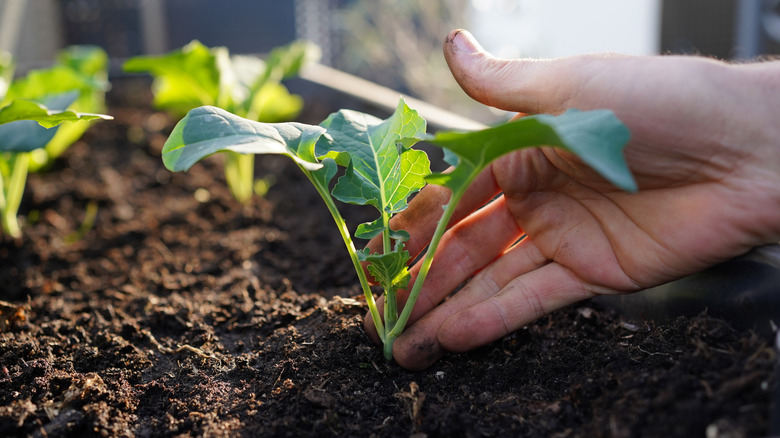
Although you can plant all sorts of plants in amended old compost, you'll have the best chance of success with plants that thrive in average fertility. Think leafy and salad greens. But plants and veggies that require rich or fertile soils, such as tomatoes or peppers, may not produce the best yields.
Also, avoid potting up plants in a 100% compost mix. Although a decent source of nutrients, compost is ultimately a mere soil amendment. Commercial offerings are mostly homogenized, tracing their source to singular or a small mix of ingredients, such as composted manure or bark. So, even if you enrich it with an all-purpose fertilizer, the planting medium itself may be lacking in several other nutrients. Not to mention, it'll continue to break down, causing drainage and aeration issues. So, always combine old compost with a potting medium in which roots can anchor properly.
As an aside, in case you're tempted to sterilize old compost to get rid of disease-causing pathogens and reuse it for planting, know that it can be both effort- and time-intensive. But if you still want to give it a shot, place the old compost (after removing all debris) in a thick, black plastic bag and leave it in a sunny spot for six weeks. Then, combine it with the new potting mix as previously outlined.