

What To Do If You Find A Spider's Shed Skin In Your Home

It's no secret that you may not want to kill the odd spider you find crawling around your home, as these helpful bugs can keep attics, sheds, and hidden corners of the house free of more pesky pests. However, that doesn't make it any less disconcerting to see a skittering arachnoid out of the corner of your eye. A potentially more disturbing experience is finding the shed skin of a spider with unknown whereabouts. Spiders regularly shed their exoskeleton as part of their growth cycle in a process known as molting. The leftover husk often remains in one piece, and can look like a hollowed-out, semi-transparent dead spider. Stumbling upon a spider husk can be upsetting regardless of the circumstances, but your next steps will change depending on what kind of husks you find and how many there are.
Since it's extremely common to have one or two spiders in your house, it's normal to find shed spider skin every now and then. The exception is if you suspect the exoskeleton belongs to a dangerous spider. Most spiders that make their way into our homes are harmless to humans, but there are two species in the United States that should be avoided: black widow and brown recluse spiders. Both of these spiders can be identified by their markings; black widows have a bright red hourglass mark, and brown recluses have a mark that looks like a violin. These spiders rarely invade houses, but if you are suspicious a shed spider skin belongs to something venomous, you should call an exterminator just to be safe.
A few spider husks are normal; multiple are a problem
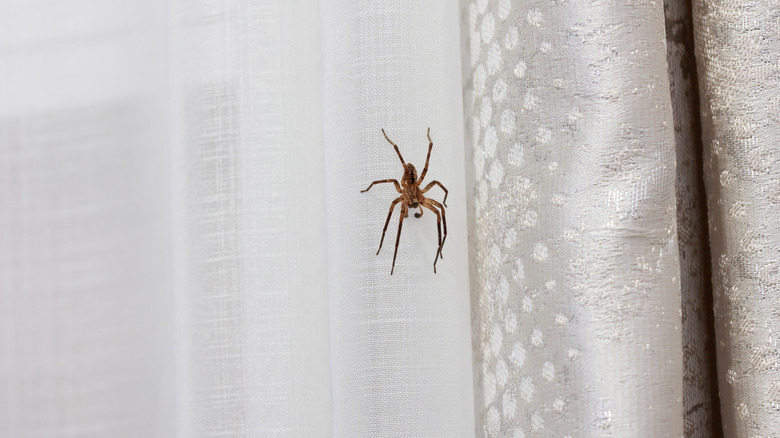
Another red flag when finding a spider's shed skin in your home is locating multiple husks in one location or over a short period of time. This could be an indication that there is a large community of spiders in your home, with more shed exoskeletons likely meaning more spiders. Numerous molts can also be a sign that whatever spiders are living in your home are thriving, as spiders will shed their skin throughout their lifetime. When looking for shed spider skin, check around any existing webs, along the windowsills, and behind furniture. An abundance of spider skin could mean you're dealing with an infestation.
The most common spiders you may see in your home won't become more aggressive in large numbers, but you may still want to call in a professional if you suspect you have a problem. Aside from easing your peace of mind, doing so can also make the house more comfortable for anyone who is allergic to spiders — spider allergies can be triggered by just being near a spider, and can induce intense symptoms like hives and shortness of breath.
Once you've dealt with any spiders inside your home, either by allowing them to stay or having them removed, you can prevent other spiders from moving in by keeping both the inside and outside of your home free of clutter (a spider's favorite thing) and sealing off cracks around windows and doors. Fortunately, finding a shed spider skin in the house isn't a big deal, which isn't always the case when finding a snake's shed skin in the yard.