

15 Flowers You Can See Bloom In April
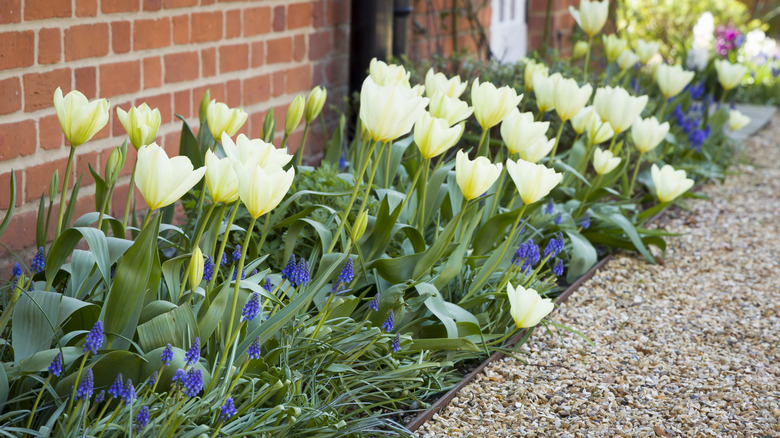
Even though the saying is "April showers bring May flowers," there are many flowering plants that can bring color to your garden in the month of April, including bulb-planted beauties like daffodils and hyacinth to colorful pansies and bushes like lilac and azalea, and even native wildflowers known as ephemerals. They're all gorgeous, resilient, and don't mind the occasional cold snap that can happen even as the days trend warmer.
April-flowering plants that grow from bulbs or shrubs generally need to be planted ahead in the fall, but if you haven't gotten around to that, use the warming days to plant some perennials that bloom in the spring or annuals known to tolerate cool weather. You'll have the best luck growing ephemerals if your garden has shade and moist soil like their native forest conditions and if you have time to wait for them to develop roots first for a few years. Also keep in mind many spring flowers — particularly the ephemerals – have short-lived blooms, so if you want to keep a colorful garden (and get some practice for the fall), plant some perennial bulbs for beautiful summer blooms.
Daffodil
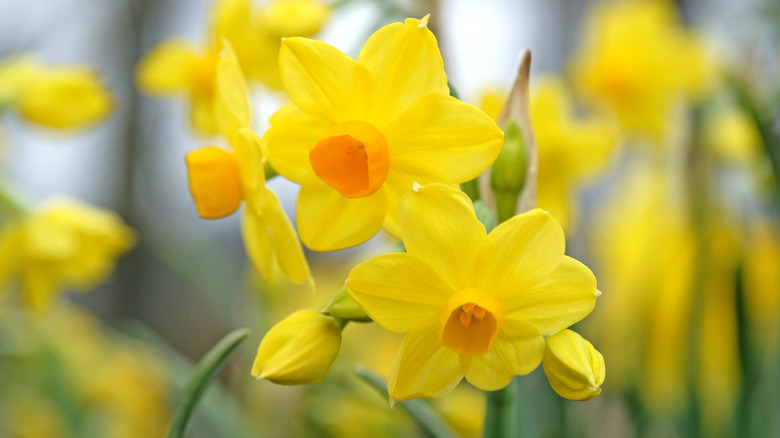
If you've planted daffodils (Narcissus) the previous autumn as bulbs, April is when their blooms, in combinations of yellow, white, or orange, should be at their fullest, as long as you haven't given them too much shade. They're one of the first plants to flower in the early spring in USDA Hardiness Zones 4 through 8, with an iconic shape made up of a cup-shaped corona surrounded by petals. Daffodil bulbs should keep growing in subsequent years, but if you notice less blooms over time, it may help to divide their clumps after they're done flowering.
Bleeding heart
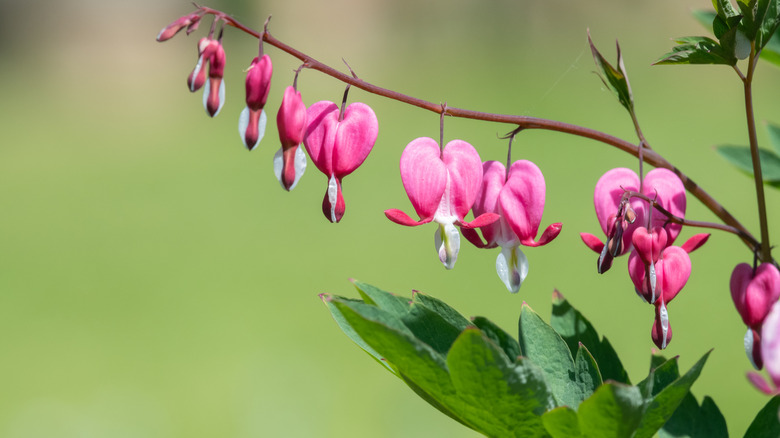
Bleeding heart (Lamprocapnos spectabilis) flowers have a striking shape unique among its spring companions. Small pink flowers, shaped like hearts, hang from the plant and open up to reveal drop-like white parts. Bleeding hearts bloom from April through June in USDA zones 3 through 9 and then enter dormancy over the rest of the summer. Making sure these 2- to 3-foot-tall plants have adequate shade and moist soil is key to successfully caring for your bleeding heart plant.
Pansy
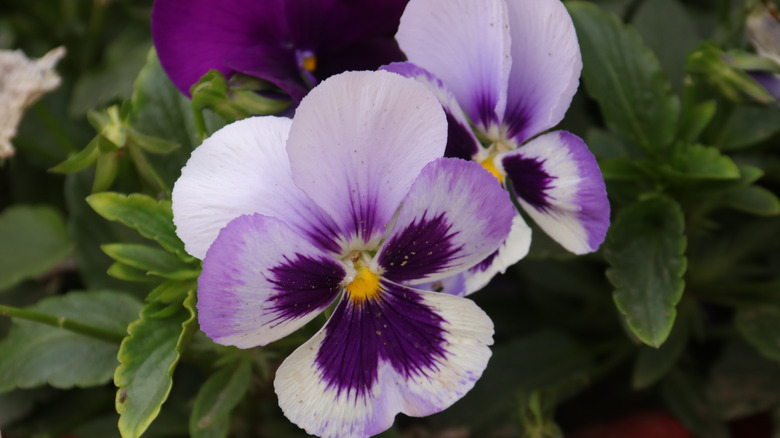
The cool-tolerant pansy (Viola x wittrockiana) is one of the best flowers to plant in pots in April. You might even find them already potted up at your local plant nursery. Grown as annuals, pansies bloom from early spring through June in USDA zones 6 through 10 but won't make it through the hot summer. Although you should discard the plants after flowering is over, deadheading individual blooms during the spring can prolong the blooming season. In addition to adding vibrant color, the purple, orange, or yellow blooms also attract butterflies.
Tulip
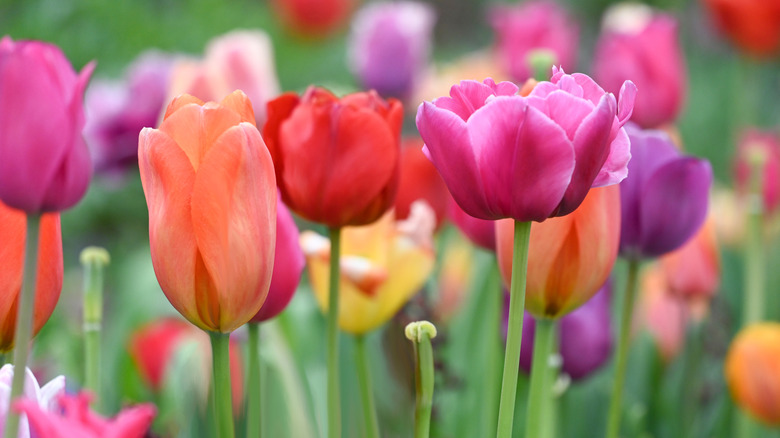
It wouldn't feel like spring without some tulips (Tulipa) popping up here and there, with cup-shaped flowers in almost every color of the rainbow. Having them bloom in the garden by April requires the forethought of planting their bulbs in the fall for USDA zones 3 through 8, although there are some tulip varieties you can still plant until December. Tulips often need to be replaced every year or so as the volume of blooms wanes over time, so take note of the interesting varieties you see in April to plan what you'd like to grow next year.
Dwarf crested iris
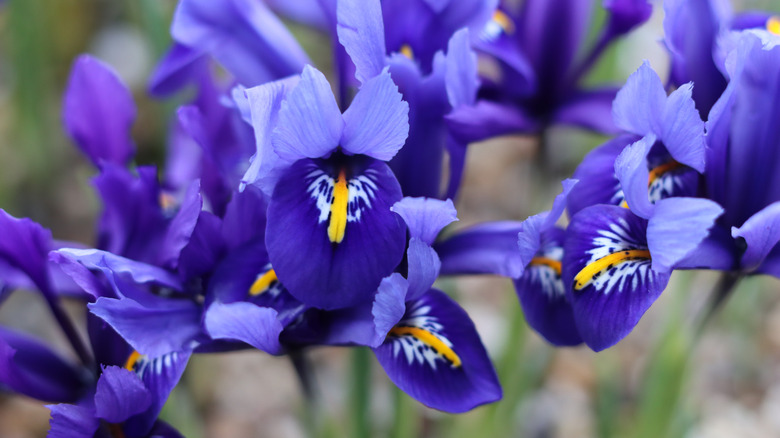
A native perennial perfect for rock gardens, the dwarf crested iris (Iris cristata) flowers in April and May. The blue or purple flowers have a similar shape as a larger iris, and the plant itself can be used as ground cover, providing value after the blooms have faded. Dwarf crested iris is best grown outside in USDA zones 3 through 9. If it's in a very sunny area, make sure to give it some extra water since it likes moist soil.
Peony
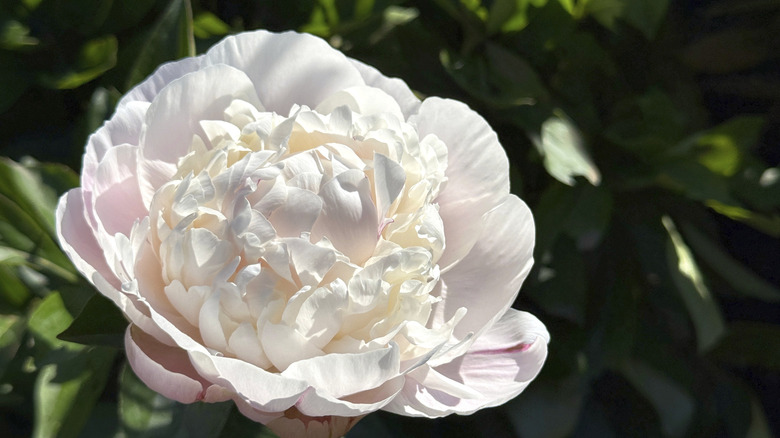
Peonies (Paeonia) start blooming at the end of April, but the enchanting flowers, known for their fragrance and large size, are worth the wait. These perennials thrive in zones 3 through 8. You're most likely to see woodland peonies with white flowers bloom first, but you can plant garden peonies to enjoy more color and variety throughout the rest of the spring. Make sure they're in a fully sunny spot to help maximize the number of blooms from your peonies. And for the plants' health, avoid overwatering or planting them in soil that doesn't drain well.
Virginia bluebells
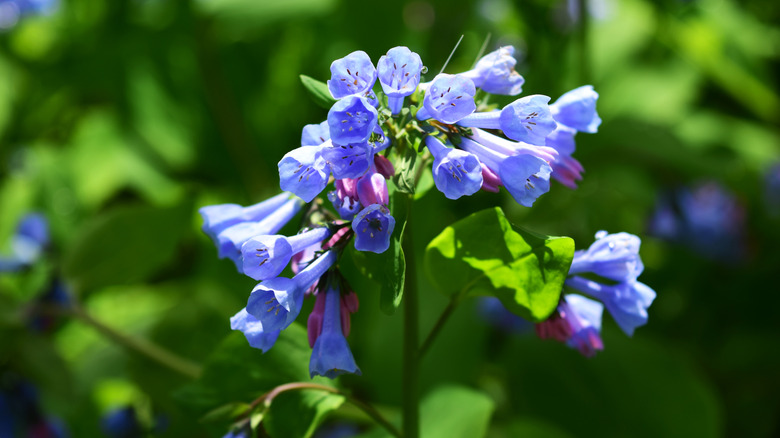
From April to May, you might be lucky enough to see Virginia bluebells (Mertensia virginica) on a walk in the woods. Just like the plant's name suggests, it sports blue flowers shaped like little bells. In USDA zones 3 through 9, you can grow these beauties in the garden, although patience is necessary; they may not bloom for years as they get established. If you're able to cultivate these wildflowers, they may self-seed, and you'll be doing your part to help a native plant that's under threat from habitat loss.
Azalea
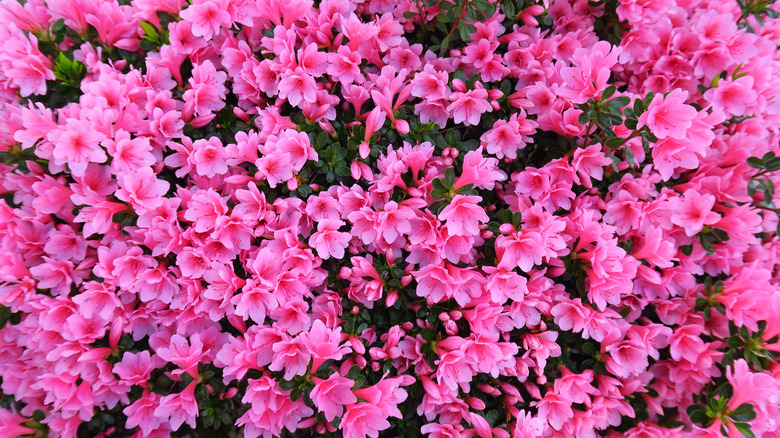
With their funnel-like flowers in a variety of vivid and pastel colors, azaleas (Rhododendron) are a sure sign of spring. These perennial shrubs flower on multiple stems and some varieties appear coated in pink flowers when they're in bloom. It should be noted bloom times can vary among the many types of azaleas, (which are technically a kind of rhododendron, hence its scientific name). Kurume azaleas are an evergreen type that flower in the beginning of April and are best grown in zones 6 through 9, and Kaempferi azaleas, hardy in zones 5 through 7, bloom toward the end of the month.
Dutchman's breeches
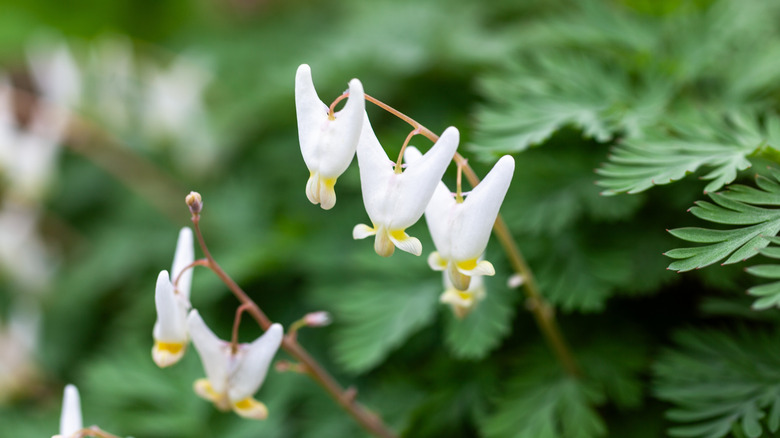
One of the more whimsical ephemerals to spring up in April is Dutchman's breeches (Dicentra cucullaria), named for their puffy, indented white blooms similar to old-fashioned pants, like bloomers. Look for these wildflowers in wooded areas after the last frost in your area throughout zones 3 through 7. If you want to get some of these unique perennials established in your garden, it helps to have shade from tall trees like they would find in those forests and be prepared to wait a few years for the flowers. The leaves will die in June as the plant enters dormancy.
Lilac
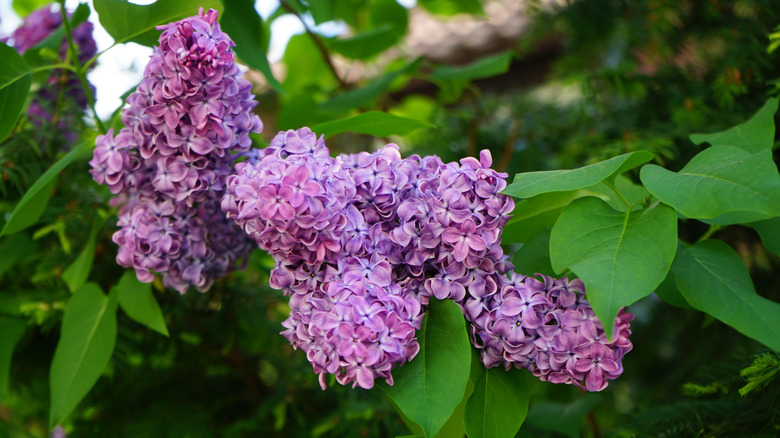
Lilac (Syringa vulgaris) is beloved for its fragrant (often) purple clusters of flowers that emerge in the latter half of April, but there are also varieties with pink-toned and white blooms. Bees and other pollinators are attracted to these winsome flowers. Making sure the plants stay full and flower well each year takes some work, including deadheading flowers when they wither and pruning the plant right after all the flowers fade. Don't delay the pruning step, since if you prune too late you might accidentally lop off buds that will open the following year.
Red columbine
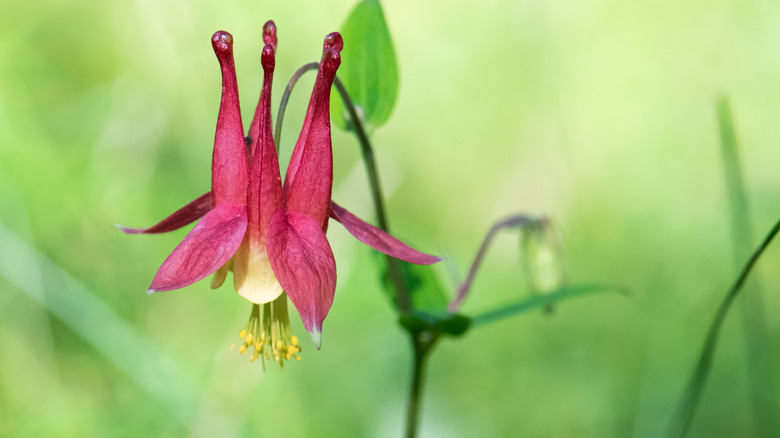
April is the height of the blooming season for red columbine (Aquilegia canadensis), with dangling tube-shaped flowers that include yellow stamens. Butterflies, hummingbirds, and other pollinators are nourished by the blooms of this native plant through June in USDA zones 3 through 8. If you admire these wildflowers in the garden, give them plenty of water and allow them to self-seed so you can see the red flowers for many more years. You can also trim off the parts with their seed capsules to keep them in one area (like a patch for attracting pollinators).
Hyacinth
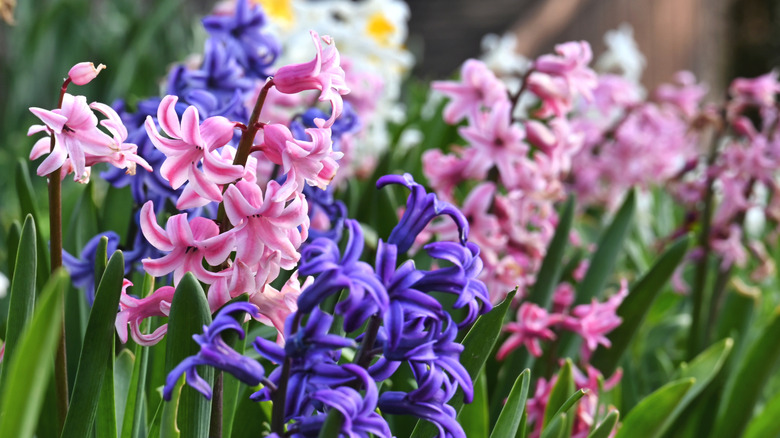
Hyacinth (Hyacinthus orientalis) is one of the spring-blooming plants you need to plant as bulbs during the fall. As perennials, they'll keep coming back when the weather warms up in USDA zones 4 through 8, but you can also treat them as annuals to have more robust flowering. Each bulb produces one stalk of flowers, so by planting the bulbs in groups, paired with tulips or daffodils, you can get areas of early spring color at the edge of the garden. Hyacinth blooms are fragrant and vibrant in color, ranging from blues and purples to yellow and peach.
Great white trillium
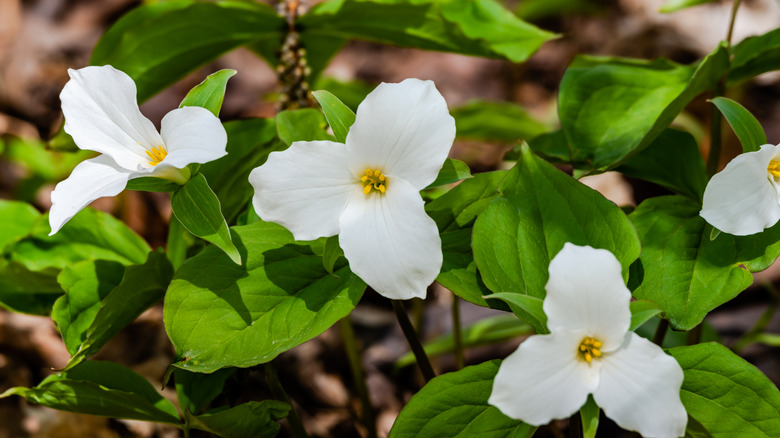
The three petals of great white trillium (Trillium grandiflorum) make it one of the ephemerals that's easiest to spot in April throughout USDA zones 4 through 8. Ants tend to spread this plant's seeds, so you may even find it spring up unexpectedly. Over time, the white flowers take on a pinkish color. For growing trillium, it's good to have soil that's moist and rich in organic matter. After their long root-building period, they'll shine in mass plantings.
Magnolia
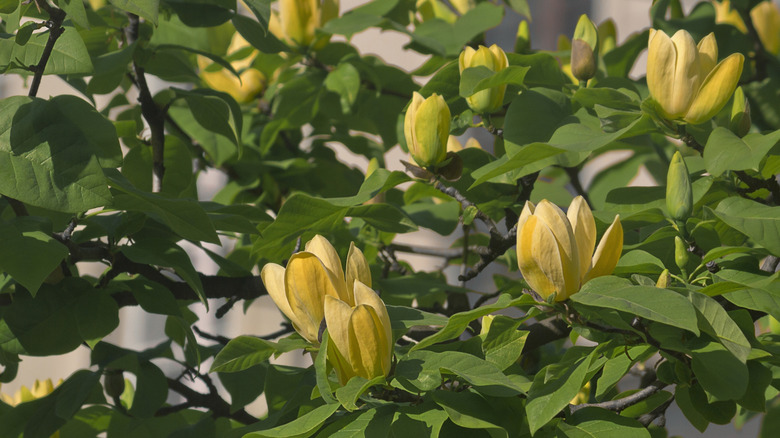
There's a wide variety when it comes to magnolia (scientific name Magnolia), so you have your pick of flowering shrubs to plant as your garden border or single specimen. They're outdoor hardy in USDA zones 5 through 8. Several varieties bloom in April, including Yellow Bird'and Loebner's magnolia. Magnolia flowers, which are often open even before the leaves unfurl, are vulnerable to damage from cold snaps or unexpected spring frosts, so the plant may appreciate some shelter in your garden.
Wild geranium
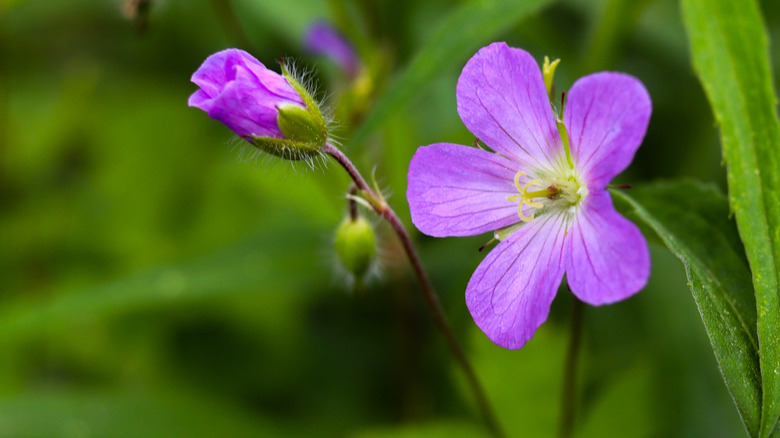
Wild geranium (Geranium maculatum) is also known as "hardy geranium," so you can tell it stands up to the unpredictability of April. Its small pink or purple flowers are saucer-shaped and attract bees to the garden. Another reason to try them in a spring planting is their wide array of cultivars, some of which can keep blooming until September or have petals outlined with dark-colored veins. This perennial feels at home in USDA zones 3 through 11. In addition to gracing rain gardens, it can spread out and form ground cover.