

The Fast-Growing Tropical Plant You Can Use For Privacy In Your Yard
We may receive a commission on purchases made from links.
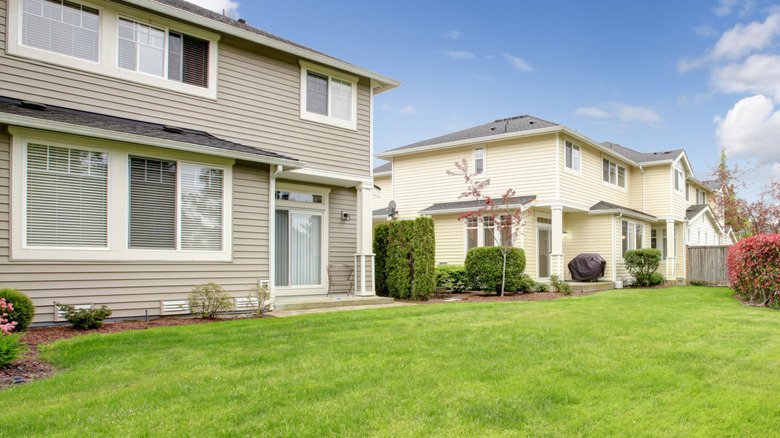
If you've ever felt exposed while sitting outside in your yard, you could probably do with a little more privacy. After all, no one enjoys feeling watched by neighbors or passersby while relaxing on their back patio. A natural screen is a relatively easy — and aesthetic — fix. Which plants work best for privacy is largely a matter of taste and location. If you live somewhere warm and like tropical gardens, the Areca palm (Chrysalidocarpus lutescens) is definitely worth checking out. It is a tropical evergreen perennial known for its lush, bright green, feathery fronds. The plant grows 10 to 30 feet tall and 8 to 15 feet wide, with multiple stems from the base, making it a great option for creating dense and natural privacy screens in yards.
In fact, Areca palms are one of the most popular palms for natural privacy screens in residential and commercial landscaping. For starters, they grow fast. Given the right conditions, Areca palms can grow 2 to 3 feet every year. Plus, it only takes them 10 years to reach full size. Areca palms also produce yellow flowers in summer, followed by yellow fruit that attracts birds — in their native habitat, at least. You can only grow the Areca palm outdoors in USDA Plant Hardiness Zones 10 to 11. If you live outside these zones, you will have to plant other fast-growing trees for a natural privacy screen in your yard. If you live in South Florida, choosing an Areca palm might not be the best idea. While the species isn't officially considered invasive yet, you need to manage it carefully to prevent escape.
How to plant Areca palms in your yard for a dense tropical privacy screen
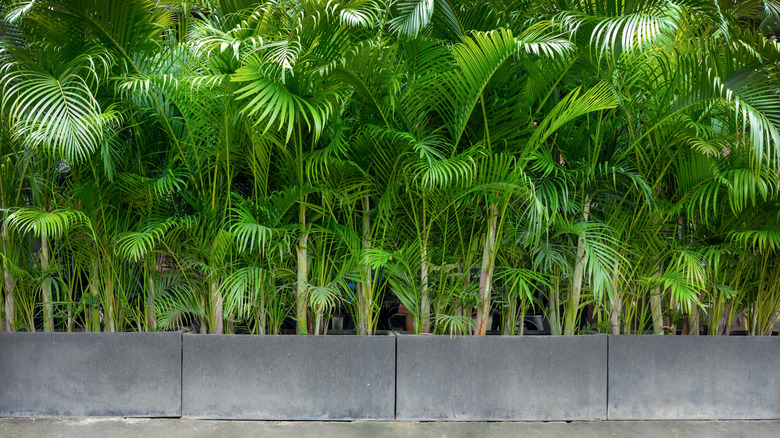
If you want to create a privacy screen around your yard using Areca palms, you need to space the plants correctly. They grow 8 to 15 feet wide, so planting them around 10 feet apart works well to ensure there are minimal gaps in your natural fence. If you want a hedge-like planting or a dense privacy screen, plant the palms 3 to 6 feet apart. It is also important to prune your Areca palms to keep them tidy and encourage clustering. Use the three-D rule to properly prune your plants — start by only pruning branches that are dead and damaged. Excessive pruning of Areca palms can stunt their growth or even kill them.
Another thing that can lead to Areca palm death is waterlogged soil. Make sure you plant your palms in well-drained soil with a slightly acidic to neutral pH to stop them from developing root rot and keep them thriving. You could use a relatively accurate home-based soil testing kit, like the well-rated MySoil Soil Test Kit for about $32, or send some soil away for lab testing. If your soil is too alkaline, mix in some sulfur to bring the pH down.
While Areca palms will tolerate a full-sun site, they prefer partial sun. Their leaves can yellow with too much sun, which makes them look less attractive. Similarly, too much fertilizer can also turn the foliage pale. You need to fertilize your Areca palms at least once each in spring, summer, and fall with a product specially designed for palms, like Miracle-Gro Shake 'N Feed Palm Plant Food. Always follow the manufacturer's instructions, and avoid feeding your palms in winter — and possibly in fall, if growth has already slowed.